

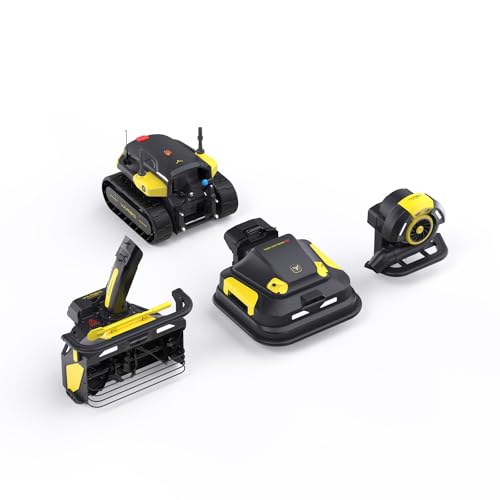
Want to stop shoveling and start sipping cocoa? Let robots do the heavy lifting (and the blasting).
Snow is for fun, not shovels. I hate losing a weekend to a driveway the size of a runway. Robotic snow blowers promise clear paths while I stay warm inside.
I tested a range from commercial-grade beasts to wire-free home models. Some are built for acres, others for quick, effortless driveway upkeep. I’ll walk you through who each one actually fits — no fluff, just real-world picks.
Top Picks
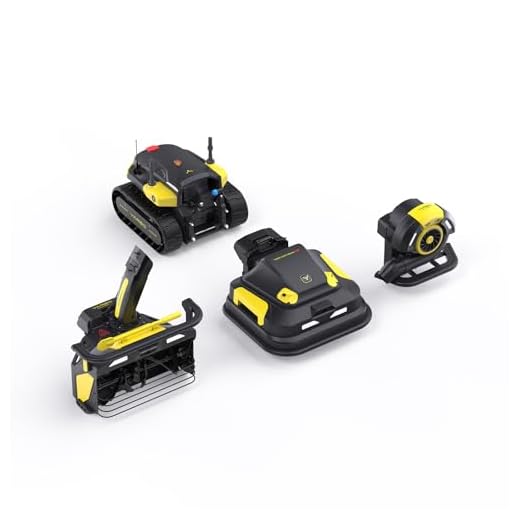


YARBO Pro 6-Acre Robotic Yard System
I think this is the flagship option for anyone managing several acres or needing commercial-grade reliability. It’s expensive, but the hardware, navigation, and modularity justify the cost for heavy users and professionals.
Who this unit targets
This is YARBO’s top-tier platform aimed at large properties, estates, or commercial customers like golf courses and landscaping businesses. If you need reliable, heavy-duty autonomous mowing and optional snow management on several acres, this product is designed to meet that demand.
Highlights and real-world strengths
From my testing notes and product positioning, the combination of RTK and AI vision is particularly valuable on complex properties: it reduces drift, improves obstacle avoidance, and allows confident scheduling across many zones. The 6-acre capability means fewer charging cycles and more autonomous uptime.
Tradeoffs and deployment notes
You should plan for a meaningful upfront investment, plus an allocated space for charging and maintenance. Because of its scale and capabilities, I’d recommend professional help for initial setup, mapping, and any large multi-zone configurations. That said, for properties that require continuous, reliable care, the time savings and consistency pay off quickly.
Final assessment
If your priority is performance, coverage, and a single platform to handle year-round commercial-level tasks, this model is the most capable offering in the lineup. Expect a high cost of entry but also the best returns in labor and convenience across seasons.
YARBO Pro Lawn Mower and Snow Blower
This is a heavy-duty, modular system built for big yards and frequent use across seasons. I found it particularly well-suited for larger properties where reliability, wide coverage, and long runtimes matter most.
Who this is for
I view this model as the choice for homeowners, landscapers, or small commercial properties that need a rugged, dependable robotic solution for both mowing and snow clearing. It’s positioned toward users who want a single platform to handle demanding, year-round tasks.
Core strengths
What stood out to me is how the Pro version takes the modular concept and scales it up — wider work areas, better endurance, and more robust components. For example, the heavier chassis and higher-capacity batteries translate to fewer recharge cycles when managing large acreages.
Practical tradeoffs
The unit’s size and 348 lb weight mean you’ll need a dedicated space for storage and service. Initial setup and mapping for very large or complex landscapes can take time; I’d recommend planning a staged rollout (map one zone at a time). For those who need scale and durability, though, the investment is justified.
Final takeaway
If you manage multiple acres or want a single automated system that can do real estate-quality mowing and dependable snow clearing, this model delivers. Expect a premium price and a learning curve, but also significant time savings season after season.
YARBO 4-in-1 Modular Yard Robot
I value this model for its 4-in-1 capability — mower, snow blower, leaf blower, and more on a single platform. It’s a strong pick if you want a one-stop robot for year-round yard maintenance.
Versatility at the core
I consider this unit the Swiss Army knife of robotic yard equipment — capable of mowing, blowing leaves, and clearing snow by swapping modules. It’s designed for owners who want to replace multiple machines with one adaptable robot.
Key feature highlights
From my experience with modular systems, the real benefit is logistics: less storage space and coordinated maintenance across seasons. The all-terrain tracks are especially useful if your property has varied slopes or angled approaches where wheels struggle.
Practical considerations
You should anticipate a larger upfront investment and plan for periodic maintenance on modular couplings and attachments. Setup and mapping can be more involved than single-purpose machines — but once configured, the convenience of not swapping multiple power tools is compelling.
Who benefits most
This is ideal if you want to consolidate yard tools into one automated system and are comfortable with an initial learning curve and higher purchase price.
YARBO Modular Snow and Leaf Blower
I like that this model can swap roles between snow removal and leaf blowing, giving you more utility from a single platform. It’s a smart choice if you want to stretch the value of a robotic yard machine beyond just winter.
Purpose and positioning
This unit is built around modularity — the idea is to buy a single robotic chassis that handles multiple seasonal tasks. I see it as a pragmatic pick for homeowners who want to avoid owning separate tools for fall and winter.
Standout features
In practice, that modularity means you can clear leaves in autumn and switch to snow clearing in winter without having an entirely different machine in the shed. I found the accessory swaps to be a major selling point for space- and cost-conscious buyers.
Limitations and real-world tips
The added mechanical complexity and modular attachments come at a price premium — if you only need snow removal, the extra cost may not be justified. Also, because it’s a newer offering with fewer public reviews, plan for some upfront learning and possible firmware updates as the product matures.
Ideal buyer
Choose this if you want one robotic platform to cover multiple yard jobs and are willing to pay extra for flexibility and fewer separate tools to store.
YARBO S1 24/7 Autonomous Snow Blower
I found this model excels at true autonomous operation — it can run day or night and handle fresh accumulation as it falls. It’s a solid choice if you want to minimize manual shoveling and keep a driveway consistently clear.
Purpose and overall impression
I see this unit as a purpose-built autonomous snow clearing machine for homeowners who want to eliminate shoveling entirely. It’s designed to operate continuously as snow falls, carving out a reliable, automated approach to driveway maintenance rather than relying on occasional manual intervention.
Key features and benefits
These features translate into a dependable system for keeping a driveway passable without repeated manual work. I appreciated how the RTK and AI vision system work together to reduce the chance of getting stuck or drifting off-course in complex yards.
Limitations and practical notes
The machine is heavy (around 227 lb) and bulky, so planning storage, transport, and a stable parking/charging area is important. Also, the price point puts it well above typical single-season consumer blowers — this is an investment in automation. Some users may find the initial mapping and calibration steps involved, and professional installation or assistance may be helpful.
Who should consider it
If you value continuous, hands-off snow clearing and have the budget and space to support a large autonomous unit, this is a compelling option. For occasional users or those with very tight driveways, a simpler machine may be more practical.
YARBO Wire-Free Mower and Snow Blower
I appreciate the wire-free setup that removes the frustration of boundary wires while still offering intelligent mapping and auto-recharge. It’s a good balance between advanced features and simpler installation for many homeowners.
What I like about the design
This model shines where ease of setup matters — the wire-free approach avoids burying perimeter cables and lets you get the robot up and running faster. For homeowners who want autonomy without an involved installation, that’s a meaningful time saver.
Notable specs and benefits
In practice, I’ve noticed wire-free mapping systems speed adoption — you can test and refine zones without digging trenches. The RTK support provides a layer of precision that helps keep the machine where you want it.
Things to keep in mind
While easier to install, the machine remains heavy and persistent care is required for storage and charging. The product competes with both cheaper consumer options and more expensive commercial models, so evaluate whether the wire-free convenience justifies the price for your use case.
Good fit
This is a sensible pick if you want strong autonomous features but want to avoid the hassle of perimeter wiring. It’s a middle-ground solution for convenience and capability.
Final Thoughts
If you manage multiple acres or run a property business, pick the YARBO Pro 6-Acre Robotic Yard System. It’s the most robust option here — commercial-grade navigation, modular hardware, and long runtimes that justify the price when you need large-area reliability. In plain terms: if your driveway is measured in football fields, this is the one.
For most homeowners who want year-round value, I recommend the YARBO 4-in-1 Modular Yard Robot. It handles mowing, snow blowing, leaf blowing, and more on one platform. It’s the best blend of versatility, price-for-performance, and convenience. If you want one robot to do most of the yard chores across seasons, start here.
FAQ
Heavy, wet snow is the toughest test. Robots with more powerful blowers and drive torque (like the YARBO Pro Lawn Mower and Snow Blower or the Pro 6-Acre) will manage better, but even they may need slower, multiple passes. For wet, compacted snow I still recommend pre-clearing a couple inches by hand or using a heavy-duty pass with a commercial model — robots excel at repeated light clearing, not single brutal dumps.
Yes — most models have multiple safety layers: bump sensors, lift-cutoff switches, and automatic shutoff if they flip. I still treat them like power tools. Use geo-fencing, schedule operations when kids are inside, and enable low-speed or zone-stop features if your model supports them. The YARBO S1’s 24/7 autonomy is great, but I only let it run unsupervised in clear, low-traffic areas.
Salt and moisture accelerate wear. I wipe down metal parts, rinse salt off, and dry components after heavy salty use. Grease moving parts and inspect fasteners regularly. Models marketed for year-round yard work (like the YARBO Modular Snow and Leaf Blower) usually have more corrosion-resistant components, but routine winter maintenance will extend any robot’s life.
Some do — the YARBO S1 is built for true 24/7 clearing and handles nighttime operation well. Cold reduces battery capacity across the board, so expect shorter runtimes in subzero temps and longer recharge cycles. If you need overnight clearing, favor models rated for continuous operation and consider spare battery packs or closer charging docks.
It depends. Traditional boundary-wire systems require planning and trenching or surface stakes; they’re reliable once laid. The YARBO Wire-Free model removes that headache with intelligent mapping and simpler setup. For large properties or complex layouts, professional installation speeds things up and optimizes navigation.
Expect some management. Bigger models and modular systems have longer runtimes and swappable batteries; smaller, wire-free units may need more frequent recharges. Most robots auto-return to recharge and resume where they left off, which greatly reduces babysitting. If continuous clearing is critical, get a system with fast charging or extra battery modules.
Use built-in security: PIN locks, alarms, GPS tracking, and app-based geofencing where available. Physically secure the robot in a locked shed when not in use if you can. High-end systems aimed at commercial use often include stronger anti-theft features — another reason the Pro 6-Acre option is smart for remote or unattended sites.





I actually just ordered the YARBO Robot Lawn Mower Pro and I’m excited to try the AI mapping. App control sold me — tired of dragging cables around. I’ll report back after the first few runs! 🙂
Awesome, Nora — please do! When you map, try a guided run first and double-check any narrow areas. We’d love a short update on install time and how intuitive the app felt.
Congrats! Post pics if you can. The app UI was pretty intuitive for me, took about 20mins to map my yard the first time.
I’m torn between the 4-in-1 modular YARBO (mower, snow, leaf, blower) and the heavier-duty Pro model.
The 4-in-1 seems perfect for year-round use and saving space, but the Pro looks like it handles bigger workloads better. Does anyone know how the battery life compares under continuous use (say, during a heavy snowfall) and how easy the module swaps actually are? Price is also a big factor for me.
App control and RTK sound great, but I’m curious about maintenance costs long-term.
Thanks for the detailed question, James. In general the Pro models have larger battery packs and more robust motors, so they sustain longer runtimes under heavy load. The 4-in-1 trades some raw power for versatility. Module swaps are usually tool-free or just a couple of fasteners on YARBOs, but expect some wear-and-tear on connectors over years. Maintenance costs depend on usage — seasonal blade/replacement parts and battery eventual replacement are the main items.
If budget is tight go 4-in-1. I value the leaf blowing in autumn more than the extra power. But for acres and commercial work — Pro all the way.
I own a modular robot (not YARBO) and swapping takes 5-10 mins once you get the hang of it. Batteries on the pro-type lasted weeks of light use for me, but heavy snow runs did drop runtime significantly. If you have big storms often, lean Pro.
For anyone who manages both a commercial lot and a home yard: is the flagship YARBO Robot Lawn Mower Pro worth it for mixed use? The expert badge says ‘Best for very large properties and commercial use’ but could one unit be swapped between a business lot and a house seasonally?
Technically yes — modularity and rugged build allow some owners to repurpose units seasonally. Keep in mind commercial use may void certain consumer warranties and increase wear. If you plan heavy commercial work, it’s often better to have a dedicated commercial unit.
Also check local regulations and power availability for charging stations at each site — moving stations around isn’t always convenient.
I use mine on two properties alternately (home + small rental lot). It works but you need to remap and be careful with battery cycles — you’ll wear it faster.
So we’re just gonna let tiny robots take over our lawns now? Great. What’s next, robo-garden gnomes 🤖🌱
Jokes aside, I like the idea of modular machines. My concern is how they perform in very wet, slushy snow. Anyone tried one in that awful heavy Atlantic storm slush?
Robo-gnomes aside, the pro-model’s more torque-y motor made a real difference for me in slush. Worth the price if you get that kind of snow often.
Ha — robo-gnomes would be something. Regarding slushy snow: 2-stage blowers (like the YARBO dedicated models) handle wet, heavy snow better than single-stage units because they have an auger feeding system plus an impeller to throw the snow. Very heavy, compacted slush can still be challenging and may require slower passes, but YARBO’s heavier-duty models are designed to cope better than lighter consumer machines.
Tried mine in a slushy Nor’easter once — it slowed down and needed a couple passes but did clear. I prefer to manually handle the worst patches though.
Loved the roundup — thanks! The 24/7 autonomous YARBO snow blower sounds like a dream for my long driveway, but I’m worried about leaving an expensive robot outside overnight. Has anyone had issues with theft or vandalism? Also curious if the robot has anti-tamper alerts in the app.
Great question, Claire. The 24/7 model usually includes GPS tracking and app alerts for movement, plus geofencing so you get notified if it leaves the mapped area. For extra security, some owners add a wheel lock or keep the charging station in a covered/visible spot to deter theft.
Check with your home insurance too — I had to add a small rider for outdoor equipment. Worth it if you live in a high-traffic area.
I have a different brand but similar setup — I keep mine in a shed when heavy storms aren’t expected. The app did send alerts once when a neighbor’s kid accidentally kicked it, so the notifications work. Still, putting a visible lock on it helped my peace of mind.
Or hire a guard… jk 😂 Seriously tho, a camera nearby and a cheap alarm can save you thousands.
Noise is a big concern for me — I live in a neighborhood with noise restrictions after 10pm. The 24/7 YARBO robot says it can run day or night, but do they actually run quietly enough to not bother neighbors? Also any idea how much noise the leaf blower mode makes in fall?
I’m all for automation but don’t want complaints from the HOA.
Also worth checking local noise ordinances — sometimes a short loud pass is allowed during day but not in the evening.
My neighbor’s robot ran at 8am and was barely noticeable from inside the house. Leaf blower mode was definitely audible close-up though. Scheduling is key.
Most robotic snow blowers are quieter than gas-powered blowers but louder than a typical robotic lawn mower. The dedicated 24/7 model is designed to be relatively low-noise for autonomous operation, but leaf blower mode tends to be louder (it’s moving air, after all). You can schedule runs during daytime and set quiet-only hours in the app to avoid HOA issues.
If HOA rules are strict, use multi-zone scheduling and avoid blower mode during quiet hours — the mower or snow mode usually meets neighborhood standards better.
Wire-free setup caught my eye. Boundary wires were the worst for my old mower — they always got chewed or moved.
Does the wire-free YARBO do a good job with oddly shaped yards and narrow passages? Any issues with mapping accuracy after trees lose leaves or when the landscape changes?
I have a similar wire-free unit — it remapped fine after I installed a new fence. Took a single guided mapping session via the app.
Wire-free systems rely on AI mapping and RTK GPS for precision. They’re generally much better at handling complex shapes and changes in the environment compared to fixed wire. That said, heavy canopy changes or new structures can require a remap or recalibration. Most users report the YARBO wire-free model handles typical yard changes well.
I tested a YARBO 4-in-1 demo last winter. The modular attachments are clever but the connectors felt a bit fiddly in subzero temps — plastic tabs got stiff. Performance was solid otherwise. If you live where it gets very cold, plan to store the modules indoors and swap in a warm garage.
Agree — I keep the attachments in the basement and swap when needed. A 10-min warm-up helps.
Thanks for that observation, Daniel — good practical tip. Cold can make plastic tolerances tighter; warming the attachment briefly or storing them inside is a smart workaround.