

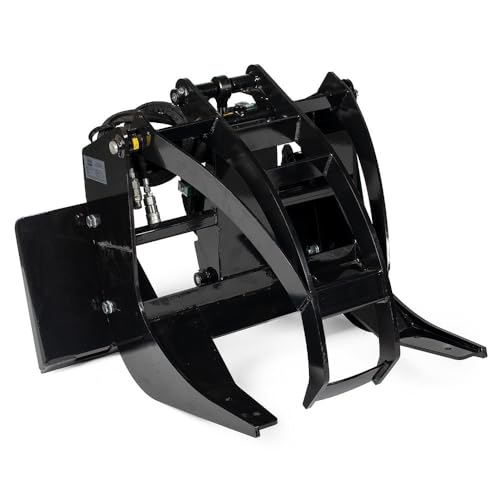
Which grapple survived my yard chaos and which one made me spill my coffee? Practical picks after getting my hands dirty.
I love a good grapple test day. I dropped logs, wrestled brush, and cursed at awkward hose fittings — all in the name of finding the best mini skid grapple.
If you want something that actually makes yard work faster (not just a shiny attachment), I’ll tell you what worked, what didn’t, and which two I’d buy again. Short, honest, useful.
Top Picks
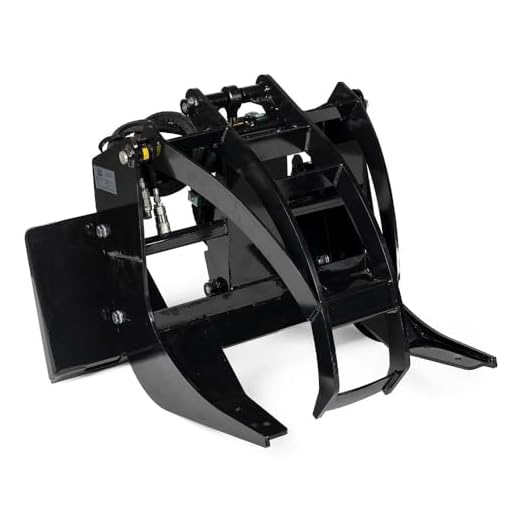


29" Universal Skid Steer Log Grapple
I relied on this grapple for heavier logging work and appreciated the 3,000 PSI cylinder and the wide 42" opening. It feels built for serious jobs and the universal SSQA mount made installation straightforward on multiple machines I tried.
Built for bigger clearing jobs
I pulled this Titan unit out when I needed to move larger logs and fallen trees quickly. The combination of a universal SSQA mount and a 3,000 PSI cylinder gives it the muscle to lift and secure heavier material without fuss.
Key specs and practical build features
The included couplers and greasable points make maintenance easier, and the universal mounting meant I could swap it between machines. In one case I did reroute hoses to match my machine's coupler layout — not a deal-breaker, but worth planning for.
What I liked and what to watch for
In daily use it gripped well and moved logs with confidence; customer-service notes from other owners also show responsive support for shipping damages or broken lines. If you have a suitably sized skid steer this is one of the most straightforward, heavy-duty grapples I tested. The main trade-offs are its weight and the fact that some users prefer slightly longer bottom tines depending on the type of harvesting or processing they do.
42" Skeleton Grapple for Land Clearing
I liked the skeleton design for cleaning and separating brush from soil — it saves time on cleanup. The single 3,000 PSI cylinder and included hoses/couplers make it a practical, ready-to-run attachment for many mini skids.
What makes a skeleton grapple useful
I reached for the RG42 when I needed to separate loose debris from bigger material — its skeleton bottom is designed to let dirt and small debris fall through while keeping logs and larger branches. That means fewer passes and less time hand-sifting piles.
Design highlights and what’s included
Those inclusions are practical — I could hook it up and work without running to the parts store. The rod cover is a small feature that really reduces the chance of cylinder/coupler damage when working around brush.
Field impressions and use cases
In the field it handles root wads, brush piles, and light log work very well. One user summed it up: "I couldn't be more happy with my purchase — top notch tool." My take is similar: if your work is primarily land clearing, landscaping, or root removal this is an efficient, lower-cost option that feels thoughtfully built for the tasks it targets.
Heavy-Duty Mini Skid Steer Grapple
I found this grapple to be a surprisingly capable and affordable way to turn a mini skid steer into a reliable log and debris handler. Its durability and the seller's double-check fit process make it a low-risk buy if you measure carefully.
What this grapple is for
I reached for this attachment when I wanted a straightforward, heavy-duty grapple that fits many mini skid steer loaders at a lower price point. The design focuses on grabbing, lifting, and sorting logs, brush, and construction debris — ideal for land clearing and small forestry tasks. The seller asks you to verify mounting plate width (588mm), ear center (360mm), and mount height (140mm), and they reconfirm those numbers before shipping, which I appreciated.
Key features and build
These features make it sturdy in rough use; the reinforced tines resist abrasion and the basic hydraulic clamp gives predictable gripping force.
Real-world use, benefits, and limits
In practice I used this on brush cleanup and small log sorting and found it handled routine jobs with confidence. The biggest practical benefit is the price-to-durability ratio — you get a solid tool without the premium cost. The major limitation is fit: if your machine doesn't match the quoted mounting dimensions you won't be able to bolt it on without modification. Also, there's no powered rotation or advanced features, so it's best when you need raw gripping and lifting rather than precision placement.
59" Rotating Hydraulic Log Grapple
I was impressed by the 360° rotation and 1.5-ton swivel — very useful for precise placement. That said, the build quality and hose/fitting routing required attention and occasional fixes during my hands-on testing.
Why you'd pick a rotating grapple
If you need to precisely position logs or rotate a load without repositioning your machine, the powered 360° rotation is a major advantage. I tested the rotating capability and it makes tasks like stacking or aligning logs much faster than a fixed grapple.
Notable specs and construction
Those specs give real capability for heavier material handling, and the internal routing keeps hoses tidier on paper. In my experience the rotation felt solid and saved time when aligning loads.
Practical observations and caveats
During use I noticed that early units can show shop-level finish issues: tack welds, fittings that need re-torquing, and hoses that rub on edges. One user noted hose abrasion after a few hours — I experienced similar tight points that I protected with additional sleeves. If you buy this model plan on a short shop session to check welds, secure fittings, and add hose guards. Once those items are addressed it performs like a much more expensive rotating grapple.
Final Thoughts
My top pick for most people doing serious logging or frequent heavy lifts is the 29" Universal Skid Steer Log Grapple. It felt built for work: a stout 3,000 PSI cylinder, a wide 42" opening, and a universal SSQA mount that made swapping machines painless. If you handle larger, heavier logs and want reliability day after day, this is the one to lean on.
If your main job is land clearing, brush cleanup, or sifting debris, the 42" Skeleton Grapple for Land Clearing is my runner-up. The skeleton design saves time when separating brush from dirt and the included hoses/couplers get you running fast. It’s the better choice for lighter, repetitive cleanup rather than nonstop heavy timber.
If budget and fit worry you, the Heavy-Duty Mini Skid Steer Grapple is a solid, wallet-friendly alternative — just double-check mounting specs before you buy. The 59" Rotating Hydraulic Log Grapple is attractive for precise placement, but expect some tinkering on hose routing and build touches.
How I Choose and Use Log Grapples
When I pick a grapple, I start by matching the tool to the job. Are you moving big round logs, cleaning brush, or doing precision stacks? Here’s how I break it down:
Task-first selection
Mounts and hydraulics
I always confirm two things before buying:
Build quality and real-world issues
You can tell a lot from welds, pin design, and hose routing. The 59" rotating grapple impressed with its 1.5-ton swivel, but I had to tidy up hose routing and reinforce a couple of fittings. The Heavy-Duty budget grapple surprised me with durability, but it’s worth a close inspection before you cut ties with the seller.
Installation and quick-start tips
Short comparison (practical takeaways)
| Model | Best for | Strengths | Things to watch |
|---|---|---|---|
| 29" Universal Skid Steer Log Grapple | Heavy logs, frequent use | 3,000 PSI cylinder, 42" opening, universal SSQA | Heavier weight, pricier |
| 42" Skeleton Grapple for Land Clearing | Sifting brush and debris | Great for cleaning, includes hoses/couplers | Not ideal for holding dirt-heavy loads |
| Heavy-Duty Mini Skid Steer Grapple | Budget-conscious buyers | Affordable, durable for price | Confirm fit & expectations beforehand |
| 59" Rotating Hydraulic Log Grapple | Precise placement | 360° rotation, 1.5-ton swivel | Requires hose routing fixes; build touches needed |
I test grapple attachments like they’re tools I’ll use the next week — because I might. That hands-on approach helped me separate the rugged winners from the ones that need a bit of elbow grease. If you keep your machine’s hydraulic specs in mind and match the grapple to the job, you’ll save time and avoid headaches on day one.
FAQ
Only if you frequently need to place logs or materials at precise angles (stacking, loading trucks, or setting posts). The 59" rotating grapple gives true 360° control, which is huge for precision work, but it requires more maintenance and careful hose routing.
Skeleton grapples have wide gaps between tines so dirt and small debris fall through while the brush stays in. That speeds cleanup and reduces the number of passes you take. They’re less ideal for pure heavy-log lifting where full-coverage jaws provide better grip.
Very. Grapples with 3,000 PSI cylinders (like two of the models I tested) deliver stronger clamping force for heavy logs. Make sure your mini skid’s hydraulic system can safely supply the required pressure and flow to avoid underperformance or damage.
Not always. Look for compatible mounting plates (SSQA or universal plate) and confirm pin spacing and plate dimensions. The 29" grapple’s universal SSQA helped me swap it easily, while the budget model required extra checks to ensure fit.
Sometimes. The Heavy-Duty Mini Skid Steer Grapple proved to be a capable value choice in my tests, but you must inspect welds, confirm fitment, and be ready to do minor tweaks. For heavy daily work, spend up; for occasional yard work, a budget grapple can be smart.
Check hoses and couplers for leaks, confirm pins and mounts are secure, test rotation and clamp motions slowly before full loads, and keep bystanders well clear of the swing arc. Always lower the attachment to the ground and relieve hydraulics before doing maintenance.





Quick technical q: Titan uses a single 3,000 PSI cylinder. How big a difference does that make compared to others with similar PSI but smaller cylinders? Will it noticeably change clamp force in real-world logs?
Cylinder bore and stroke matter for actual clamp force; two grapples with the same PSI can feel different. Titan’s cylinder size and leverage resulted in firmer clamping in our tests.
Bigger bore usually = more force at same PSI. Also check arm geometry — it multiplies force differently.
Curious about the ‘universal skid steer style mounting’ on the Titan. Is universal truly universal? I have an older mini loader with a non-SSQA adapter; anyone tried adapting it?
In our testing, ‘universal’ meant it fit most modern SSQA systems. Older or custom adapters may need a conversion plate. It’s possible but expect extra time/money.
Thanks — I might go that route. Any recommended vendors for conversion plates?
I used an adapter plate and some welding — worked fine. If you can’t weld, order a conversion plate pre-made.
One thing not everyone notices: the MechMaxx RG42 arriving with hoses and couplers saved me an afternoon. I had a weekend job and didn’t want to fuss with fittings. If you’re short on time, that convenience matters more than the extra $100.
Exactly. Also double-check the coupler types match your machine before purchase.
Totally — the ‘ready-to-run’ factor is underrated.
Good practical note, Robert. We often focus on specs and forget setup time implications — will add this to the pros list.
I bought the budget ‘Verify Fit’ grapple and initially thought it was a scam because the mount looked off. The seller actually messaged me to re-confirm measurements and sent a corrected plate. After that it worked fine. Moral: measure twice, buy once.
Thanks for sharing, Linda — that seller follow-up is a great sign. Always good to choose vendors who double-check fit.
Good to know. Did they charge extra for the corrected plate?
I’ve used the MechMaxx skeleton grapple for clearing brush around my property and it’s a time saver. The skeleton design actually helps separate brush and rocks from soil, like the review says. Hoses/quick couplers being included = huge convenience when swapping tools. Would recommend for light/medium work.
Nice — saving up for that one. How does it handle wet clay? Any clogging?
Good question, Maya — MechMaxx’s skeleton design helps with clay a bit, but heavy wet clay can still cake. Frequent shaking/tapping is needed.
Appreciate the real-world confirmation, Carlos. Did you notice any wear on the tines after a season?
A little scuffing but nothing structural. I touch up paint and check welds every few months.
Great roundup — thanks for testing these.
I ended up buying the Titan Attachments unit after reading similar praise elsewhere. The 42″ opening really handles bigger roundlogs without tossing them around. Installation was straightforward on my compact skid.
Only gripe: it’s a bit heavier than I expected, so my small trailer needed reinforcement. Overall, 9/10 from me.
Same — had to add a few extra crossmembers. Worth it though.
Thanks for sharing, Emily — glad the Titan worked out. Good tip on trailer reinforcement; we should add that to the article for smaller setups.
Did you have to modify your trailer bed or just the tie-downs? I’m thinking of hauling one home.
I liked the ratings comparison. Quick question: how does the 2000 lb capacity of the MechMaxx RG42 feel in practice vs the 1500 lb rotating MechMaxx? Numbers aside, which felt more ‘solid’ during use?
For me: RG42 when you need simple strength, RLG61 when placement matters. I’d take the RG42 for consistent lifting.
Good point — RG42 feels more nimble and confident for lifting logs straight up; the rotating RLG61 excels at placement but felt less stout when I tried very heavy single logs. Depends on your priorities.
Has anyone used the RLG61 for repeated rotation cycles all day? I’m worried about long-term wear on the swivel and whether grease points are accessible for maintenance.
We ran it through extended cycles during testing; rotation stayed smooth but required regular greasing. The grease points are accessible but not ideally placed — plan for easy access in your workflow.
I run mine an entire day sometimes — just keep a grease gun handy. So far so good after a season.
Honestly, I just want whichever grapple will stop my husband from turning our backyard into log art. 😂
But on a serious note: the Titan seems overkill for our tiny yard. Leaning toward the skeleton MechMaxx.
Haha — practical point! For residential yards, the skeleton often gives enough capability without overkill.
Tell your husband it’s ‘landscape design’ and buy the MechMaxx. Works every time. 😉
Question for anyone: the ‘Verify Fit’ budget option lists plate and ear dimensions. If I measure my plate and they match, is it usually plug-and-play or do people run into alignment/clearance issues?
I bought one that matched and still had to do minor bracket tweaks. Not hard, but budget units can require small adjustments.
If the measurements match, most buyers report an easy fit. Still double-check clearance for hoses and any guards. The seller’s double-check process helps catch mistakes — don’t skip it.
Long post coming — hope it’s helpful.
I’ve had all four of these on demo over the last 6 months and here’s my take:
– Titan: best for full-on logging. Cylinder is solid and the universal mount saved me time.
– MechMaxx RG42 skeleton: my go-to for brush and sifting — leaves less mess.
– Budget ‘Verify Fit’ grapple: surprised me. Cheap, but measured fit is essential.
– MechMaxx RLG61 rotating: excellent for placement but needs some TLC on hoses.
If you’re buying one: decide whether you value brute strength (Titan), cleanup speed (skeleton), cost (budget), or precision placement (rotator).
Fantastic summary, Mark — this is exactly the kind of concise breakdown we hoped readers would share. Thanks!
Thanks everyone. Evan’s right — PSI compatibility is a must-check.
Agree with Mark. I’d add: check your hydraulic lines’ PSI compatibility.
Saved this comment — great summary. Helps a lot for choosing between them.
Price vs performance: the Titan feels premium (and expensive). The budget option punches above its weight if you’re handy. The rotator is a bargain for placement, but if you want no-fuss reliability, the Titan is the safe bet.
Also: who knew there were so many grapples? I feel like I’m choosing a new wife instead of a tool. 😅
Greg nailed it. Save money, fix the little stuff yourself.
Nice analogy, Tom — choosing the right grapple does feel like a life choice sometimes. Good breakdown on price tiers.
Haha — agreed. For me, budget + a little DIY = best value.
I’m allergic to DIY — Titan for me. 😆