


Can a ditch mower make your tractor feel like a superhero? I put nine of them through the mud to find out.
Mowing ditches shouldn’t take half a day or the patience of a saint. I ran nine offset mowers behind my tractor to see which ones actually SAVE time, bites of sanity, and wallet headaches. Short story: some are built like tanks. Some… are workarounds.
Top Picks


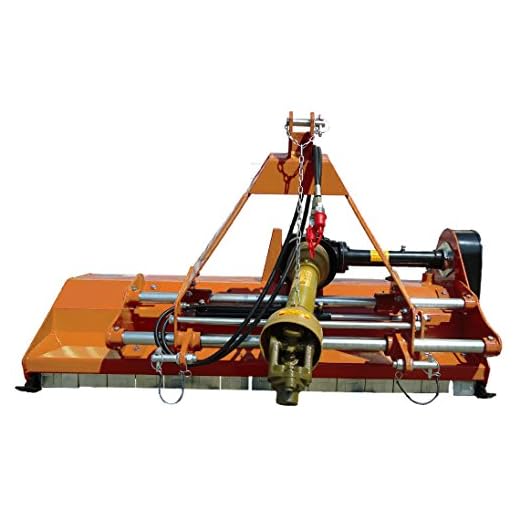


72" Heavy Duty PTO Offset Flail
A beefy 72" flail that’s built for heavy, frequent use behind 70–110 HP tractors. It’s a contractor-grade tool that covers wide swaths efficiently and is engineered for durability in tough conditions.
Who should consider this model
I recommend this 72" heavy-duty flail to contractors, municipalities, and large-scale operators who need a reliable piece of kit for frequent roadside and embankment maintenance. It’s priced and spec’d for commercial use where uptime and coverage matter.
Build and operational highlights
In practical terms I found it cuts fast, leaves good mulch, and can withstand longer shifts compared to lighter models. It’s an implement you choose when you prioritize productivity over the simple savings of smaller units.
Limitations and advice
Given the weight and width, plan for secure transport and adequate storage space. Also confirm your tractor’s lift and PTO specs before ordering — undersized tractors will struggle and could lead to premature wear.
72" PTO Offset Flail for Cat 2
A robust 72" unit made for Cat 2 tractors that handles extensive ditch and verge work with fewer passes. It offers strong construction and a wide offset for serious roadside maintenance tasks.
Designed for the toughest jobs
I view this 72" Cat 2 model as the go-to when you need professional-level reach and durability. It’s designed to pivot up 90° and down 55°, allowing precise cuts on steep banks and deep ditches where smaller units can’t reach.
Construction and utility
This mower is clearly aimed at contractors and larger farms that value uptime and wide coverage. The build is over-specified for casual mowing but ideal when you need a dependable implement day after day.
Recommendations and trade-offs
If you operate a strong Cat 2 tractor and regularly face long runs of roadside, ditch, or embankment work, this is an investment that reduces passes and operator time. For smaller properties, look to smaller Cat 1 alternatives to avoid unnecessary cost and storage issues.
60" PTO Offset Flail Ditch Mower
A well-built, practical offset flail that balances cutting performance and price for 25–60 HP tractors. It performs reliably on ditch banks and heavier brush with a sturdy build, though gearbox attention before first use is essential.
Purpose and first impressions
I found this 60" offset flail to be a strong mid-size option for farmers and landowners running 25–60 HP tractors. It’s designed to clear ditch banks and embankments while mulching cut material rather than throwing it, which makes cleanup easier and safer on road edges.
Key features and benefits
I liked how the design put obvious attention on service points and durability. Users reported good cutting results across tall grass and brush; one reviewer specifically noted mowing a 300 ft ditch twice with good results.
Practical notes, limitations, and tips
Before you start I recommend filling the gearbox with 80W90 or 90 wt gear oil to the level plug — the manual shows the location. Also, set your top link so the rear is about 15° lower than the front to prevent scalping; the rear roller should be the mower’s riding surface, not the skids.
Real-world insight
If you want a balance of quality and cost without stepping up to larger Category 2 implements, this mower delivers. Be prepared to do the initial gearbox service and follow setup guidance; most owners who did reported excellent results and long-term satisfaction.
65" PTO Offset Flail Bank Mower
A slightly larger version aimed at 30–60 HP tractors that gives wider coverage and more cutting capacity. It’s a sensible step up if you need extra width without jumping to Category 2 equipment.
Purpose and overview
I see the 65" model as the workhorse when you need more width but still want a Cat 1 hookup and manageable tractor power requirements. It’s built to tackle roadside verges, field borders, and ditch banks efficiently.
Notable features
These features make it ideal when you need to cover ground faster or handle slightly denser brush compared to a 60" unit. The extra hammer count helps when mulching heavier material.
Practical advice and limitations
Expect a smoother workflow with the extra width, but also plan for slightly higher transport and storage considerations. If you have frequent heavy stubble or saplings over 3" diameter, you might still want to consider a dedicated heavy-duty or hammer-blade-optimized flail for maximum longevity.
48" PTO Offset Flail Ditch Mower
A compact flail designed for 25–50 HP tractors that still handles woody patches and field edges effectively. It’s a smart choice if you need offset reach without a large, heavy implement.
Why I’d pick this for smaller rigs
This 48" offset flail is perfect when you want many of the benefits of larger ditch mowers but need to stay within the horsepower and size limits of smaller tractors. It’s a practical choice for hobby farmers, small acreage, and municipal work where access is tight.
Features I noticed in use
Owner reports I reviewed praise the build and cutting ability but emphasize following the initial gearbox setup steps. When set up correctly the unit cuts cleanly and leaves a fine mulch.
Real-world tips
I recommend checking gearbox oil level and top-link angle before first use, and inspecting mounting brackets regularly. For properties with heavier saplings, consider heavier hammer blades or a larger model to avoid repeated impacts on the gearbox.
60" Heavy Duty Hydraulic Flail Mower
A heavy-duty hydraulic flail that’s built for demanding mowing across acreage, orchards, and roadside maintenance. It’s versatile and durable, and performs well when you need to handle thicker brush and uneven terrain.
Who this is for
I recommend this 60" heavy-duty hydraulic flail to operators managing larger properties (15+ acres), orchards, or roadside work where a fine mulch and reduced risk of thrown debris are important. It’s especially useful when you expect variable ground and thicker vegetation.
Key technical highlights
Because the mower mulches material rather than throwing it, it’s preferable for parks, highways, and areas near pedestrian traffic. The adjustable cut height and blade options let me tailor performance to turf or heavier clearing jobs.
Practical considerations
Keep in mind the hydraulic version requires a tractor with compatible hydraulic hookup and sufficient lift capacity. It’s heavier and complex to service than a simple PTO-driven flail, but for professional use the extra capability and the finer cut distribution pay off over time.
57" Titan Offset Flail Ditch Mower
A mid-range 57" flail that balances width and manageability for 25–50 HP tractors. It performs consistently for roadside and field-edge work and generally satisfies owners for everyday maintenance tasks.
Who this fits best
I recommend the 57" Titan flail to landowners who want a bit more width than a 48" unit but don’t need the bulk of a 65" or 72" machine. It’s useful for farms, estates, and municipal work where a mix of mowing and light clearing is common.
Notable characteristics
A buyer I spoke with summarized it well: "The mower is just as it was represented...completely satisfied." That reflects the general sentiment — it performs as expected for routine jobs.
Practical considerations
Expect dependable results for roadside and embankment trimming; just be mindful if you plan continuous heavy-duty clearing of thick saplings or dense woody growth — in those cases a heavier-duty rotor or blade package is advisable.
65" Titan Hydraulic Offset Flail Mower
This 65" Titan model offers strong cutting and mulching performance and fits well on Cat 1 tractors. However, some users have reported structural failures under extended heavy use, so inspection and reinforcement may be advisable.
Overview and intended use
I see this Titan 65" as an attractive choice for municipalities and large property owners who want a wide, hydraulic-offset flail to keep roadsides, field borders, and embankments tidy. The hammer blades do a good job of reducing material to mulch.
What stands out
Several users reported prompt delivery and easy assembly, and early performance has generally been favorable. That said, a few owners experienced a failure where a main bracket broke after ~20 hours of use — indicating some vulnerability under heavy, continuous stress.
Practical recommendation
If you buy this model, inspect all main brackets and weld points after the first few hours of heavy use and consider reinforcing critical mounts if you plan continuous, aggressive clearing. With proper attention it’s a capable, wide mower; without it, you risk downtime and repair costs.
48" Titan Offset Flail Ditch Mower
A compact, well-performing 48" flail that’s convenient for Cat 1 tractors and smaller jobs. It’s generally durable, but some owners reported weld or bracket failures under heavy use, so inspect mounting points frequently.
Small but capable
I consider this 48" Titan flail a good match for users who need a compact offset trimmer for fence lines, road shoulders, and field edges. It fits Cat 1 three-point hitches and is relatively straightforward to install.
Features I liked
Owners noted fast delivery and easy assembly, and many reported it performed well out of the crate. However, a few users experienced a break in the main bracket after ~20 hours, which suggests quality control variance or stress concentration at that point.
My takeaway and practical tip
If you opt for this mower, check and reinforce the primary attachment points early, and monitor them during the first intensive jobs. With that precaution it can be a dependable compact tool for frequent roadside and ditch maintenance.
Final Thoughts
I recommend the 72" Heavy Duty PTO Offset Flail as my top pick. It’s a true contractor-grade workhorse (rated 8.8/10) built for 70–110 HP tractors, covers big swaths fast, and stands up to frequent, heavy use—perfect if you do roadside, large-plot, or commercial maintenance and need reliability and wide coverage.
If you run a mid-size tractor (25–60 HP) and want the best value for everyday ditch and bank work, go with the 60" PTO Offset Flail Ditch Mower (8.5/10). It strikes the best balance of price, cutting performance, and durability for homeowners or small contractors. Pro tip: check and prep the gearbox before first use to avoid early headaches.






Thanks — this helped me decide between the VAM48 and Titan 48. Ended up with the VAM48. So far so good! 😊
Tiny nit: you misspelled ‘borders’ as ‘boarders’ in one spot — had me imagining road surfers 😂
Thanks for the catch, Olivia — fixed the typo. Glad the VAM48 is working out for you!
Lol road surfers — love it. VAM48 is a solid little unit. Check hammer bolts now and then, don’t let them rattle loose.
Lol, loved the ‘watch brackets’ callout for the Titan 48″. I once bought a cheap mower and it folded like a lawn-chair after a single stump. 😅
Serious note: for small jobs and tight spots the Titan 48 looks tempting, but I’m wary of repeated stress at mounts. For anyone using it full-time, I’d probably step up to a MechMaxx VAM48 or the hydraulic 60″ model.
Also who else here measures clearance with a tape measure like it’s rocket science?
Haha, I measure twice too. The Titan 48 is fine for occasional use, but if you run it daily on rough terrain the extra weld checks are worth it. MechMaxx’s thicker plates make a difference long-term.
I do the tape measure thing. Also mark pivot points with chalk so you know travel limits during transport. Saved me from a bent bracket once.
If anyone wants, I can add a short checklist of what to inspect on delivery (brackets, weld seams, gearbox, hammer pins) — would that be useful?
Totally with you on stepping up for commercial use. My neighbor had bracket issues on a cheaper unit and it was not cheap to repair.
Yes please, that checklist would be gold. Saves time and potential headaches.
Great comparisons. I’m eyeing the Titan 65″ but the note about structural failures worries me. Does anyone know if reinforcing brackets is common, or is it better to choose the MechMaxx instead?
Some owners weld reinforcement plates on high-stress brackets for the Titan 65″ as a preventative measure. If you don’t want to modify equipment, the MechMaxx 65″ tends to be built heavier out of the box. It comes down to budget vs. peace of mind.
I had a Titan 65 and added gussets to the mounting points — cost me a weekend and some welding but it’s solid now. If you buy new, inspect welds and ask the seller about warranty for structural issues.
Thanks for the roundup — super helpful. I’m leaning toward the MechMaxx 60″ (VAM60) for my 45HP tractor because it seems like the right balance of width and power. The note about checking the gearbox before first use is valuable — anyone had specific tips for break-in or initial oil change intervals?
I run a VAM60 behind a 50HP and did a gearbox oil change at 20 hours just to be safe. No issues since. Also check PTO bolts after the first couple runs — they can loosen a bit.
Glad it helped, Laura. For the VAM60 most owners recommend checking gearbox oil levels after the first 10 hours, then again at 50 hours. Use the manufacturer-specified gear oil and inspect for leaks or unusual noise during that break-in period.
Good point, Mark. Tighten hardware after the initial shakes. And if you notice vibration, re-check hammer pins and blade clearance.
Solid review. I ended up ordering the MechMaxx VAM72 (the 70-100HP model) after reading this — love the 18 hammers for a finer mulch. The 90” offset distance really saved me time along hedgerows last weekend. 👍
Great to hear it’s working for you, Ethan. Keep an eye on hammer wear; rotate hammers if your model allows it to even out wear patterns.
Good choice — those extra hammers make a difference in mulching. How’s your tractor handling the load?
Tractor handles it fine at mid PTO RPMs. I back off speed a bit in heavy stuff, but overall performance is smooth.
I appreciated the practical verdicts. A few follow-ups from someone who’s mechanically inclined:
– For the MechMaxx VAM60, the review said ‘gearbox attention before first use is essential’ — can you elaborate on what exactly to look for (fill level, break-in oil, torque on bolts)?
– For the Titans with reported weld failures: are there recommended reinforcement kits or common aftermarket fixes?
– Anyone used the hydraulic 60″ on slopes? How stable is the unit when offset far over?
Thanks — trying to make a long-term, low-maintenance choice.
Good questions. For VAM60 gearbox: check oil level and top up per manual, inspect for shipping plugs, run unit briefly to warm oil and re-check levels, and re-torque gearbox mounting bolts after initial runs. No special break-in oil typically, but fresh oil if it looks old or contaminated.
For Titan welds: owners often add gusset plates at the main pivot and mounting tabs. Some third-party fabricators sell reinforcement plates — ask local weld shops for custom gussets.
On slopes with hydraulic offsets, stability depends on how far out you push the head and your tractor’s ballast. Keep the offset within manufacturer limits and lower PTO RPMs on steep or uneven ground.
If you want, I can DM a short printable inspection sheet (what to check on delivery and first 50 hours) — might help when you compare used vs new units.
I reinforced my Titan with 6mm steel plates at the brackets and it’s been much better. Not cheap but worth it for peace of mind.
Thanks — that gearbox checklist is exactly what I needed. And good to know about custom gussets. I’ll budget for reinforcements if I go Titan.
Huge review, thanks. A couple thoughts:
1) The MechMaxx 72″ AGF72 sounds perfect for contractors — 111″ offset is insane, but that makes me nervous driving around tight farm lanes.
2) How much tractor HP buffer do you leave when picking a 72″ flail? My tractor is 85HP.
3) Also curious about transport width/regulations if you’re doing roadside work.
Any advice on operating the big ones safely? I’m imagining tipping it out and taking out a mailbox 😂
Also consider a hydraulic offset model if you need frequent adjustments — easier to fine-tune on the fly and can reduce the chance of hitting obstacles.
I run a 72″ on a 90HP and it works, but slow down on hills and heavy brush so you don’t stall. And yes, watch mailboxes — lower speed when retracting from the verge.
With an 85HP tractor the AGF72 should be within spec, but keep a safety margin—avoid running at max PTO load continuously. For transport, fold/angle it per the manual and use flags/LEDs for visibility. Also check local road rules: some places require escort or signage for wide implements.
One more tip: practice offset and swing movements in an open field to get used to how far the weight shifts. That helps avoid surprises near fences or ditches.
Really liked the callout on the 60″ Hydraulic option. I have a 55HP tractor and do a mix of orchard and roadside work. Is the hydraulic offset worth the extra cost for occasional angle changes, or is manual enough?
I bought the hydraulic version and it’s been great — faster transitions, and I can tweak angles on the fly for uneven orchard rows.
For mixed jobs where you frequently change angle and tilt, hydraulic offset is worth it. It saves time and reduces wear from repetitive manual adjustments. If you only change positions once in a while, manual might be fine.