


Which grapple will make your skid steer feel INVINCIBLE — and your brush pile vanish?
Stumps fear me. I embarrass brush piles for a living and I test grapples so you don’t have to.
I pick tools that save time and bother. Quick swaps, solid bite, and no surprises on the job matter most to me.
Top Picks

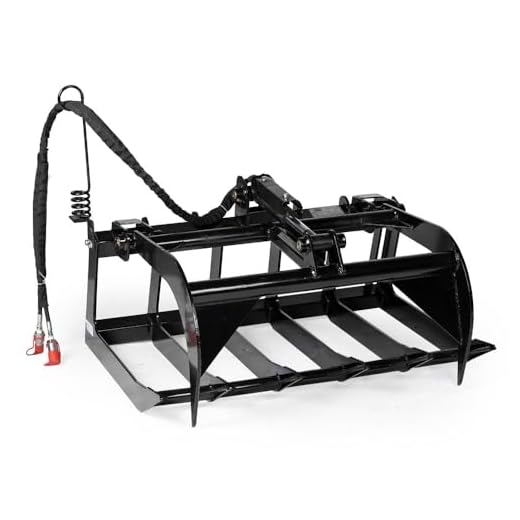


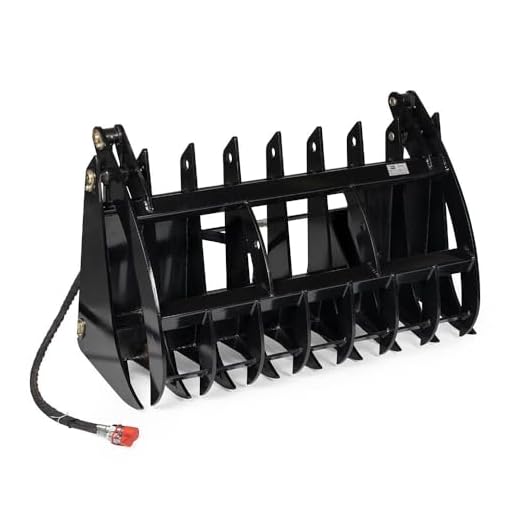


72" Extreme Root Grapple Rake
This 72" extreme root rake is built for the biggest jobs — moving heavy logs, rocks, and bulky debris with confidence. I count on its rugged construction when tackling demanding clearing projects.
Heavy-duty capability
When I’m facing large-scale clearing—fallen timber, rock removal, or bulky demolition debris—this 72" extreme root grapple rake is my go-to. The wide 50" opening height and replaceable forged teeth let me tackle oversized and abrasive loads without wearing out the working edge quickly.
Durability and hydraulic power
Twin 3,000 PSI cylinders provide the force needed to grab and hold heavy objects securely. The overall frame and teeth are designed to stand up to repeated hard use, which makes it suitable for contractors and larger-acreage property owners.
Practical considerations
This is a very heavy piece of equipment — factor in proper mounting, ballast, and transport logistics. Several buyers report freight handling issues, so communicate directly with the seller and carrier to schedule delivery. Once in the field, however, its performance in moving large debris makes the preparation worthwhile.
48" Economy Root Grapple Bucket SSQA
This 48" economy root grapple is a standout for landscaping and light land-clearing. I value its universal SSQA mount and durable 3/8" steel frame for everyday farm and yard work.
Who should consider this grapple
I recommend this 48" economy root grapple for homeowners, landscapers, and small-farm operators who need a reliable attachment for clearing roots, brush, and debris. The SSQA quick-attach makes hookup painless on compatible loaders, which I find saves a lot of time on repeated swaps.
Standout construction and protective features
Built with a 3/8" thick steel frame, this model feels substantial in day-to-day use. It also includes a cylinder guard, back stopper, and hose spring to protect the hydraulics when working in rocky or brushy environments.
Real-world limitations and tips
At roughly 390 lbs it’s not a light implement — make sure your carrier is rated and consider ballast to offset the weight. Some buyers report difficulty finding the manual online; keep a local contact for parts or fitting questions. For me, the sturdy build and easy hookup outweigh those inconveniences, and it’s become my go-to for daily clearing tasks.
60" Grade 50 Root Grapple Bucket
This economy-grade 60" root grapple uses Grade 50 steel that balances weight and strength for clearing roots and brush. I find it ideal for light- to medium-duty land clearing where soil penetration and grip matter.
Purpose and build
I reach for this 60" Grade 50 economy root grapple when I need a balance of strength and reduced weight. The serrated leading edge makes ripping small roots and undergrowth much easier than a smooth blade, and the single-cylinder design keeps things straightforward to operate and maintain.
Features that matter in the field
The Grade 50 steel construction gives a useful improvement in toughness over standard steel while keeping overall weight manageable. The grappling jaw opens wide enough for common brush and root clumps, and the hook-and-pin connection fits many utility loaders for quick swaps.
Limitations and use cases
This unit is intended for light- to medium-duty clearing — think fence-line cleanup, small root balls, and brush — not heavy rock or large stump removal. If you need heavy-duty ripping of big stumps or boulders, a heavier-duty or twin-cylinder model will be a better fit. For my day-to-day property work this grapple strikes a great balance between capability and ease of use.
Industrial Excavator Hydraulic Grapple
I rely on this industrial hydraulic claw for heavy material handling in demolition and scrap sorting. It offers tight-wrapping design and optional 360° rotation for precise placement in confined spaces.
Industrial purpose and strengths
I use this industrial excavator grapple when handling scrap metal, demolition debris, timber, or stones where a tight, enclosed grip is required. The multi-petal, enclosed structure prevents spillage during transport and helps when you need to move odd-shaped or loose materials confidently.
Key features and on-site benefits
The grab’s strong clamping force and optional 360° rotator make placement and loading into trucks or containers far more precise than a basic bucket. It’s designed for frequent, demanding cycles and to resist abrasion from reused or jagged materials.
Limitations and buying tips
This attachment is a heavier investment than simple grapples — final price depends on custom accessories and rotator options. Lead times and shipping should be confirmed upfront, especially if you need a tailored configuration. For large-scale operations where uptime and safe material handling matter, the extra cost and planning are usually justified by the productivity gains.
48" Grade 50 Root Grapple SSQA
This 48" Grade 50 root grapple delivers strong grip and improved penetration while staying lightweight. I like the SSQA quick-tach for fast swaps and the clean, reliable operation I've seen in the field.
Design and everyday use
I use this 48" Grade 50 root grapple when I want a durable, easy-to-mount option that won’t overburden my compact loader. The Grade 50 steel gives it a tougher profile than standard economy steel, and the serrated jaw edge makes short work of fibrous roots and dense brush.
Quick-tach compatibility and practical performance
The SSQA quick-tach connection is a major convenience — it takes seconds to attach and detach when moving between jobs. In actual use I’ve noticed smooth opening and closing and a strong hold on irregular loads, with simple single-cylinder hydraulics minimizing potential failure points.
Notes on setup
Be aware that the grapple often ships with flat-face hydraulic quick connects; you may need adapters to match your tractor’s quick couplers. Beyond that, it’s straightforward and dependable for the typical brush-clearing and landscaping tasks I do frequently.
60" Clamshell Root Grapple Rake
I like this 60" clamshell for its universal skid-steer mount and versatility across many carriers. It’s a capable mid-size rake that balances reach, clamping force, and maneuverability.
Versatility and mounting
I often choose the 60" clamshell root grapple because its universal skid-steer hookup makes it compatible with a wide range of tractors and loaders. That flexibility is handy when I need to loan the grapple between machines or when working with dealers who have different coupler styles.
Field use and maintenance
Twin 3,000 PSI cylinders provide reliable clamping force for branches, brush, and moderate logs. The inclusion of greaseable pins and bushings means routine maintenance is straightforward and keeps performance consistent over time.
Real-world caveats
Expect some initial shakedown: I’ve had to tighten hardware and address a stuck zerk on one unit. Some customers also report the flat-faced quick connects that come installed may not match their tractor couplers, so budget for adapters. Despite those bumps, it’s a strong value for contractors and landowners who want a versatile mid-size clamp for daily cleanup and brush work.
Bolt-on Bucket Grapple 72"–84"
I appreciate how quickly this turns a standard bucket into a grapple without welding. It’s a solid, cost-effective solution for occasional to moderate grapple work.
What it does and who it's for
I use this bolt-on grapple when I need grapple capability without buying a dedicated grapple bucket. It’s designed to bolt onto a matching bucket size and gives you a single-center grapple jaw that holds loads steady for moving brush, logs, or demolition debris. The kit aims to be a DIY-friendly conversion, but expect to drill mounting holes using the supplied template.
Key features and real-world benefits
The grapple arrives with hoses, flat-faced couplers, and a 3,000 PSI cylinder protected by a shield — everything you need to operate once it’s mounted and plumbed. In practice I’ve found the single-piece top bar adds noticeable rigidity when closing on heavy logs, and the adjustable width is handy when switching between slightly different buckets.
Limitations and practical tips
The unit is heavy (200+ lbs), so plan for a hoist or extra hands during install. Several users (including me early on) ran into mismatched hydraulic fittings — some adapters are required depending on your tractor’s couplers. Also, the kit can be light on detailed installation instructions, so mechanical confidence helps.
How I use it and final thoughts
I rely on this bolt-on for storm cleanup and property maintenance because it dramatically speeds up moving large, awkward items without having to change attachments constantly. If you want a rugged, economical upgrade to your existing bucket and don’t mind doing a bit of custom plumbing during installation, this is a practical choice.
Bolt-on Bucket Grapple 60"–72"
This model gives the same bolt-on convenience tuned for slightly larger buckets. It’s reliable for medium-duty land clearing and debris handling when installed correctly.
Overview
I keep this 60"–72" bolt-on grapple in my rotation when I need extra reach and capacity over the smaller bolt-on option. It converts a standard bucket into a grapple without permanent modification and is intended for operators who want flexibility without committing to a full grapple bucket.
What I like about it
The adjustable mounting and single-center jaw make it easy to center loads and secure long branches or small logs. The included cylinder guard and hoses are thoughtful touches that reduce wear in brushy conditions.
Practical considerations
You’ll need to be prepared to drill into the bucket for the mounting pattern, and hydraulic hookup might need adapters depending on your tractor’s couplers. Because the assembly is heavy, plan the lift carefully. Overall, it’s a solid middle-ground option if your work is regularly medium-sized loads.
Bolt-on Bucket Grapple 48"–60"
I consider this the go-to for smaller buckets where portability and conversion speed matter. It’s solidly built but requires mechanical aptitude to install well.
Quick summary
I use this 48"–60" bolt-on grapple when I want to add grapple capability to a compact tractor bucket without investing in a whole new attachment. The kit’s design keeps things simple: bolt on the backing plates and attach the grapple, then plumb to your auxiliary hydraulics.
Practical features and on-the-job benefits
The bolt-on system is straightforward and, once mounted, provides better load control than a plain bucket when handling trees, brush, and irregular debris. The cylinder shield and included hoses are nice touches for protection and convenience.
What to watch out for
Installation is doable but heavy — expect to use a hoist if you don’t have multiple helpers. Also, some users have reported mixed hydraulic coupling types out of the box, so plan to source adapters or have a local hydraulic shop match fittings if necessary. For the price, it’s a practical upgrade to extend your bucket’s usefulness.
72" Clamshell Root Grapple Rake
This 72" clamshell rake handles large brush and debris when mounted to compatible carriers, but alignment and bracket fit can be tricky. It’s best if you have strong mounting capacity and patience for initial setup.
Capabilities and intended use
I keep this 72" clamshell root grapple rake for jobs where I need to move high volumes of brush, logs, and root mats. The twin 3,000 PSI cylinders give good clamping force and allow me to pick and hold bulky debris that a single-cylinder unit would struggle with.
Real-world fit and build notes
It was designed for Global Euro carrier-style mounts, so compatibility is excellent on John Deere Euro systems and similar loaders. However, some users (and I’ve experienced it) noted that brackets and fitment can be finicky — expect to check hole alignment and possibly modify mounting brackets for a snug fit.
Practical advice and limitations
This is a heavy, large grapple — plan for transport, proper tractor capacity, and a decent amount of setup time. In one job I had to tweak pins and tighten up play at the bushings before it felt tight enough for repeated heavy lifts. If you need a workhorse for big cleanup jobs and have the right carrier, it’s useful; if you want plug-and-play simplicity, a smaller grapple might be a better fit.
Final Thoughts
If I had to pick two grapples to keep in my shed in 2026, here’s what I’d choose.
If you only need a grapple occasionally, consider one of the bolt-on bucket grapples as a cost-effective converter — but for full-time performance, the two above are my clear picks.





Really enjoyed the roundup — thanks for testing these out in 2026. I bought the Titan 72″ Extreme Root Grapple last fall and it’s been a game-changer for clearing windfall and big root balls on our acreage.
What I like:
– Forged steel teeth actually bite into heavy logs without deforming.
– Twin cylinders give a reassuring clamp when moving bulk debris.
Question for others: anyone doing routine hydraulic maintenance on these? I swapped hoses once and wondered if there are recommended intervals for checking the 3,000 PSI fittings. Also — tip: if you have to lift rocks a lot, put a steel plate on the bucket lip to avoid gouging the bucket edge (saved mine!).
I schedule a pro hydraulic check once a year. Saves surprises during busy seasons. Also, make sure you torque the fittings to spec — overtightening can cause damage too.
Good tip about the steel plate — I welded a small guard on my bucket too. For hoses: I replace any hose with even minor cracking rather than risk a burst. Better safe than hydraulic soup 🤦♂️
Great to hear it’s working well for you, Laura — thanks for the maintenance question. I usually recommend checking hoses and fittings before heavy-use days and doing a full inspection every 250 hours or seasonally, whichever comes first. Look for nicks, abrasion, and leaking at crimp joints. If you’re using high-flow or frequent cycling, shorten that interval.
Appreciated the callout on the Titan 48″ Economy Series with SSQA. I use the 48″ on my compact tractor for stump/brush clearing and it’s surprisingly nimble. The single 3,000 PSI cylinder has enough pull for my yard work.
Question: does the SSQA plate cause any issues with older tractors (2000s era) or is it generally plug-and-play? Thinking about recommending to a neighbor.
Most tractors that have the matching quick-attach will be fine, but older machines sometimes need a thicker shim or updated pins due to wear. If the neighbor’s tractor has been heavily used, confirm the quick-attach edges aren’t rounded — if they are, consider new pins or a refurb.
I retrofitted a ’98 compact with SSQA a few years back. Took a little filing and a heavier pin, but then it clicked in fine. Not fully plug-and-play but doable for a weekend mechanic.
I liked the notes on the 72in Clamshell Root Grapple that ‘alignment and bracket fit can be tricky’ — understatement of the year 😂
Long story short: bought the 72″ clamshell to mount on my JD Global loader. Brackets didn’t line up, had to mill one side and add shims. Took me two weekends to get it true. When it was aligned, it worked great for brush and medium logs, but that initial setup is brutal.
Would be useful if Titan offered pre-fit options for common carriers or sold alignment kits. Has anyone else done bracket mods and have a parts list or step checklist? I could share measurements if others are in the same boat.
Thanks for sharing that, Marcus — mounting headaches are unfortunately common with larger clamshells. If you can share the measurements, others would definitely appreciate them. A short checklist that helps: verify pin centers, test-fit with cardboard templates, mark weld locations, tack first then cycle. If you post photos, I can add a link to the article’s comments section for others to reference.
Quick extra note: if your carrier has a dealer-installed adapter plate option, get that first. It’s often cheaper than reworking the grapple brackets and preserves resale value.
Same here with a different brand — pre-fit is a myth sometimes. Marcus, I’d be interested in your measurements. I ended up using 1/2″ shims and recalculating pin height.
If anyone’s thinking about welding brackets: beware of warpage. Tack, measure, re-tack, then finish weld. Took me a weekend but worth it. Also check carrier capacity — these things are heavy!
Good roundup. I’m torn between the 60″ Grade 50 economy grapple and the 60″ clamshell with twin cylinders. My use case: mix of brush clearing and moving small logs around a hobby farm. Thoughts on longevity vs weight? Grade 50 sounds lighter but is that a compromise for tougher roots?
Also — the bolt-on 60″ – 72″ model looks tempting for occasional use. Are those bolt-on gullets strong enough for prying action, or are they just for light sorting?
Grade 50 gives a good strength-to-weight ratio — fine for light to medium roots and brush. If you’re regularly prying stumps or heavy logs, the twin-cylinder clamshell (with stronger frame and twin cylinders) will handle fatigue and impact better. Bolt-on conversions are great for light sorting and occasional load, but repeated heavy prying will stress the bolt pattern and can elongate holes over time.
If you go bolt-on and expect heavier use, consider reinforcing the bucket lip or installing wear plates. That significantly prolongs the bolt-on life.
I run the Grade 50 60″ on my small farm — it’s been perfect for a couple years. For real heavy prying you need the heavier frames; I learned that the hard way.
Love the inclusion of the Excavator Grapple Attachment for scrap and demo. Short and sweet: this thing ate a pile of rebar and concrete chunks last month and still looked intact 😅
Anyone tried the 360° rotation option? Worth the extra cost or overkill for small demo jobs?
Used rotation on a multi-day scrap job — saved a ton of repositioning time. Big QoL upgrade.
Rotation is excellent for tight spaces and precise placement, especially when sorting scrap or loading trucks. For basic demo where you just toss debris, it’s less critical. If you’re frequently needing orientation control, it’s worth it.
Bolt-on bucket grapples are a lifesaver if you don’t want to keep a dedicated grapple. I installed the 72″ bolt-on model on my loader bucket and it really extended the usefulness of the existing bucket.
Heads-up: when you bolt these on, make sure you use lock washers/Loctite and follow torque specs. I had one bolt back out on the third job (embarrassing) and now I recheck bolts after each morning break.
Also — anyone have recommended torque values for 3/4″ bolts used on these attachments? I couldn’t find a universal spec in the manual.
Final reminder: if you see any deformation around bolt holes, stop using it until repaired. Structural integrity matters more than a quick day’s work.
If you can’t find the exact manual, call Titan support — they often give torque specs over the phone for common bolt sizes. Saved me a guess once.
I use 3/4″ Grade 8 with nylon patch and then check at 50 hours. When I upgraded to serrated flange nuts I haven’t had one come loose since.
Also consider plating the bolt holes or using hardened washers — prevents elongation over time.
Nice tip rechecking bolts. Torque depends on bolt grade — for 3/4″ Grade 8 bolts typical torque is ~240-260 ft-lbs when dry, but confirm with Titan’s manual or a certified mechanic. Use a calibrated torque wrench and thread locker for vibration-prone installs.
Was hoping the Titan 48inches – 60inches bolt-on model would come with clearer install instructions. The English in the manual is kinda meh and the diagrams are tiny. Spent a whole afternoon guessing hole alignments and had one bolt cross-thread 😒
Otherwise the grapple works fine for smaller debris. If Titan could fix the instructions, that’d be 5 stars from me.
Agree on manuals — manufacturers often skip good illustrations. For the cross-thread, back it out a bit and use penetrating oil, then try a thread chaser or helicoil like admin said. Saved my bacon once.
Sorry you had that experience, Sophie — that’s valuable feedback. I’ll reach out to the support team to suggest clearer diagrams and torque callouts. Meanwhile, if you upload a photo of the cross-thread area I can suggest repair steps (often a helicoil insert or oversized bolt can fix it).