


Dig less, plant more — which bits save your back and your weekend?
You can plant a hundred bulbs in an hour — if you have the right drill bit. I tried a dozen augers so you don’t have to.
I love tools that actually make gardening faster. No sore knees. No uneven holes. Just tidy, repeatable planting that gets the job done.
Top Picks


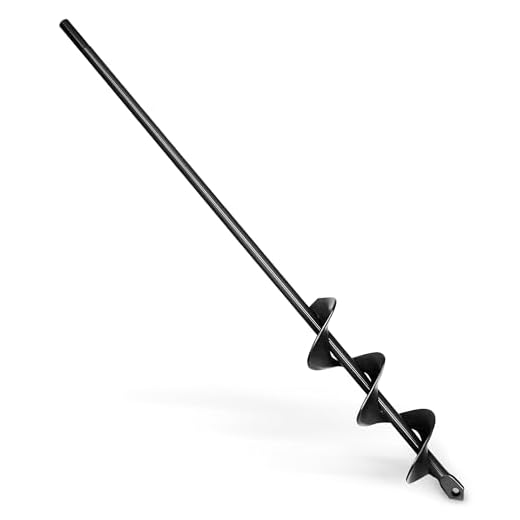


3-Pack Auger Set with Extension
A comprehensive kit that covers small to large holes and includes an extension for added depth. The flexibility and variety make it my top pick for most gardeners who want one kit to do it all.
Why this earns my top spot
I favor the 3-pack with extension because it removes the guesswork: small, medium, and large diameters plus a long extension let you tackle bulbs, posts, and deeper transplants with one kit. That combination is why I rate it highest for most people.
What’s included and why it matters
Real-world performance and guidance
In practice this set shines when you start holes with the small bit and step up to larger sizes for planting or posts. Users report success in mixed soils — clay, gravel, and loam — by working incrementally. The extension is handy when you don’t want to crouch for deeper holes. The main trade-off is price and the need for a higher-torque drill in dense soils.
Practical tips
If you’re installing a mailbox or planting large shrubs, start with the small bit and work up. Use low speed/high torque and keep both hands on the drill: when these bits bind in roots or rock they can twist. Adding the extension transforms the kit into a comfortable, less-bent-over workflow for taller gardeners.
4-Pack K-Brands Auger Bit Set
A reliable 4-piece set offering a broad range of diameters for most garden needs. Strong construction and predictable results make it a smart choice for people planting a variety of bulbs and shrubs.
Who it's ideal for
I suggest this 4-pack to gardeners who want one kit to tackle a wide range of planting tasks without constant tool changes. It’s especially useful for projects that mix bulbs, bedding plants, and small transplants.
Key attributes
Real-world use and limits
In my experience this kind of set removes the guesswork when you’re working across mixed beds — start small, then go to a larger diameter for a transplant or post. The only consistent limitation across augers is torque management: in rocky or very compacted clay you need to slow the drill and work in increments to avoid abrupt kickback.
Practical advice
I recommend pairing this set with a high-torque cordless drill and wearing gloves for torque control. If you hit a stubborn rock, back off and try angling the bit or move to a smaller size to loosen the material first.
MAXCCINO 2" x 14.5" Auger Bit
A single, heavy-duty 2" auger that excels at medium-depth planting and repeated use. Strong welds and simple maintenance mean it stands up well to clay and root-filled soils when used correctly.
Why I picked this bit
I like this 2" x 14.5" MAXCCINO because it hits a sweet spot for many garden tasks: large bulbs, small shrubs, and bigger bedding plants. For gardeners who want a single reliable workhorse bit, this is a sensible choice.
Construction and features
Real-world performance and limits
In my use and in several reviews, this bit held up when drilling hundreds of bulb holes and when digging through compacted clay and small roots. The beefy welds make it durable. The limitation is that it’s only one diameter: if you need fine control for small bulbs or much larger holes you’ll need additional sizes.
Best practices
I recommend using a brushless 18V+ drill for repeated holes and running it at lower speed/high torque. Pull the auger out periodically to clear soil, and if you hit rocks, back off and work in smaller bites.
K-Brands 1.6 and 3.5 Auger Set
A versatile pair of auger bits that covers most bulb-planting and small planting tasks. Sturdy construction and familiar sizing make it a solid value for gardeners who want utility without spending much.
What it is and who it's for
I picked this two-bit K-Brands set because it gives you both a small and a medium auger in one purchase — ideal if you plant a mix of bulbs, small shrubs, or set umbrella/fence posts. The pair covers most garden tasks without needing multiple separate purchases.
Key features
Why I like it (and limitations)
I like how the two sizes let me start a small pilot hole with the narrow bit, then follow up with the larger one for transplants or umbrella stakes. The alloy steel feels durable and the bits thread soil out efficiently. That said, in very rocky or heavily compacted clay the drill can kick back and you need to manage speed and torque carefully to avoid wrist strain.
Practical tips and real-user context
If you encounter roots or stones, work in short bursts at low speed and use the drill’s higher torque/low-speed setting. One user described planting shrubs in tough North Texas clay — they recommended leaning the auger slightly to widen the hole and using a slower gear on the drill to reduce kickback. I echo that: good technique keeps this affordable set performing reliably.
MAXCCINO 4-Piece Auger Drill Set
A well-rounded set that covers multiple hole sizes for bulbs, transplants, and light posts. Efficient cutting geometry and multiple choices make it a strong pick for routine garden work.
Overview
I recommend this MAXCCINO 4-piece set for gardeners who want a ready range of diameters without shopping for individual bits. The set typically includes smaller and larger diameters, making it useful whether you’re planting bulbs, bedding plants, or tamping in small posts.
Key features and construction
Performance and real-world benefits
I’ve found the extra blades on this newer model help lift soil faster, so you spend less time on each hole. Several users reported planting hundreds of bulbs with minimal trouble when running the drill at lower speed and using steady pressure. The main caveat is that if you try to force it at high speed into compacted or rocky ground, the bit or your wrist can get a nasty yank — slow down and let the auger bite.
Tips and practical use
Use the smaller sizes to pilot holes then step up if you need a wider cavity. If you have an 18V (or higher) drill it performs best; if your soil is heavy clay add a bit of loosening first with a garden fork so the auger doesn’t bind.
ERYTLLY 3" x 7" Bulb Planter
A compact, gardener-friendly auger ideal for bulb beds and small seedlings. Its 3" diameter makes consistent, tidy holes and it's especially easy for beginners to attach and operate.
Best use cases
I reach for the ERYTLLY 3" x 7" when I need tidy, consistent holes for larger bulbs like tulips or when planting small seedlings in rows. Its compact length makes it easy to control and less tiring for short bursts of work.
Construction highlights
How it performs and where it shines
This model is a favorite among beginners for its user friendliness and dependable hole size. It cuts consistent holes and greatly reduces the time compared with a hand trowel. One caveat: because it’s relatively short, it’s not the best choice when you need deep holes or are planting very large transplants.
Practical tips
Use slower drill speeds and be ready to switch to reverse to back out when it catches roots. For row planting, mark spacing and move along quickly — the speed and uniform hole size are the real time-savers here.
SYITCUN 1.6" x 16.5" Solid Auger
A no-frills, heavy-duty auger built with a reinforced solid shaft to resist breakage. Good for gardeners who need a tough, dependable bit for repetitive planting or rocky soil conditions.
Rugged construction for repetitive jobs
I like this SYITCUN model when durability is my priority: the solid-shaft design is reinforced to resist the common mid-shaft failures of cheaper augers. That makes it a strong candidate for repeated backyard projects and tougher soils.
Design highlights
Use cases and limitations
This auger is especially helpful when planting rows of vegetables or dozens of bulbs — it stands up to the occasional stone or root without failing at a joint. The trade-off is that a single-flute design can sometimes be a bit slower at ejecting soil than multi-flute bits, so you’ll do well to periodically clear the bit during long sessions.
Practical tips
Pair this auger with a 1/2" chuck, brushless drill for the torque and stability required. Run in short bursts and use reverse to clear material and free the bit from roots or compact clumps.
TCBWFY Extended 1.6 x 16.5 Auger
A useful extended-length auger that speeds up aeration and large-scale bulb planting. Works well on hillsides and naturalizing projects where you need lots of consistent holes.
What makes it different
I picked the TCBWFY extended auger because the extra spiral length makes it easier to work on slopes and in raised beds without bending as much. It’s a good pick if you’re doing bulk planting or lawn aeration.
Key specs
Performance and practical use
Users have used it to plant hundreds of bulbs and to aerate soil patches with very good results. It may not always reach much deeper than its length suggests in very compacted ground, so for deep transplants you might need a different tool. Like other augers, it performs best when you control drill speed and use torque rather than brute force.
Tips
If you plan on long sessions, pair it with a brushless 18V+ drill and a side handle to manage torque. For aeration, punch a grid of holes every few inches and then add soil amendments for best results.
SORANGEUN 1.6" x 16.5" Plant Auger
A low-cost auger that dramatically speeds up bulb planting and light digging tasks. Durable enough for sandy and moderate clay soils, though it benefits from a careful drilling technique in heavier ground.
Overview
I like this SORANGEUN auger because it turns a tedious day of bulb planting into a quick job. It’s a straightforward, budget-oriented option that still delivers solid performance for many gardeners.
Notable attributes
Performance notes and limitations
This auger excels in sand and prepared beds; users report drilling many bulbs quickly without issue. In heavier clay you may need to use more deliberate, short bursts and a higher-torque drill — it sometimes takes muscle to extract the bit from compacted soil. Overall, it offers great value if you accept those trade-offs.
Practical tips
If your drill won’t accept hex shanks, you may need an adapter. I also recommend brief sharpening of the leading flute if you plan to use it in unprepared or root-filled beds.
Sproot 1.6 x 16.5in Spiral Auger
A single-piece solid-shaft auger that performs well for stakes, spikes, and fertilizer spikes. The one-piece design reduces weak points and increases durability for light-to-moderate jobs.
Who should consider this
I recommend the Sproot 1.6 x 16.5" when you want a simple, dependable auger for setting stakes, spikes or doing light planting. The single-piece shaft is less prone to breaking at joints and is easier to maintain.
Features at a glance
My impressions and practical notes
Out of the box the leading edge can be a bit dull on some units; a quick touch-up on a grinder or file (2–5 minutes) gives a noticeably better bite, especially in unprepared soil. I’ve used it for tree spike installation and holiday stake work — it makes those repetitive tasks much faster. In root-heavy or rocky beds you’ll feel occasional jerking; technique matters.
Tips and limitations
Angle the bit slightly and redrill if it snags roots, and always use low speed/high torque settings for better control. If you need large planting cavities, this size will require you to widen holes manually.
Final Thoughts
I recommend the 3-Pack Auger Set with Extension as my top pick. It’s the most versatile kit here — three sizes plus an extension mean you can handle tiny bulbs, larger bulbs, and deeper holes for shrubs or light posts without swapping tools. It’s my go-to when I’m planting a mix of bulbs or doing a weekend of garden prep because the extension saves you from having to dig by hand.
If you want strong value and predictable results, grab the 4-Pack K-Brands Auger Bit Set. Its four sizes cover almost every common bulb and small-planting need, and the solid construction makes it a reliable everyday option. I reach for this set when I’m planting varied bulbs across beds and borders and want consistent hole sizes without fuss.





No replies needed here, just wanted to say the ERYTLLY 3″ made perfectly clean holes for my tulips. Very pleased.
Bought the Sproot for staking and the one-piece design really feels durable. No wobbles even after a few dozen holes.
No frills, just does the job.
Anyone else find the MAXCCINO 4-set a little rough on the hands if you don’t use a handle-adapter on your drill? I started using a side-handle and it’s so much steadier.
Also: don’t forget to oil them after the season to avoid rust.
Good tip, Peter — gloves + handle = happy back and hands for long planting days.
I use a leather glove on my grip hand too — less vibration and better control.
A side-handle or a drill with an auxiliary handle helps a ton. And yes — a quick wipe and light oiling before storage prolongs life.
Quick comparison I did after using several of these:
– Best versatile kit: Auger 3-pack with extension (the extension alone is worth it)
– Best value for multiple sizes: Auger 4-pack
– Most heavy-duty single: MAXCCINO 2″
Also, remember safety: wear eye protection — flying clods are real. 😅
Also keep a small brush to clear out debris from the spirals between holes.
Nice mini-review, Lucas. Safety is underrated — gloves and eye protection make the task much less annoying.
I’m torn between buying the extended TCBWFY length and the standard MAXCCINO set. Anyone used the extended length on slopes/hills?
TCBWFY is handy on slopes because you can stand more upright and keep holes consistent. But if you need multiple diameters, pair it with a smaller set.
I used the extended one on a sloped bed and it saved my back. Just watch for wobble — a steady hand helps.
I wanted to love the TCBWFY extended bit for a mass planting day but found it flexed a bit too much when I pushed hard into compacted clay.
Ended up swapping to SYITCUN which held up better.
Still useful for aerating looser beds though.
Thanks — I have clay too, so I’ll skip the long one and get a reinforced shaft.
Good observation, Zoe. Extended length can mean more flex — solid-shaft options are preferable for compacted soils.
I have a question for those who used the 1.6″ bits: do you find that size small for tulip bulbs or is it just right?
Thinking about the ERYTLLY 3″ for larger bulbs but the 1.6″ sounds good for smaller varieties.
I use 1.6″ for crocus and 3″ for large tulips — works perfectly.
1.6″ is great for smaller bulbs (crocus, some tulips). For larger tulips or daffodils, go 3″ or slightly larger to ensure room for planting depth and soil cover.
Mixed sets are the most flexible for varied beds.
Thanks! That helps — I think I’ll grab a mixed set so I’m covered.
Okay funny story: I thought the ‘hex drive’ meant I needed an actual hex key. 😂
Bought the Sproot anyway and it works great on umbrella holes — quick and light.
Long story short: read the product specs, not my panic texts.
Haha — hex drive just means the shank fits a 3/8″ chuck or adapter. Glad Sproot did the job for you!
Quick note for anyone considering the 4-pack: sizes are great for variety but
some of the smaller bits can get stuck if you hit a root.
I had to back out and clear them a couple of times when planting daffodils.
Still beats digging by hand, but expect to spend a minute clearing the auger on troublesome spots.
Pro tip: twist counter-clockwise after pulling up to release packed soil.
I wrap a small rag around the bit before storing so gunk doesn’t cake on — saves cleaning time later.
Excellent tip, Liam — roots are the great equalizer. Clearing frequently keeps the bit from binding and burning out your drill.
Do you have a torque setting you recommend? My drill has 20 steps and I never know where to start.
Counter-clockwise twist is clutch. Also shorter bursts on the trigger help avoid overheating.
I was surprised how well the MAXCCINO 2″ held up in clay. Not flashy but gets the job done.
Right — the single 2″ MAXCCINO is built for the grind. For clay, go slow and clear debris often.
Has anyone tried the SORANGEUN for sandy soil? I have a beach-front garden and I’m wondering if the low-cost option will hold up.
SORANGEUN does fine in sandy soils — actually it’s easiest there. Just be careful with pivoting; sandy soil offers little resistance so control is key.
I used it for a dune restoration project last year — survived fine, but I wouldn’t expect magic with heavy roots or compacted clay.
Long post because I tried a few things and thought I’d share:
1) Bought the K-Brands 2-pack as a starter. Good balance for bulbs and little posts.
2) Then I upgraded to the MAXCCINO 4-set for bigger projects and it’s noticeably faster.
3) If you have rocky or rooty soil, opt for one with a solid shaft (like SYITCUN or Sproot) — they don’t snap as easily.
4) Also: use a drill with a clutch and steady pressure. Don’t muscle it.
Hope this helps anyone on the fence about which set to buy.
Agreed — I broke a cheap auger in year two and switched to SYITCUN. No regrets.
How did you like the MAXCCINO four-set for speed? Worth the jump from the K-Brands?
Solid rundown, Oliver. The solid shaft suggestion is important — lots of users underestimate strain from rocks/roots.
Fred: yes, once you need consistency for several dozen holes, the 4-set is worth it. Saves time and backache.
Thanks for the breakdown — very practical and helpful for buyers.
Bought the 3-pack with the extension after reading this roundup and it’s honestly a game changer.
The extension lets me reach deeper beds without switching tools and the spiral cuts through loam like butter.
Only gripe is the hex driver fit on my older drill — had to shim it a bit. Still, would recommend to anyone planting tulips or small posts.
Glad it worked for you, Ethan — the extension is what sold me too. If the hex play is an issue you can wrap a bit of electrical tape around the shank for a snugger fit.
I use a cordless for shallow bulbs and a corded one for the deeper posts. Tape trick works well btw.
Thanks Ethan — did you use a cordless drill or corded? I’m worried my little cordless won’t have the torque.