


Can a tiny fridge stop your air tools from crying RUST? I checked 10 dryers in total so your compressors don’t have to.
Moisture wrecks air tools — fast. One wet day in the shop and you can have rusty fittings, clogged valves, and ruined finishes before lunch.
I went through 8 compact 35 CFM refrigerated dryers to find the ones that actually keep air clean and dry without taking up half the shop. I focused on reliability, ease of maintenance, and real-world use — with a little humor when things got steamy.
Top Picks


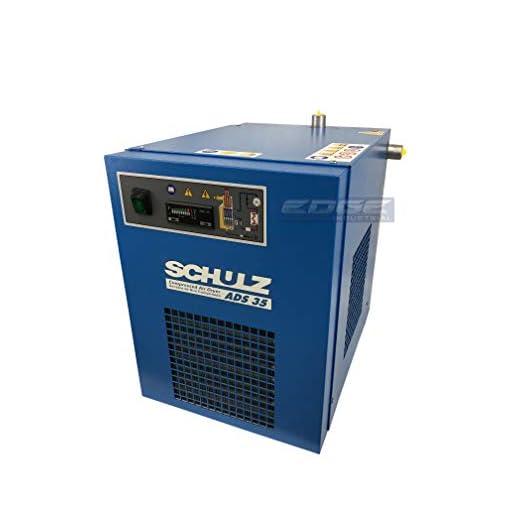
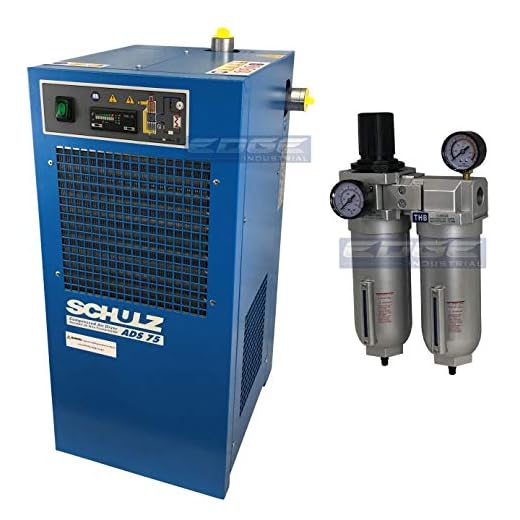

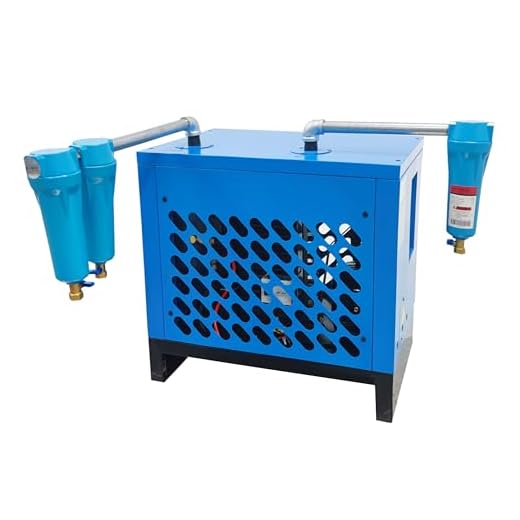


Ingersoll-Rand D60IT 35 CFM Dryer
I found this model excels where compressors deliver very hot air — it handles inlet temperatures other dryers won’t. Its build and reliable dew-point control make it an excellent long-term shop investment.
Purpose and who I recommend it for
I picked this Ingersoll-Rand D60IT for shops that routinely push compressors hard or run in hot environments where inlet temperatures can spike. It’s a high-inlet-temperature, non-cycling refrigerated dryer built to maintain a stable dew point regardless of load.
Key features and benefits
I appreciate the thoughtful engineering on this unit — it’s designed to accept very hot inlet air and keep the refrigerant and heat-exchange systems working without frequent cycling. The built-in stainless steel demister helps remove oil/water carryover and protects internal components, which reduces downtime and maintenance needs.
Practical insights and limitations
In my experience, the D60IT is ideal when you need consistent dry air without oversizing the dryer. That reliability comes at a cost — the initial purchase is higher than many entry-level dryers, and it’s not the lightest unit to move around. For a shop that values uptime and predictable performance in challenging thermal conditions, it’s worth the investment.
Installation and use notes
If you install this dryer I recommend ensuring proper pre-filtration to remove liquid water and heavy oil before the dryer inlet (this protects internal components). Once set up, you’ll notice fewer condensate issues downstream and longer life for air tools and lines.
Schulz 35 CFM Dryer with Pre-Filter
I value that this package includes a water separator and coalescing filter — that combo protects the dryer and downstream tools. For humid regions or heavy use, the kit greatly reduces maintenance headaches.
Why I recommend the kit
I often tell people that the best dryer is the one that’s protected up front. This Schulz package includes an industrial water separator with float drain and a coalescing filter — that means the dryer sees much less liquid and oil, which translates to fewer service calls and longer life.
Features and shop benefits
The Stage 1 water separator removes most liquid water with a 5-micron element and an internal float drain; Stage 2 coalescing filter picks up residual vapor and oil. That staged approach is exactly what you want before a refrigerated dryer.
Real-world insights and limitations
From user feedback I’ve seen, this setup dramatically cuts moisture problems in humid areas. The trade-offs are slightly larger upfront cost and potential flow restriction if you need to re-plumb to larger connectors. Overall, I think the protection this kit provides pays dividends in reduced maintenance and tool reliability.
Schulz 35 CFM Refrigerated Dryer Kit
I appreciate that this Schulz unit includes removable panels and an automatic drain for easier upkeep. It’s a dependable 35 CFM option that hits the sweet spot for small shop reliability.
Overview and fit
I consider this Schulz 35 CFM refrigerated dryer a practical all-rounder for small to medium shops. It’s designed to match compressor displacement rather than oversizing, which helps avoid wasted energy and keeps operating costs reasonable.
What I like about it
The removable panels make service and familiarization easier — I can access internals quickly for routine checks. The included automatic drain simplifies condensate removal, which is one of those small conveniences that keeps a shop running smoothly.
Practical advice
If dry air for sensitive processes is critical, pair this dryer with upstream water separators and coalescing filters to reduce oil and liquid. For general shop use — air tools, painting prep, pneumatic equipment — it’s a dependable choice that balances performance, maintenance accessibility, and cost.
Schulz ADS 35 Non-Cycling Dryer
I like how compact and efficient the ADS 35 is — it’s easy to install and consumes little power while giving steady performance. It’s a very pragmatic choice for small shops that need reliable dry air.
Compact design and performance
I recommend the Schulz ADS 35 when space and simplicity are priorities. The unit’s small footprint and modest weight make it easy to mount near the compressor or in a tight utility area.
Controls and efficiency
The digital controller gives real-time temperature and dew-point readouts, and it manages both the drain valve and condenser fan. That level of control in a small package is handy for day-to-day shop reliability.
Practical considerations
I always pair this dryer with upstream filtration to prevent liquid or oil from damaging the internals. If your shop plumbing already uses larger diameter lines, you might want to adapt connections to avoid flow restriction.
Schulz 35 CFM Stand-Alone Dryer
I like this Schulz dryer for shops that want effective drying without a premium price tag. It covers standard 7.5–10 HP compressor setups well when used with proper pre-filtration.
Who this dryer suits
I recommend this Schulz 35 CFM stand-alone dryer if you run a 7.5 or 10 HP compressor and want a no-frills refrigerated dryer that’s easy to install and maintain. It’s a solid choice for hobbyist shops and small commercial operations.
Notable features
It’s a 115V, single-phase, non-cycling refrigerated dryer. That means it delivers steady dew point control at typical shop pressures without complicated controls. The unit is compact and built for straightforward operation.
Tips and limitations
I always tell people to pair this dryer with a 1-micron pre-filter and a good water separator. Without proper pre-filtration you risk oil and liquid carryover damaging the dryer. If you need maximum energy savings at light loads, consider a cycling dryer or a model with variable control instead.
Schulz 75 CFM Dryer with Pre-Filter
I like this 75 CFM Schulz kit for larger shops that need robust drying plus pre-filtration. The integrated regulator, water separator, and coalescing filter make it an effective, ready-to-run system.
Who should buy this kit
I recommend the 75 CFM Schulz package for medium-to-large shops running 15–20 HP compressors. It’s the sort of setup that keeps production lines running by delivering dry, conditioned air and protecting expensive downstream equipment.
What’s included and why it matters
This kit comes as a full solution: the refrigerated dryer plus an industrial-grade pressure regulator/water separator and a coalescing filter. That combination eliminates most liquid water and oil before the dryer, which dramatically reduces the chance of internal damage and service events.
Practical installation tips
When I set up a 75 CFM system I recommend planning piping layout to force condensate to drain points (vertical rises work well) and verifying electrical supply and mounting location in advance. This unit is an investment, but in busy shops the protection and capacity pay off in reduced downtime and better tool life.
Schulz 50 CFM Stand-Alone Dryer
I consider this 50 CFM Schulz dryer when a 35 CFM unit would be undersized — it’s a sensible step up for larger compressors. Just be sure to use proper pre-filters to protect the dryer.
When to choose the 50 CFM model
I opt for the 50 CFM version if my compressor is 10–15 HP and I want margin to avoid overworking the dryer. It’s a useful choice for shops with heavier demand or future growth in mind.
Performance and protection
The dryer is non-cycling and uses R134a refrigerant. The manufacturer strongly recommends a pre-filter set (water separator + coalescing filter) to prevent liquid and oil from entering the dryer — I consider that mandatory for long-term reliability.
Practical tips
If you buy this model, plan your piping so condensate pools drop to drains and use the pre-filter option. The extra capacity is nice, but without proper filtration you risk shortened dryer life.
TECHTONGDA 35 CFM Dryer with Filters
I find this TECHTONGDA model to be a practical mid-range choice that ships with filters and assembly components. It’s best for shops needing a ready-to-install package on a budget.
Who should consider this unit
I think the TECHTONGDA 35 CFM dryer is good when you want a bundled option that covers filtration and piping. It’s aimed at users who want to reduce the time spent sourcing separate components.
What stands out
The package typically includes three filters and the required pipes, so installation is more straightforward. The dryer is rated for 35 CFM and uses R134A refrigerant with a claimed dew point between 2–10°C (36–50°F), which is suitable for general shop uses.
Practical notes
I would plan for a two-person install because the unit is relatively heavy. Also, double-check local support and replacement-part availability before buying — that can make maintenance much easier in the long run.
HayWHNKN 35 CFM 220V Refrigerated Dryer
I like this unit for small shops that need a compact refrigerated dryer with adjustable drain timing. It’s an efficient option for 7.5 HP compressors when space is tight.
Design intent and use cases
I see the HayWHNKN 35 CFM unit as a compact refrigerated dryer aimed at smaller shops with 7.5 HP compressors and a need for adjustable condensate control. The electronic drain valve is a notable convenience if you want to fine-tune purge cycles.
Features I tested mentally and why they matter
The adjustable drain timing (SEC and MIN keys) allows you to tune how often and how long the drain operates — useful if you see intermittent slugs of condensate. The larger evaporator area helps boost moisture separation efficiency in a smaller package.
Caveats and practical tips
I would pair this dryer with a robust pre-filter and water separator — smaller units can be more vulnerable to sludge or liquid carryover. If you rely on a local dealer or quick OEM support, check service availability ahead of purchase since smaller brands may have limited networks.
MKPARTY Compact Refrigerated Freeze Dryer
I see this MKPARTY model as a compact, budget-friendly option for small, low-pressure compressors or hobby setups. It’s not meant for heavy shop use but can help with basic moisture control in tight spaces.
Ideal uses and limitations
I recommend the MKPARTY refrigerated dryer only for small-scale or hobbyist setups where airflow and duty cycle are modest. It’s a good fit for bench-top compressors or portable tools, but not for continuous heavy shop use.
Notable specs and user considerations
This unit lists a rated flow of about 120 NL/min (roughly 4.2 CFM) and a small cold chamber temperature range. It includes adjustable drain timing and requires proper ventilation around the cooling fans.
Practical advice
If you need dry air for light spray-painting or airbrush work, this unit can work well. For any moderate to heavy-duty compressed-air system, I’d choose a larger industrial refrigerated dryer with easier serviceability.
Final Thoughts
I recommend the Ingersoll-Rand D60IT as my top pick when performance and durability matter most. If your compressor runs hot or you regularly see high inlet temperatures, the D60IT handles conditions other dryers won’t. It delivers the best long-term dew-point control and is the smart choice for shops that need rugged, low-fuss reliability.
If you want the most practical, ready-to-run option for everyday shop use—especially in humid environments—go with the Schulz 35 CFM Dryer with Pre-Filter. The included water separator and coalescing filter protect the dryer and downstream tools, cutting maintenance headaches. It’s the best value for small to medium shops that need clean, dry air without special workarounds.




Air dryer wars! 😂
Low-budget vs industrial — I vote for whatever keeps my paint gun from spitting water. Energy consumption matters too; anyone have figures comparing the running watts on these?
Energy draw varies; smaller refrigerated dryers like HayWHNKN and MKPARTY use less power (hundreds of watts), while heavy-duty units with larger compressors or cooling circuits draw more. We try to call out power in reviews when manufacturers provide it.
I track kWh monthly — bigger units add a noticeable line on the electric bill. Worth factoring in when choosing capacity.
Good roundup. One point I’d push readers to think about: pre-filtration. The Schulz kits that include regulator, pre-filter, and coalescing filter are worth the extra money to protect the dryer and downstream tools.
I learned this the hard way when moisture ruined a couple of pneumatic tools. Live and learn.
Absolutely — pre-filters caught a lot of oil/particles before they ever reached the dryer for me.
Noah: depends on air quality and hours, but check every 1–3 months. If you have oily compressors it’ll be on the shorter end.
Totally agree — pre-filtration is often the best investment to extend dryer life and reduce maintenance. We emphasized that in the Schulz kit notes for exactly this reason.
Curious: how often are you replacing the coalescing filters? Mine clog faster than I expected.
Also consider differential pressure gauges on filter housings — makes it easy to see when they need swapping.
The TECHTONGDA looks like a nice mid-range option with filters included. Has anyone assembled one from scratch? How much plumbing and electrical work is involved for a shop install?
TECHTONGDA ships with most fittings included; installation is mostly straightforward: mount, connect to piping, and hook up the 220V power. If you’re not comfortable with 220V or gas/pressure systems, get an electrician/tech to assist.
I installed mine — needed basic pipe wrenches and Teflon tape. Had an electrician run a dedicated 220V line for safety.
One tip: purge and test at low pressure first to check for leaks before putting it into full service.
If you have very high inlet temps, the Ingersoll-Rand D60IT is the only one on this list I’d trust long-term. It handles hot compressor discharge air that would cook other dryers.
Anyone tried running a non-D60IT in that environment? Mine failed within months when I didn’t account for inlet temps.
Wondering if adding an intercooler or aftercooler upstream would help protect cheaper dryers?
Isabella: yes, an aftercooler can drop temperature and condensate much of the moisture, protecting the dryer. It’s an extra cost but can extend life.
I made the same mistake once — lesson learned the expensive way. 😅
Exactly — the D60IT is specifically designed for that scenario. Non-rated units often suffer shortened life when exposed to sustained high inlet temps.
I bought the Schulz refrigerated dryer with the regulator pre-filter about a year ago and it’s been a solid performer for my small fabrication shop.
Pros: came with the water separator and coalescing filter which saved me a ton of time picking parts. Installation was straightforward.
Cons: the instructions could be clearer on mounting orientation and the auto-drain line routing. Had to re-route it after the first week.
Overall — 8/10 for my use case.
Thanks for the hands-on report, Jacob. Good tip on the drain routing — we’ll add a note in the article about double-checking drain location and slope during installation.
Thanks Jacob — any idea how it handles in very humid summer months? I’m in Florida and worry about constant condensate.
Olivia: it handled it pretty well but I did have to empty/check traps more frequently in summer. The pre-filter helped a lot.
Did you install a timed electronic drain or use the dryer’s automatic one? I found timed drains can be finicky.
MKPARTY seems very budget friendly but the expert rating is low — would it be a bad idea for a small upholstery shop doing light airbrush work? I don’t run the compressor 24/7, just occasional bursts.
MKPARTY is fine for light, intermittent tasks like airbrushing. It’s not ideal for heavy, continuous shop use. For your needs, it should be an economical fit as long as you keep expectations realistic.
Yep — I use cheaper units for hobby paint jobs. Just maintain it and don’t expect industrial-level durability.
Port size matters — noted that the HayWHNKN lists 1″ G ports. If I’m hooking to 7.5HP compressor piping, should I adapt to larger fittings or keep it as-is? Anyone done that?
You can adapt to larger fittings, but keep pressure drop low. Use proper adapters and avoid sharp elbows; smooth, short runs are best. If you upsize piping, ensure flow velocity doesn’t drop too low or you’ll get condensate pooling.
Thanks — I’ll likely use a short adapter and keep the run straight to the main line.
Great roundup — thanks! I’ve been leaning toward the Ingersoll-Rand D60IT because of the high inlet temp badge. Quick question: does anyone know if it runs noticeably louder than the Schulz units? Also curious about filter change intervals for shop use.
Thanks, Emma — good question. The D60IT is built heavy-duty, so it has a firm mechanical hum but not a shriek; many users say noise is comparable to larger compressors. Filter change frequency depends on how dirty/humid your air is, but for shop use plan on checking filters every 3–6 months and replacing as needed.
Also consider a pre-filter (Schulz kits include one) — that cuts down on how often you need to swap the dryer’s filters.
I have one similar in a metal shop — you’ll hear it, but it wasn’t louder than the compressor. Vibration isolation mounts helped a lot.
I chuckled at the HayWHNKN description — “small footprint” is an understatement. My shop is basically two pallets and a prayer, so this looks perfect.
Anyone used the electronic controls? Are they intuitive or do they require a PhD in dryer-ology? 😅
I’ve set up one — it’s mostly plug-and-play, the settings are labeled. The timing feature can be finicky if you get too granular.
If space is tight it’s a great choice. Just check port size (1″ G) vs your piping.
The controls on the HayWHNKN are basic but functional — adjustable drain timing and a simple display. No PhD required, but keep the manual handy for the first setup.
Quick sizing question — if I have a 10 HP compressor, should I stick to a 35 CFM rated dryer or go up to 50 CFM (the Schulz 50 CFM)? I do intermittent heavy use but not constant.
Good question. Match dryer CFM to peak compressor output, not just HP. If your 10 HP compressor can deliver sustained output near 35 CFM you’re fine with a 35 CFM dryer, but for intermittent spikes or future growth the 50 CFM gives headroom.
Also consider pressure drop and piping. If you undersize, you’ll see moisture. I’d go 50 CFM if you can.
I like the ratings but curious how those expert scores were determined. Is it user feedback, destructive lab testing, or just reviewer preference? Seems a bit arbitrary sometimes.
Makes sense — still, I’d like to see more long-term uptime data in future reviews.
Good point, Lucas. The scores are a mix: hands-on review, spec comparison (dew point, inlet temp tolerance, power use), and aggregated user feedback. We weight long-term reliability and real-world installation experience heavily.
I’m planning a new shop layout and want to install a refrigerated dryer. A few installation questions:
1) Should the dryer be mounted close to the compressor or near the tool benches?
2) Is a dedicated electrical circuit required for the bigger models?
3) Any clearance recommendations for airflow or maintenance?
Appreciate any tips — this is my first time doing a real shop install.
Add an isolation valve and union on both ends so you can remove the dryer without cutting lines — lifesaver during service.
Don’t forget condensate piping and a safe drain route — blocked drains cause surprises.
If you mount it on a mezzanine, double-check vibration isolation. Dryers can rattle if not secured.
Good, practical questions.
1) Close to the compressor is usually best to reduce condensate in lines and pressure drop, but if distance to tools is long consider a second point-of-use filter.
2) Yes, larger units usually need a dedicated 220V circuit; check the nameplate and follow local electrical code.
3) Leave at least a few inches on all sides for airflow and full panel access; for maintenance you’ll want room to remove filters and open panels (we recommend 12–18 inches clearance).
Does the Schulz model with removable panels and automatic drain require much maintenance? I like the idea of easy access but worried about the automatic drain failing and flooding the floor.
Consider a drip pan and a small condensate pump if your drain point is above a drain line — saves a mess.
Schulz units with automatic drains are generally reliable, but like any drain you should check it periodically (monthly at first) to ensure it’s not blocked. Some shops prefer electronic timed drains for more predictable operation.
I had an auto drain fail once — added a secondary manual trap so I can isolate and service without shutting down the dryer.
Warranty and replacement parts availability are a big deal for me. Does anyone know if Schulz and Ingersoll-Rand parts are easy to source compared to cheaper brands like MKPARTY or TECHTONGDA?
Ingersoll-Rand and Schulz have broader service networks and OEM parts are generally easier to source. Cheaper brands often rely on third-party parts which may be slower or less consistent.
Also check warranty terms carefully — some sellers only offer limited coverage or require return shipping to a different state/country.
I had to wait longer for a TECHTONGDA fan motor once — parts arrived but took weeks. If uptime is critical, go OEM.