

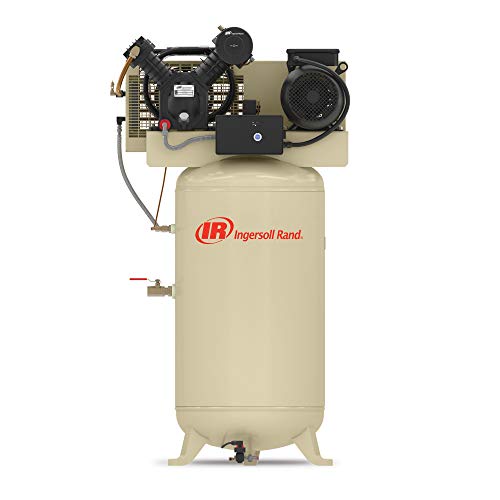
Which one will keep your shop humming (and your patience intact)? A 7-compressor cheat sheet for pros and weekend warriors.
Air power matters. One bad compressor leaves the whole shop standing around, coffee cooling and projects stalled. I know — I’ve been there.
Top Picks


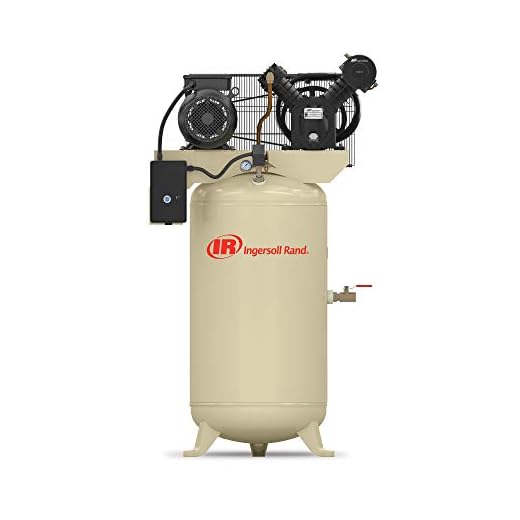


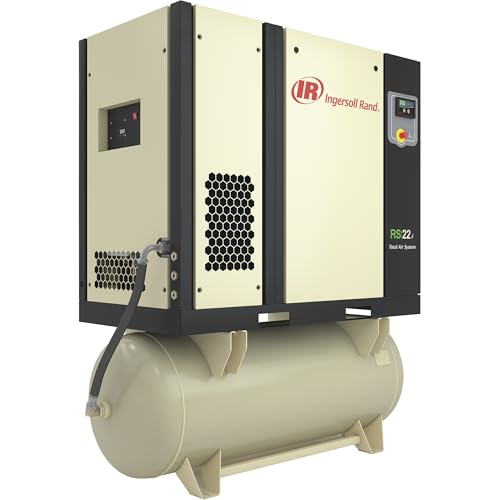
Fully Packaged 7.5 HP Type-30 Unit
A top-tier, packaged Type-30 built for heavy shops and small production lines where continuous duty and onboard accessories matter. The fully packaged extras reduce installation hassle and improve reliability in daily use.
What this unit brings to a shop
I view this fully packaged 7.5 HP Type-30 as a small-production powerhouse. It’s meant for shops running multiple tools at once — think paint booths, large restorations, or production lines where air demand is continuous.
Standout features I value
The packaging reduces the number of add-on choices you need to make when installing, and the aftercooler plus auto drain help manage moisture and maintenance automatically.
Practical benefits and considerations
From my experience, the packaged safety features (low-oil switch) and automatic drains keep downtime and operator intervention lower — very useful when multiple shifts run the equipment. If you run several sanders, grinders, or paint operations concurrently, this unit keeps pressure steady and avoids tool starvation.
Drawbacks and installation notes
If you need continuous, shop-grade performance with integrated accessories, this is a strong, long-term investment in reliability.
Type-30 5 HP Two-Stage Compressor
A workhorse built for continuous, industrial-style use with proven Type-30 durability and performance. It balances power, air delivery, and long service life for shops that need reliable compressed air day after day.
Purpose and overall impression
I see this unit as a classic shop compressor for heavy use — the Type-30 legacy is real. It’s built to live in a professional environment where long duty cycles, consistent pressure, and reliability matter more than portability or whisper-quiet operation.
Key features I rely on
These features mean the compressor recovers quickly and maintains pressure for air tools, paint booths, and continuous production tasks.
Benefits and practical insights
I appreciate how the cast-iron construction and robust internals reduce downtime. For example, when I run impact wrenches and paint guns back-to-back, the large tank and two-stage pump keep pressure steady without constant motor cycling. The 69 dB rating is reasonable for this size, though you’ll still want the compressor in a separate room for a quieter shop.
Limitations and buying tips
Overall, I’d pick this if you need a dependable, industrial-grade compressor that’s designed to be repaired and kept in service for many years.
7.5 HP Two-Stage 80 Gallon Compressor
A high-capacity two-stage compressor that handles continuous heavy-duty work and higher pressures up to 175 PSI. It’s a dependable choice for professionals who need strong airflow and long run times.
Where this unit excels
I consider this 7.5 HP two-stage model ideal when you need high pressure and steady CFM — useful for heavy pneumatic tools, multiple simultaneous tool feeds, and shops that expect continuous operation without overheating.
Features that matter on the job
When I’ve worked around this class of compressors, the pressure headroom (175 PSI) is helpful for tools that need extra kick or for setups with long hose runs.
Benefits, limitations, and recommendations
The unit’s heavy construction means longevity but also freight and installation costs; I recommend coordinating delivery and electrical hookup in advance. Noise is expected at this power level — plan placement away from customer areas or apply sound mitigation if needed.
Overall, this is a best-seller for a reason: it provides reliable high-pressure air for pro environments where uptime and performance matter most.
Packaged 5 HP Type-30 with Auto Drain
A thoughtfully packaged 5 HP Type-30 that includes helpful accessories like automatic tank drain and low-oil protection. It simplifies installation and reduces routine maintenance chores for a busy shop.
What I like about the packaged version
I like that this fully packaged 5 HP Type-30 bundles convenience items you’d otherwise source separately. Automatic drains and low-oil switches save time and reduce the chance of operator error in maintenance routines.
Useful features and performance notes
In real use, those packaged components reduce small failures and make the compressor more tailored to a shop environment where different people may handle maintenance.
Practical recommendations and caveats
This model is a great balance if you want reliable Type-30 performance but also want the reduced maintenance overhead a packaged unit offers. Still, plan for delivery inspection — some buyers report tank or component damage in transit, so check the unit before signing acceptance.
If you want a dependable 5 HP compressor that simplifies day-to-day upkeep, this packaged option is one I’d recommend considering.
Twin-Stack 2 HP 4 Gallon Compressor
A portable, well-built small compressor that punches above its weight for framing, finish nailing, and light tool use. It’s heavy for its size but that weight equals durable metal construction and reliable performance.
Who this is for
I find this Twin-Stack model ideal for the DIYer or contractor who needs a reliable portable compressor for nailing, brad guns, inflating tires, and occasional impact use. It’s a classic balance of portability and durability.
Notable features I like
These specs make it suitable for finish and framing nailers, roofing guns, and light shop tasks where recovery speed matters more than long continuous runtime.
Real-world benefits and tips
In my experience this unit fills quickly and recovers well after short bursts — I’ve used similar units for deck and shed builds and they handled nailers and brad guns admirably. A practical tip: replace the stock gauges with larger, easier-to-read ones if you work overhead; many users also swap quick-connect fittings for Milton-style fittings to improve flow.
Limitations to consider
I recommend this as a best-value portable compressor that feels built to last.
Type-30 5 HP 460V 80 Gallon Compressor
A solid Type-30 option for shops that run 460V three-phase power and want a dependable 5 HP compressor with an 80-gallon receiver. It’s straightforward, rugged, and built for routine industrial tasks.
Who should consider this model
I recommend this model if your shop already runs 460V three-phase power and you want a dependable 5 HP compressor with a large 80-gallon tank. It’s geared to industrial settings where electrical infrastructure is already in place.
Key features at a glance
These features make the compressor a good match for machine shops, body shops, and maintenance shops with robust power infrastructure.
Practical notes from use and maintenance
I like the simplicity: fewer electronic extras means easier troubleshooting and long-term reliability. That said, plan for freight, rigging, and an electrician to wire it in. If you have vibration-sensitive equipment nearby, add isolation pads and a proper piping run to minimize transmitted noise.
Overall, this is a pragmatic choice for shops that already have three-phase service and need a reliable, no-nonsense compressor.
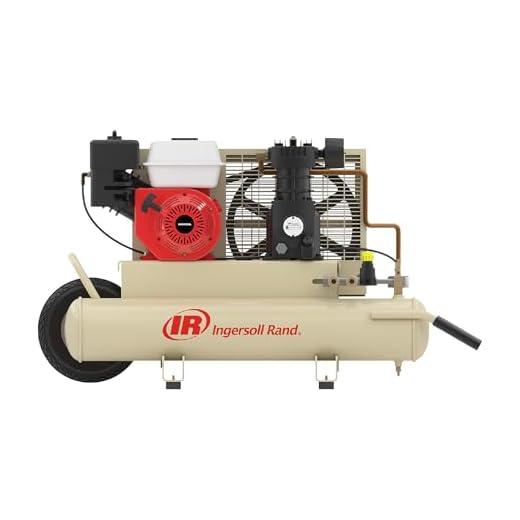
Gas-Powered 5.5 HP Twin Pontoon Compressor
A practical gas-powered compressor for jobsites without electric power; the wheelbarrow design and Honda engine make it easy to move and start. It’s rugged but some owners report reliability issues over time.
Ideal use case
I’d pick this gas twin-pontoon compressor when I need true portability and no reliance on electrical hookups — for outdoor framing, roofing, remote maintenance, or landscaping tasks. The wheelbarrow form factor makes moving it around a jobsite straightforward.
Key features I pay attention to
Those features mean I can run framing nailers and an impact gun off the same machine without trailing long extension cords or generators.
Practical experience and caveats
I value the portability and engine reliability — Honda engines typically start on the first pull. That said, multiple users report pump or valve issues over time; if you buy one, register it and confirm local warranty service. Also, the tank drain valves and some controls can be awkward in wet conditions, so I keep basic tools and spare parts on hand.
In short, this is a solid contractor-grade compressor when electricity isn’t available, but plan for routine maintenance and inspect the unit on delivery to avoid early issues.
Final Thoughts
If you want one clear winner for a small-to-medium shop or a light production line, go with the Fully Packaged 7.5 HP Type-30 Unit. It’s my top pick for a reason: continuous-duty performance, onboard accessories that cut installation time, and the reliability you need when the whole shop depends on compressed air.
If your work demands higher pressure or longer run times (think plasma cutting, heavy sandblasting, or multiple large air tools running together), pick the 7.5 HP Two-Stage 80 Gallon Compressor. Its two-stage design and big receiver mean steadier airflow and the ability to push up to 175 PSI when the job calls for it.
Quick tip: if you need portability or a remote jobsite option, the Twin Pontoon gas-powered model or the Twin-Stack 2 HP are good backups — but for a fixed shop setup, the two 7.5 HP choices above are the most dependable, long-term performers I’d personally choose.
FAQ
If you regularly need pressures above ~125 PSI or run multiple heavy tools at once, yes — two-stage pumps are more efficient at higher pressures and handle continuous heavy work better. For light nailing or inflating, single-stage units are fine.
Packaged units come with useful extras—filters, regulators, safety valves, and in some models an auto drain—so installation is faster and you avoid hunting for compatible parts. For busy shops, that saved time and fewer compatibility headaches usually pay off fast.
Only if your shop has 460V three-phase service. That model is built for three-phase environments and is more efficient in those setups. If you don’t have three-phase, you’ll either need a different model or a step-up solution installed by an electrician.
A good baseline is to check oil every 50–100 hours and change it about every 500 hours, but follow the manufacturer schedule in your manual. Filters get swapped more often in dirty environments—think every few months or sooner if you notice performance drops.
Yes, if you don’t have reliable power. The Honda-powered wheelbarrow design is easy to move and start. Just know it needs more routine engine service (fuel, spark plug, carburetor care) and some crews report long-term reliability quirks compared with electric units.
Look at the Twin-Stack 2 HP 4 Gallon for portability and a small footprint if your needs are light (nailing, finishing). For heavier requirements in a small space, the packaged 5 HP Type-30 with auto drain gives a compromise between size and capability.
Type-30 is Ingersoll Rand’s long-standing pump family known for rugged, serviceable reciprocating designs. In short: durability, easy parts availability, and serviceability — which is why pros favor them for heavy shop work.
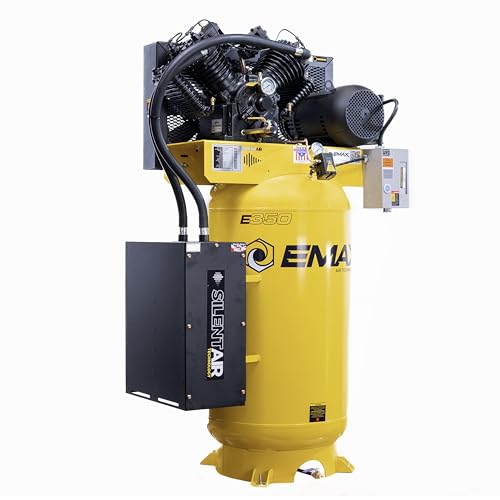






I like the 5 HP 460V 3-phase 80-gallon model — seems ideal for our shop’s three-phase feed. Quick question: has anyone tried running one of those in a facility that sometimes drops to single-phase? Is there a simple workaround or is it a no-go without a phase converter?
We used a VFD on a similar compressor for a year while waiting for a permanent three-phase feed. It worked well but make sure it’s rated for the motor’s start/load currents. Also, some manufacturers advise checking warranty implications when using converters.
You’ll need a phase converter or VFD to run a true 3-phase motor on single-phase supply. Running direct without one usually isn’t possible. A rotary phase converter or an online VFD sized for the compressor motor are common solutions; each has pros/cons (cost vs. efficiency).
I’m really impressed with the 7.5 HP fully packaged Type-30 (2475N7.5-P) you highlighted. I’ve been shopping for something to run a couple of continuous-use lines and the ‘fully packaged’ extras sound like a time-saver.
A few questions from someone who isn’t an installer:
1) How difficult is the initial setup? Would an electrician + a compressor tech be enough?
2) Any tips on reducing vibration/noise? My shop is attached to the main building and Mrs. Bennett will complain if it’s loud 😅
3) Is the onboard automatic drain reliable long-term or should I still plan on manual checks?
Also — price is high but if it saves downtime, might be worth it. Has anyone run one daily for years?
Mrs. Bennett will survive if you bribe her with coffee ☕️ but seriously — acoustic foam panels on the wall near the compressor cut perceived noise by a lot. Also rotate the compressor schedule (if possible) so it doesn’t run constantly during sensitive times.
I run a similar Type-30 daily in my small fab shop. Installer did the hookup in a morning. The automatic drain was fine for a year — after that I cleaned it out and now do a quick visual every 2 weeks. Vibration mounts + rubber mat under the feet helped a lot.
Good questions, Laura. For that fully packaged 7.5 HP you’ll typically need an electrician to wire the 230V single-phase and a tech to hook up the air lines and check mountings. The packaged units usually include vibration pads and a built-in drain — they help, but I’d still schedule periodic manual checks once a month for peace of mind. For noise, place it on a concrete pad and consider an isolation platform or a simple acoustic barrier if sound is an issue.
Nice roundup — helped narrow choices for a small production line. Quick poll for experienced folks:
– Which would you pick for a 2-person production run that needs steady air but not top-tier industrial power?
I was leaning toward the packaged 7.5 HP for reliability, but maybe the 5 HP packaged model is enough and saves money? Thoughts on energy usage vs. output? I’m torn between upfront cost and running costs.
Also consider a timer-controlled compressor schedule and decent receiver sizing — sometimes adding more tank capacity fixes short high-demand spikes without a larger motor.
For a 2-person production run, the 5 HP packaged 1-phase is often the sweet spot — lower upfront and running costs, simpler installation, and still plenty of capacity for steady light-to-moderate use. If you expect to expand or run multiple heavy tools simultaneously, step up to the 7.5 HP. Energy usage scales with load, so match compressor size to realistic peak demand rather than theoretical maximums.
If your duty cycles are moderate, 5 HP should be fine. Monitor PSI drops during peak operations for a week (if you can borrow one) and you’ll know if you need more.
I ended up buying the 5 HP packaged (2475N5FP) for my small woodworking shop and the automatic tank drain is a game-changer.
Pros: quieter than my old unit, low-oil protection saved me once, and the packaged extras really cut down install time.
Cons: heavier than expected and needed a forklift to place it onto our platform 🙈
A couple of things to think about if you’re considering it:
– Make sure your breaker and wiring are sized correctly for 230V 1-phase.
– Check clearance for service access on the side with the oil fill.
Would recommend for anyone who wants less maintenance hassle.
Sophie — how long have you had it running? Any signs of the automatic drain clogging with heavy shop humidity?
Aaron: had it ~10 months. The drain once collected a tiny sludge ring but a quick flush fixed it. Nothing major so far.
Great to hear, Sophie. Thanks for the practical tips — the service clearance point is often overlooked. Good call on checking breaker sizing before delivery.
I almost bought the same one. Sophie, did you get the optional extended warranty? Worth it for peace of mind?
Thinking about the gas wheelbarrow model (SS3J5.5GH-WB) for remote landscaping jobs.
I’ve had weird experiences with gas compressors over the years — they start great for a season, then seem fussy. The article mentions some reliability issues; can anyone share concrete maintenance tips?
A few specific things I’m curious about:
– Best oil change interval for the Honda engine under heavy use?
– Fuel stabilization tips for seasonal storage?
– Do pontoons (wheelbarrow design) hold up on rough terrain?
Thanks! I travel to sites without power so portability is a must, but I need something that won’t be in the shop every weekend for fixes.
Priya, one more thing — consider carrying a small fuel filter and inline primer. Saved my crew from a midday breakdown once. 🙂
I had one on a landscaping crew. We did oil changes every 75 hours and used a stabilizer during winter. The engine started fine after storage as long as we drained the carburetor. Terrain: avoid really rocky sites, the wheelbarrow frame gets banged up if you’re dragging it over big stones.
Good points, Priya. For that gas model: change oil every 50-100 hours under heavy use (check the Honda manual for exact intervals), run fuel stabilizer if you leave gas in the tank for more than a month, and drain the carb if storing long-term. The wheelbarrow-style pontoons are robust but check mounting bolts frequently — vibration loosens them over time.
If you can, keep a spare spark plug and air filter in your truck. Saved us multiple times in remote jobs. Also, tie a simple shock strap around the frame to reduce rattling — cheap fix but works.
I second the carburetor drain tip. If you forget, ethanol-blended fuels gum up the works. Proper winterize and you’re golden.
The two-stage 7.5HP (2475N7.5) rated to 175 PSI caught my eye — anyone using that pressure for sandblasting or heavy-duty pneumatic tools? I’m curious about duty cycle and cooldown times between long jobs.
I use a 2-stage like that for bead blasting. It keeps up fine but you do need a large receiver and to watch duty cycle. Let it rest every 30-45 minutes on heavy blasting sessions and keep an eye on oil temp. Also a good aftercooler helps.
The Twin-Stack 2 HP portable unit seems perfect for weekend projects. Heavy but durable — sounds like my kind of tool. I’m a bit worried about the weight though; anyone hauled one up a ladder? 😅
Also: how loud are these compared to small electric models? I don’t want to annoy the neighbors.