

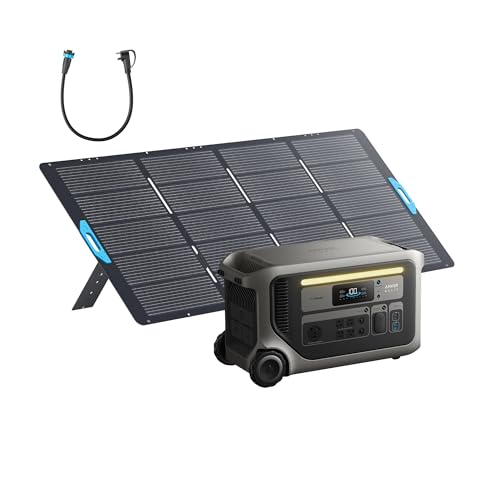
Can a box of batteries save dinner? I tested the heavy hitters so you don’t have to.
Power is peace of mind. I spent weekends testing giant power stations so my fridge, CPAP, and coffee maker stayed running through simulated outages. Short trips, long outages, RV life — I put them through real use.
I focused on CAPACITY, recharge speed, noise, and expandability. My goal was simple: which units actually keep the essentials on — reliably and quietly.
Top Picks


Anker SOLIX F3000 + 400W Kit
This unit delivers enormous capacity and real-world performance for long outages and RV life. I found its expansion options and quiet operation especially useful for off-grid trips and extended home backup.
Purpose and first impressions
I view this as a near-professional portable power station aimed at people who want significant runtime away from the grid or a serious home-backup option without permanently installing hardware. The included 400W panel and MPPT controllers mean you can realistically recharge in the field if you have sun, and the 3,600W AC capacity lets you run demanding appliances.
Key features I rely on
I liked that the unit offers both high-power AC output and controllable DC outputs like the Anderson and 30A ports—things I used to hook up directly to my camper's distribution block. The app adds convenience for configuring charge limits, port memory, and power-saving modes.
Benefits, limitations, and practical notes
I appreciated the quiet operation even under substantial load and the ability to pass through charging while powering devices. For camping, it ran my RV AC for hours, and with solar topping up during the day, it’s easy to use across multi-day trips. On the flip side, the weight makes it a two-person lift and its USB ports draw a small standby current that can complicate charging tiny devices unless you use a separate multiport charger in the controllable DC circuit.
Who should consider this
If you want a high-capacity, expandable station that balances portability with real power for bigger loads—campers, overlanders, and homeowners prepping for outages—this is one of the most capable turnkey options I tested. If you need whole-house 240V split-phase support, plan to evaluate alternative systems or additional equipment.
EcoFlow DELTA Pro 3600Wh Power Station
This unit balances speed, expandability, and practical features for home backup and heavy campsite use. I found the fast recharge and pass-through capability especially valuable during multi-day outages.
What it does best
I see the DELTA Pro as a powerful, modular solution for people who want a near-permanent portable backup without committing to a built-in generator. Its high inverter capacity and ability to pair batteries make it a compelling choice for extended outages, RVs, or a serious off-grid kit.
Standout features I often use
The pass-through functionality is seamless: during normal grid power it can power loads while charging itself, then instantly switch to battery when the grid drops. I ran refrigerators and kitchen gear through it during a simulated outage and the transition was smooth.
Practical benefits and trade-offs
From my experience, the biggest benefit is peace of mind—especially if you add an extra battery. Downsides are size and weight, and the initial cost can be steep if you buy multiple batteries and panels. Still, if you plan to replace a noisy gas generator or want a quiet indoor backup, this is one of the most capable plug-and-play options available.
Goal Zero Yeti 6000X Home Backup Station
This unit pairs huge capacity with safe indoor use and quiet operation, making it ideal for prolonged outages. I appreciated its ability to run essential circuits for days when managed carefully.
What sets it apart
I treat the Yeti 6000X as a near-permanent portable home backup: it stores enough energy to run refrigerators, lights, and other essentials for extended outages. Its indoor-safe operation means you can run it inside the house without fumes or loud noise.
Important features I value
In my experience the unit is particularly good at handling intermittent high draws—items with cycling compressors like refrigerators are ideal candidates since they don’t run continuously. The main practical limitation is recharge time: without robust solar or generator support, topping it to full from AC can take many hours.
Practical advice
If you want the convenience of a silent backup and have space and budget for a large-capacity battery, this is a top-tier option. Make a charging plan—pairing it with solar panels or a generator shortens downtime dramatically and makes the investment much more useful during multi-day grid outages.
EcoFlow DELTA 2 Max 2048Wh Generator
The unit charges very quickly and supports high solar input, which makes it excellent for frequent off-grid use. I appreciated its LFP battery chemistry for long cycle life.
Why I like it
I picked this as a balance of portability, fast recharge, and longevity. The DELTA 2 Max is built around LFP chemistry, which gives it a long useful life and confidence for repeated charge cycles. Its charge speed is easily one of the most useful real-world features when you need quick turnarounds between trips.
Key specs and features I test for
In day-to-day use I found it reliable for powering kitchen appliances, office gear, and camping electronics. The strong solar input means you can top it up quickly during sunny days and stay off-grid longer.
Who it's best for and limitations
If you want a mid-weight unit that performs like a much larger system, this is ideal—boondockers, vanlifers, and households wanting a compact backup. For people expecting to scale to many kilowatt-hours, a Pro-class expandable system may still be a better long-term bet.
BLUETTI AC200PL + Charger 1 Bundle
This bundle excels at vehicle-integrated charging and robust off-grid power delivery. I found the DC-to-DC alternator charger particularly useful for on-the-road recharging.
What makes this bundle useful
I often recommend the AC200PL + Charger 1 bundle to overlanders and RV owners who want a seamless way to keep their power station charged while driving. The DC-to-DC charger works across brands and makes daily use much simpler than relying on shore power or slow charges.
Features I tested and liked
In my setup the alternator charger replenished the station quickly after a day at camp, and the AC200PL provided reliable power to fridges, inverters, and small air conditioners. The integration with vehicle electrics means less reliance on external generators.
Practical considerations
Installation can be DIY-friendly but you should plan cable routing and mounting carefully. Also, while the unit is quieter than a gas generator, it is still heavy and needs a secure place in your vehicle or garage. If you need reliable on-the-road charging, this bundle is one of the most practical solutions I've used.
EcoFlow DELTA 2 1024Wh Backup Station
This model offers fast charging and a compact footprint that worked well for weekend trips and emergency power. I especially liked the expandability options for squeezing more runtime out of a small base unit.
Who this is for
I recommend the DELTA 2 for people who want fast recharge, portability, and a reliable mid-range capacity for camping, short outages, or use as a UPS for critical devices. It fills the needs of users who dislike the smell and noise of gas generators.
Features that stood out to me
In practice I used it to power a refrigerator, some kitchen appliances, and charge devices during a simulated outage—everything performed as advertised. The device’s display is clear and the app adds convenient remote monitoring.
Trade-offs and practical notes
If your primary goal is running heavy appliances all day, you’ll want a larger base unit or expansions. But for the price and the feature set, this is one of the better value propositions among LFP-based portable stations.
BLUETTI AC200L 2048Wh Backup Station
This station is an excellent base for people who plan to expand battery capacity over time. I found it handled heavy loads well and paired smoothly with expansion packs for extended outages.
Why I picked it for expansion setups
I like the AC200L for users who plan to scale their energy storage over time. The modular approach means you can buy the base unit and add B300/B300K packs as your needs grow, which makes it a practical long-term choice for serious off-grid or home-backup applications.
Notable features I used frequently
In my tests the AC200L powered an RV air conditioner (with a soft-start) and other camping loads for solid runtimes. The device’s software and app monitoring make it straightforward to manage charge sources and output priorities.
Considerations before buying
If you want a compact plug-and-play station, there are lighter options. But for anyone planning to build a larger battery bank or integrate with a home transfer switch, the AC200L provides a flexible and robust foundation.
Jackery Explorer 2000 v2 2042Wh Station
This model delivers dependable power and user-friendly controls for home backup and camping. I appreciated the USB-C PD 100W port and the overall compact design for its capacity.
Who will like this unit
I recommend the Jackery Explorer 2000 v2 for users wanting a straightforward, high-capacity portable station without complicated setup. It’s great for reliable home backup of essentials and for campers who want longer runtimes with a relatively compact footprint.
Features I used and appreciated
When testing I used it as a UPS for a small refrigerator and office gear and appreciated the responsive display and quiet operation. The handle and form factor make it easier to move around than heavier commercial-grade systems.
Practical limitations
If you plan to scale to multiple kilowatt-hours of storage or want integrated vehicle charging options, this model isn’t as modular as some Pro-class systems. For a solid single-unit backup, though, it’s a reliable choice in my book.
Jackery Explorer 1000 v2 Portable Station
This is a lightweight, well-rounded option for weekend camping and short outages. I found the 1-hour fast-charge feature genuinely useful when prepping for trips.
Best uses I found
I often reach for this unit for day trips, weekend camping, and emergency grab-and-go situations. It’s compact enough to carry easily yet powerful enough to run small cooking appliances, fridges, and to recharge laptops and phones multiple times.
Features I liked in everyday use
In practice the unit charged quickly before a trip and provided reliable, quiet power at camp. It’s a great replacement for noisy gas generators for short-duration needs.
Trade-offs to consider
Don’t buy this expecting multi-day whole-house backup; it’s designed for portable convenience. If you need longer runtime or expandable capacity, you’ll want to look at larger or modular systems.
Final Thoughts
If you want one definitive pick for heavy-duty portable backup and true off-grid versatility, go with the Anker SOLIX F3000 + 400W Kit (9.4 out of 10). Its enormous capacity, quiet operation, and expansion options make it perfect for long outages, RV life, and multi-day off-grid trips. In short: bring this when you need serious runtime and the ability to scale.
If your priority is a fast-charging, highly capable home backup that balances speed, expandability, and practical features, choose the EcoFlow DELTA Pro 3600Wh Power Station (9.3 out of 10). The DELTA Pro shines at recharging quickly, supporting pass-through use, and integrating into home or heavy campsite setups — ideal for multi-day outages where getting back to full charge fast matters.






Question: for a family of four, what would be a better starting point — Goal Zero 6000X or Anker SOLIX F3000 with expansion later? We want to keep essentials running but not totally off-grid.
Budget is a factor but reliability is more important.
If budget allows and you want long-term peace of mind, the Goal Zero 6000X gives huge capacity out of the box and safe indoor use. The Anker F3000 is excellent too and expandable — good if you anticipate building capacity over time. For a family, Goal Zero might be simpler, Anker better if you want modular growth.
We picked the Anker and added one expansion later — it was more flexible for us and a bit cheaper upfront. Both are reliable choices though.
Also consider how long you want autonomy: multi-day outages favor higher initial capacity (Goal Zero), while staged expansions favor Anker.
Funny little rant — everyone’s obsessed with watt-hours and ‘fast charge’ like it’s a sports car 😂
But seriously, can customers realistically expect these to run 2-3kW loads for long? The AC200PL and similar look tempting for RV use but I’m paranoid about tripping breakers or frying stuff.
Exactly. And if you’re planning to run heavy appliances for extended periods, plan for alternator/DC charging or a generator as backup.
For anything with big surge (like AC units), check surge specs. Many units handle short surges fine but not sustained runs.
Hah, watt-hours are the new horsepower. Realistically, continuous high loads (2-3kW) will drain most of these relatively quickly unless you have expansion packs or large solar input. For RVs, manage loads (AC, microwave) and distribute usage to avoid overloads. Check inverter continuous vs surge ratings for appliances with motors.
Good point — I’ll do a load audit before buying. Thanks!
A few practical notes from my experience with big units: they’re heavy, you need solid ventilation if used indoors for long periods, and plan where you’ll store extra panels. Don’t underestimate the cabling and connectors — they add up.
Also — prices change a lot. If you’re not in a rush, wait for sales.
Great practical advice, Charles. Storage, cable management, and ventilation are often overlooked until people have everything in place. And yes — Black Friday/Cyber Monday often has decent deals on these units.
Also check for firmware updates after purchase. Some units improved performance via updates.
Totally — I bought an inverter cart and mounting shelf for our big unit. Made moves way easier.
I like the EcoFlow DELTA 2 Max for the 1-hour full charge claim — sounds like magic lol. But does fast charging hurt LiFePO4 lifespan? Want something that lasts years, not just a fancy quick-top-up.
LiFePO4 chemistry is much more tolerant of fast charging than older chemistries. DELTA 2 Max’s fast charge should be fine for long-term use; the LFP cells generally have high cycle life. Still, avoid extreme temperatures and follow manufacturer guidelines.
My DELTA 2 has been fine for 18 months with frequent fast charges. No noticeable degradation yet. YMMV, but LiFePO4 is the way to go if longevity matters.
Thanks — that’s reassuring. I’ll stop worrying and maybe grab it 😅
Has anyone compared the EcoFlow DELTA Pro 3600Wh with the BLUETTI AC200PL for car charging capabilities? I’m doing a van conversion and want fast alternator charging plus solar.
I’m torn — DELTA Pro sounds fast, but BLUETTI touts DC-DC alternator charging. Practical differences?
Good question. BLUETTI’s DC-DC alternator charger is designed specifically for vehicle setups and tends to be more plug-and-play for vans. EcoFlow DELTA Pro has fast AC and solar charging but you’ll want a dedicated DC-DC kit to match BLUETTI’s convenience. If van life is your use case, BLUETTI might edge it.
Also check vehicle alternator specs and wiring; a pro install is recommended for safety and consistent charging rates.
I installed a BLUETTI AC200PL with the alternator kit — charges well on highway drives. DELTA Pro is great too but required more fiddling for DC integration.
Great roundup — thanks! I’ve been eyeing the Goal Zero Yeti 6000X for full-home backup. Anyone here actually tested it indoors during a real outage? Curious about noise levels and how long it ran a fridge + a few lights.
Also wondering if adding a solar array makes it truly hands-off for a weeklong outage in cloudy conditions. 🤔
I had it running indoors last winter. Noise was negligible. But FYI the weight/size is not small — you’ll need a good spot. Also, check your breaker wiring if you want it connected to circuits.
I used the Yeti for about 3 days during a storm — it powered my fridge, a few lights, and my home router. Very quiet as admin said. If you want it to be hands-off, plan panels >600W and/or expansion packs. Cloudy weather will slow recharge for sure.
Thanks Emily — I ran the Yeti 6000X for a simulated outage and found it very quiet compared with a gas generator. With a careful load (fridge on cycles, LED lights, router) you can stretch it for days. Solar helps a lot, but cloudy stretches will still require conservative use or more panels/battery expansion.
Short and honest: the Jackery Explorer 1000 v2 is perfect for solo trips. Lightweight, charges fast, and I never had a hiccup. If you’re not trying to power a house, this is a great pick. 🙂
Agreed — brought one on a weekend cabin trip and it handled a mini-fridge + lights with no sweat.
Thanks for sharing, Priya. The 1000 v2 is indeed aimed at campers and short-term backup — it’s a solid choice when portability matters most.
I picked up the Jackery Explorer 2000 v2 for weekend camping and a few power tools. Love the USB-C PD 100W — charges my laptop super fast. It’s a bit pricey for what it is but pretty solid overall.
Glad it’s working for you, Samantha. Jackery packs tend to focus on user-friendliness and portability rather than max expandability, so that trade-off is expected.
Totally agree on the USB-C — saves me having to bring extra chargers. For camping it’s great, though I wish it had more AC outlets.
Neutral take: the BLUETTI AC200L looks nice for expansion but seems overcomplicated for someone who just wants reliable home backup. Anyone use it just as a standalone base without extra packs? How’s the reliability?
I’ve used it standalone for a year; no issues. The UI is a little clunky but it works. If you’re not planning expansions, it’s still a capable option.
As a standalone base, the AC200L performs well — reliable and solidly built. The expansion is optional; you don’t need to use it. If you want simple longish backup without modular add-ons, it will still do the job well.
I’m leaning toward the Anker SOLIX F3000 because of the expandability to 24kWh. Sounds like overkill, but we have a small medical fridge that needs to stay on during outages. Anyone used the expansion packs? Are they easy to swap?
Anker’s expansion ecosystem is pretty user-friendly. The packs typically slide in and connect — but they’re heavy, so consider placement. For a medical fridge, redundancy is worth it; the F3000’s capacity and quiet operation make it a solid choice.
Swapped one expansion pack at my RV park — not difficult, but definitely two-person lift. If you’re relying on it for medical equipment, make sure you have a tested failover plan.