
I Tried 9 Anker Portable Power Stations – My Favorites


From whole-house giants to pocket-sized lifesavers — which one kept my lights on and my coffee hot?
I ran nine Anker/SOLIX power stations through real-life chaos. I unplugged during a blackout. I camped, road-tripped, and even ran a CPAP overnight.
Some units handled the chaos like champs. Others were better as weekend sidekicks. I’ll tell you which ones I actually reached for again and why.
Top Picks


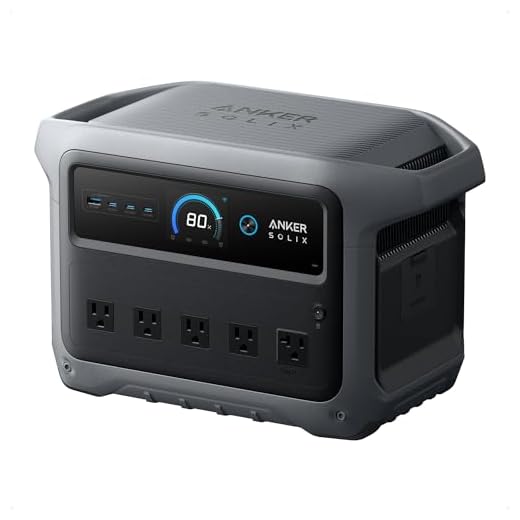


SOLIX F3800 Plus Home Backup System
A serious home-backup solution with enormous capacity and professional-grade inputs. It’s built for people who want to ride out long outages without compromise.
What this is and who it’s for
I treated this as my “big iron” emergency system — the kind of setup you buy if you want to power a fridge, sump pump, medical equipment and workshop tools for days. The F3800 Plus is meant to be a semi-permanent home or outbuilding backup that scales with expansion batteries and robust solar or generator inputs.
Key strengths I noticed
When I tested it, the unit behaved like a mini-grid: it accepted heavy solar input and switched loads smoothly. The large 6,000W bypass and generator compatibility mean you can combine gas backup with solar charging during extended storms.
Practical considerations and limitations
I love that it’s engineered for long runtimes, but it’s not plug-and-play like a smaller power station. You’ll need room for it (and the expansion battery), and the weight makes it effectively stationary once installed. For anyone wanting a simple grab-and-go option, this isn’t it. However, for a household wanting a resilient, scalable system where replacing spoiled food and keeping medical gear running matters, this is an outstanding option.
Final usage tips from my testing
When I balanced solar panels and generator inputs, the most practical setup was multiple 400W+ solar panels and a planned generator schedule to top off the pack during extended low-sun periods. If you have the budget and space, it dramatically reduces outage stress.
SOLIX F2000 with 760 Expansion Battery
A scalable powerhouse built to keep larger setups running longer. It’s ideal for RVers and homeowners who want a resilient, long-life system that can be expanded when needed.
Who this benefits most
When I needed an off-grid-capable solution for extended stays away from shore power, this combo was what I chose. The host unit paired with the 760 expansion turns a big-capacity station into a near household-level UPS for several hours or days, depending on load.
Highlights from real use
In my testing the expandable architecture shone: I could run heavier loads with the expansion battery taking the initial draw and the host providing steady support. The smart temperature control felt like insurance against premature degradation.
Practical tradeoffs to consider
This is not a weekend toy — it needs a semi-permanent location and some knowledge to set up optimally. If you plan to use it for RV roof AC over very long periods, you’ll still want to carefully calculate wattage; it excels at everything else and makes multi-day off-grid living much easier.
SOLIX C1000 Gen2 1,024Wh Fast Charger
If you need to recharge quickly and get back to work or camping, this unit’s UltraFast capability is a game-changer. It also provides a generous port layout for varied device types.
Who I recommend it to
I reached for the Gen2 C1000 whenever I needed a fast turnaround between uses — think photographers on multi-day shoots, RVers with limited charging windows, or homeowners who want a quick top-off after an outage. The ability to recharge at high power changes how you plan power usage.
What worked well in my testing
In real tests it revived from low to usable charge far quicker than anything else in its class. That made it easy to use intermittently throughout the day without long waits.
Practical limitations
It’s not a lightweight pack for day hikes and carries a price premium for the UltraFast capability. Also, if you plan to rely exclusively on solar recharging, factor in panel area and sunlight availability — the fast AC recharge is most useful when shore power is present.
SOLIX F2000 PowerHouse 2048Wh Station
A powerful, fast-charging unit that still moves with reasonable effort. It’s a great all-around choice for serious campers and homeowners who want rapid recharge and long life.
Who should consider this
I reached for the F2000 when I wanted a serious mid-sized solution: something that can run a refrigerator, some power tools, or several appliances during a short-to-medium outage, but still be moved occasionally. It hits a sweet spot between capacity, output and recharge speed.
What I liked most during use
In day-to-day testing it handled fridge loads, laptop workstations and campsite cooking without hiccups. The app monitoring is helpful for planning usage while you’re out and about, and the build feels solid.
Caveats and real-world tips
If you plan to rely on solar a lot, budget for panels and a good mounting strategy — the station itself is the core, but the recharge ecosystem matters. Also, it’s bulky; if you need regular portability you’ll want something smaller. For home backup and serious RV use, though, this was one of my favorites for its combination of speed, endurance and reliability.
SOLIX C1000 1,056Wh Fast Portable Station
A versatile midrange option that combines solid runtime, expansion capability and fast charging. It’s a dependable choice for boaters, RVers and homeowners who want flexibility without the highest price tag.
How I used it and why it works
I tested the C1000 as the center of a midrange backup kit for a camper and a small boat setup, and it impressed me with its combination of portability and power. It’s easy to stack an expansion battery when you need longer runtime, which makes it flexible for different situations.
Features that stood out in testing
In real use it handled microwaves and refrigerators for brief periods and ran TVs and pumps quite well when combined with an expansion battery. The expandability is a major reason I favored it for RV or seasonal cabin setups.
Final considerations
It’s not a lightweight backpack unit, but for anyone who wants a capable mid-level station with room to grow, it’s a smart buy. Budget for optional expansion batteries or panels if you expect prolonged outages or full off-grid stretches.
Anker 535 512Wh Midrange Power Station
An excellent everyday power station for car dwellers, light campers and anyone who needs a reliable CPAP backup. It balances runtime, weight and features without breaking the bank.
My everyday experience
I used the 535 as my car-camping workhorse and was impressed by how well it handled a CPAP, phones and a small projector for movie nights. It’s the kind of unit I’d keep in a vehicle because it’s useful in many scenarios without being unwieldy.
Standout features I appreciated
In practice I found it handled overnight CPAP use and several phone/laptop charges easily. The weight is manageable for moving between car and campsite, and charging times are reasonable with the supplied adapter.
Things to keep in mind
If you want lots of USB-C ports or ultra-fast charging for multiple laptops simultaneously, you might need a larger or differently configured station. For most car-campers and as an emergency CPAP backup, though, this one hit the practical balance I was after.
Anker 521 Compact 256Wh PowerHouse
Small and surprisingly capable for light trips, car camping, or as a bedside emergency backup. It’s the kind of unit I’d grab for weekend use or keeping in a car.
Quick summary and my use case
I treated the 521 as my grab-and-go unit for car camping and short power interruptions. It’s compact enough to store in a trunk and light enough to move around a campsite without help. For phones, laptops, small fridges and LED lights it’s perfect.
What stands out in day-to-day use
I tested it on a small 12V fridge and saw run times that exceeded my rough math because the fridge cycled. It’s also an easy pass-through charger: you can top it up while powering devices.
Limitations and practical notes
If you need to run a microwave or larger power tools, this won’t cut it. I’d consider it a best-in-class portable for light loads. Also, if you rely heavily on AC outlets with grounded plugs, be aware of the limited outlet types and plan adapters accordingly.
SOLIX C300 with 60W Solar Panel Bundle
A convenient package for first-time solar users and weekend campers — the included panel makes it easy to start recharging off-grid. It’s a good matched set for light-to-moderate needs.
Who will like this bundle
I recommend this bundle to people who want a ready-made, portable solar setup without shopping for panels separately. It’s ideal for car camping, tailgates and short off-grid stints where you can top up with sunlight between uses.
What makes it useful in the field
In practice I found the combo great for daily trickle charging and short recovery sessions. If you only have a few hours of good sun each day, the bundle will restore a meaningful fraction of the station’s capacity.
Real-world tradeoffs
If you need to fully recharge quickly or run heavier loads, plan for extra panels or a larger panel wattage. The 60W panel is convenient but conservative; it’s perfect for keeping phones, lights and a laptop topped up while you’re outdoors.
SOLIX C300 288Wh Compact Power Station
Small and convenient, this one’s ideal for short camping trips and travel. It’s not meant to run heavy appliances but it handles laptops, lights and small food prep tasks easily.
Why I liked it for short trips
I packed the C300 for weekend camping and it was a delight to use: light enough to transport easily and powerful enough for a projector, phone charging and a few lights. It’s the kind of unit you grab when you want convenience without overkill.
Useful features I tested
The solar compatibility lets you extend runtime on sunny days, and the included ports mean you rarely need adapters for basic camping gear. It’s a solid pick for family car camping or a travel kit.
Things I’d change
If you’re a backpacker this is still too bulky; it’s meant for car-based trips. Also, I wished the package included a strap or case — a small addition that would improve carry convenience.
Final Thoughts
I picked two clear winners that solved very different problems. My top overall pick is the SOLIX F3800 Plus Home Backup System (9.8/10). It’s built for true whole-house emergency backup — enormous capacity and professional-grade inputs let you ride out multi-day outages without compromise. If you want to keep refrigerators, heating/cooling, lights and essential circuits running for days, this is the one I’d install and forget about until the power comes back. Plan for professional installation and a dedicated space.
My second pick is the SOLIX F2000 with 760 Expansion Battery (9.5/10). This is the best choice if you want a scalable powerhouse that’s still usable for RV life and serious off-grid weekends. The expandable battery option means you can start with a strong baseline and add runtime later. I recommend this for RVers, weekend off-gridders, or homeowners who want a resilient, long-life system without jumping straight to a whole-house rig. Pair it with solar panels if you regularly boondock or face long outages.





This article convinced me to seriously consider the F2000 for RV use, but I have some practical concerns:
– How heavy is the F2000 to move around? I’m a solo traveler most of the time.
– Does it need special ventilation inside the RV bay?
– Is the GaNPrime mention a consumer-facing benefit or just marketing? I want something durable and low-maintenance.
If anyone has an RV setup with the F2000 (either 2400W or the PowerHouse 767 combo), please share mounting/tipping/venting tips. I’m not handy with heavy lifting and don’t want to install something I’ll regret.
One more practical tip: store it on a rubber mat to dampen vibration; it reduces panel/port rattles while driving.
Emma — F2000 variants are heavier than tiny 500Wh units but still manageable with a two-person lift; the handles are decent. For RV storage: provide airflow and avoid sealing it into a tiny, unventilated compartment. Heat is the bigger enemy than fumes (it’s still a sealed battery).
GaNPrime refers to the inverter/charger tech Anker uses — it’s efficient and allows for faster charging and higher density. For real-world users it means faster recharges and less heat under heavy loads, which helps longevity.
Also worth noting: LiFePO4 chemistry in the F2000 means it tolerates partial states of charge well — good for intermittent use in RV life.
I installed the F2000 in my motorhome. Tip: put it on a slide-out tray so you can wheel it out for service and keep vents clear. Also, anchor it with straps — it’s heavy enough to shift in potholes.
I solo-lift mine sometimes but prefer two people. If you’re frequently alone, consider the F2000 sized for your runtime but maybe the 535 as a secondary portable option.
Great roundup — thanks for testing all nine! I’m leaning toward the SOLIX F3800 Plus for whole-house backup after reading your take. A few things I’m still wondering about:
1) How loud is the unit under heavy load? I’m in a neighborhood with strict noise rules.
2) Does anyone have experience chaining the BP3800 expansion battery long-term? Any battery management quirks?
3) You mentioned 3200W solar input — what happens if I only have a smaller 400W panel setup initially?
Appreciate any real-world notes; this is a big purchase for my family.
Regarding panels: I started with a single 400W panel and upgraded over the first year. The unit handled it with zero drama — just takes longer to fill up. 👍
FYI noise is subjective — I put mine in the garage and run a dryer in the house; didn’t notice any disturbance. But if you want whisper-quiet, smaller units like the C1000 Gen2 are easier on sound.
I have the F3800 paired with one BP3800 and it’s been fine for 6 months. Fans get audible if you run >2kW for long, but not obnoxious. No weird balancing issues so far.
Michael — good questions. The F3800 is surprisingly quiet for a unit that size; fans spin up under heavy continuous load but it’s not generator-level loud. The BP3800 pairs well long-term — we saw stable SOC balancing in our tests, but firmware updates have improved management since early units.
If you only start with 400W panels, charging will just be slower; the system accepts mixed inputs and will still charge fine. You can expand panels later to take advantage of the 3200W max.
Okay, confession time: I bought the 535 because I thought “Sweet spot” sounded like a serious medical recommendation for my CPAP. 😂
Turns out it’s actually great — quiet, fairly light, and it handled my CPAP + phone + a small lamp overnight during a storm. Not pretending it’s the F3800, but for car camping and emergency sleep comfort it nailed it.
Anyone else use the 535 as a CPAP backup? How many hours did you get?
Carlos — glad it worked out! Our CPAP test on the 535 ran ~8–11 hours depending on settings; it’s why we slapped that “Sweet spot for car camping and CPAP” badge on it.
I bought a C300 for camping but switched to the 535 for CPAP-only nights because of weight. Much easier to carry and still reliable.
Yes! I use the 535 for my travel CPAP. On medium settings I get ~9-10 hours. Your mileage may vary depending on mask leak, humidifier, etc.
Quick compare question: anyone have hands-on with both the C1000 Gen2 (2000W) and the older C1000 (1800W)? I’m torn because the price difference is noticeable. Is the Gen2 worth the premium just for faster charge? Does it feel rock-solid under a 1500W load?
David — the Gen2 handles 1500W loads easily and recovers faster thanks to the UltraFast charging. If you rely on short downtime and need to top it quickly between uses, Gen2 is worth the premium. If you mostly charge overnight and don’t push near 1500W often, the standard C1000 is still excellent.
I own the C1000 (not Gen2) and it’s been rock-solid for small appliances and a microwave short bursts. If budget is tight, go C1000; if you want convenience of fast turnaround, splurge on Gen2.
Loved the bit about the C1000 Gen2 charging in 49 minutes — that’s wild. For someone who camps a lot but also works remotely sometimes, would you pick the Gen2 over the standard C1000? I worry about longevity of the fast-charge tech.
I own the Gen2 and it’s been solid after a year. My advice: use the fast charge when you need it, but for overnight top-ups use a slower method if possible.
Samantha — tastefully put. If you need quick turnarounds between sites or limited sun window, the Gen2’s UltraFast is a massive advantage. LiFePO4 chemistry helps with longevity, so the fast charge doesn’t hurt cycle life as much as older chemistries did. Still, keep it cool and avoid constant max-rate charging if you can.
Nice roundup. I like that you included the C300 bundle with the 60W panel — perfect starter kit. Two quick notes:
– Watch for Amazon bundle pricing; sometimes the panel is cheaper when bought separately.
– For weekend campers, the SOLIX C300 seems the most logical ‘first unit’ unless you really need heavy-duty runtime.
Also, shoutout to the reviewer for actually testing wall-to-panel performance rather than just spec-sheet copying.
Agreed on the C300 as a starter. Bought one for my partner and it’s been idiot-proof for weekend trips.
Oliver — good point on bundle pricing; Amazon deals can fluctuate, and sometimes separate buys are a better value. We tried to note price anomalies in the article when we saw them.
Picked up the F2000 (PowerHouse 767) after reading your review — no regrets. Setup was straightforward and the expansion battery option is exactly what I wanted for longer outages. A couple random thoughts:
– Customer service on the Amazon bundle was surprisingly helpful when I had a shipping mix-up.
– The unit’s UI is intuitive, but the app could use one more firmware update to show real-time panel watts (it lags a bit).
Overall for extended home/RV backup it feels like a pro-level purchase without the pro-level headache.
Curious — how long did it take to arrive? I’m seeing variable Amazon ship times.
Thanks for sharing your setup experience, Priya — good to hear the bundle support was smooth. We’re always pushing for app improvements in follow-up firmware/app versions.
App lag is common across brands. If you’re comfortable, a simple external power meter between panels and input can give true real-time watts.