


Big lungs or smart lungs — which compressor will keep your shop running and your electric bill sane?
You can’t run a shop without steady air. I once watched a production line halt mid-shift because the compressor couldn’t keep up. Awkward, expensive, and totally avoidable.
I hunted through ten rotary screw units so you don’t have to. I focused on RELIABILITY, efficiency, and real-world fit — nothing flashy, just gear that works when you need it. I’ll tell you which ones I’d buy and why.
Top Picks





50HP 460V High-Capacity Rotary Compressor
I consider this 50HP unit a top pick when you need sustained high-volume air — about 220 CFM — for heavy production. It’s engineered for robust 24/7 service and large-scale operation where reliability matters most.
Overview
This MechMaxx 50HP rotary screw compressor is built for industrial-scale compressed-air demands — think multiple production lines, large paint operations, or continuous manufacturing. With around 220 CFM and 50 HP, it’s not an off-the-shelf garage unit; it’s an industrial utility.
Why it’s a top pick
I frequently recommend this class of compressor for facilities that can’t tolerate downtime and need consistent pressure at high volumes. Expect to pair it with separate dryers, filtration, and a well-designed compressed-air distribution network.
Deployment and cost considerations
If your facility demands high-capacity, continuous compressed air, this 50HP model is a leading candidate I’d shortlist for reliability and raw throughput.
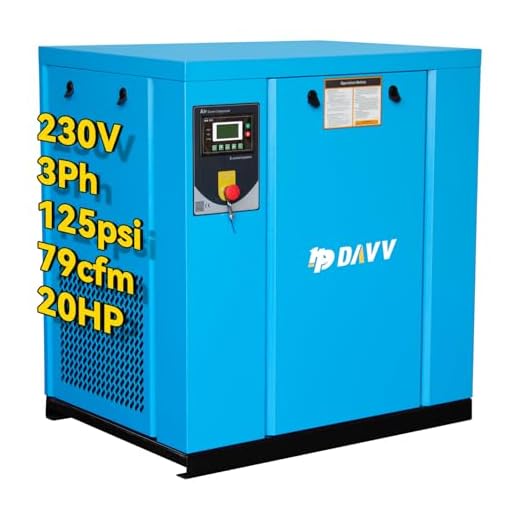
20HP Variable Speed Rotary Screw Compressor
I like that this variable speed drive (VSD) model adapts motor output to air demand, saving energy during lower loads. It’s a smart pick for shops with fluctuating cycles or where power efficiency matters.
Overview
This 20HP VSD rotary screw compressor is focused on energy efficiency: the motor speed adjusts to match compressed-air demand rather than running at full speed constantly. For shops with variable use patterns, that can translate into real electricity savings.
Key advantages
I’ve found VSD units pay back over time in facilities that don’t run at full load continuously — for example, a paint shop or mixed tooling environment where demand is intermittent.
Limitations and deployment tips
If you want to reduce operating costs and avoid oversized constant-speed operation, this is one of the most practical 20HP choices I’d recommend.
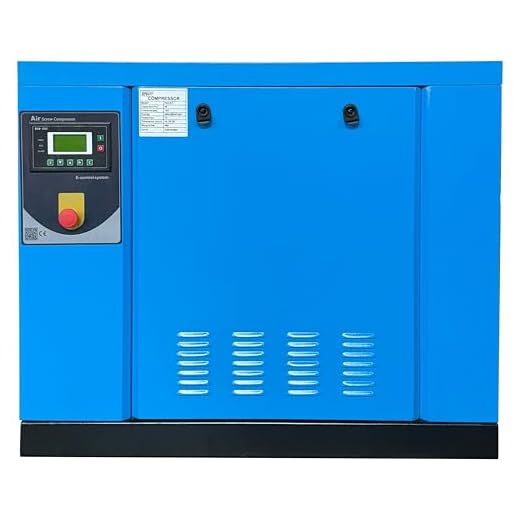
20HP 230V Industrial Rotary Compressor
I like that this 20HP model is built specifically for 230V three-phase environments, delivering near-80 CFM for manufacturing and shop needs. The combination of quality components and serviceability makes it a dependable choice.
Overview
This MechMaxx 20HP 230V model is a purpose-built, industrial-grade rotary screw compressor that fits shops with 230V three-phase power. It delivers around 78 CFM and includes features aimed at durability and reliable continuous service.
Standout features
I recommend this for production floors or fabrication shops where many pneumatic points run simultaneously. The straightforward design makes scheduled maintenance predictable and technically accessible.
Limitations and installation notes
For facilities with 230V three-phase infrastructure, this is one of the cleaner, well-engineered 20HP options I’d advise considering.
20HP 460V Heavy-Duty Rotary Compressor
I see this as a dependable 20HP workhorse with quality components and digital controls for repeatable performance. It fits industrial environments with 460V three-phase power and steady airflow needs.
Overview
This 20HP 460V MechMaxx model is built for industrial settings that run heavier duty compressed-air operations. It offers a near-80 CFM output and includes features aimed at durability, like rugged bearings and motor protection.
Highlights and benefits
I usually recommend this style of compressor for facilities such as fabrication shops or production lines where 460V three-phase power and robust components are standard.
Practical advice
For operations that already have 460V service, this model strikes a solid balance between reliability and control features.
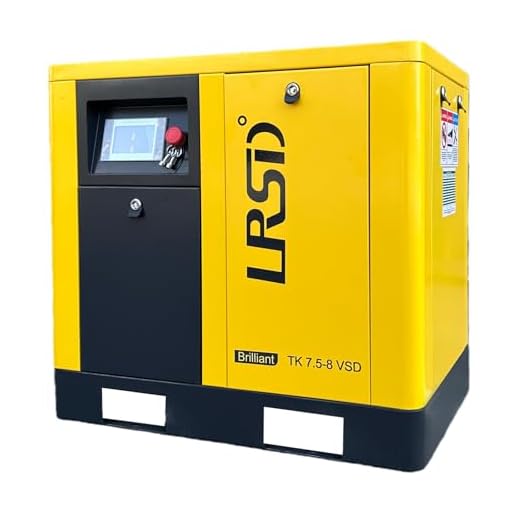
10HP 480V VFD Rotary Screw Compressor
I appreciate the quieter operation and touchscreen controls that make monitoring straightforward. The VFD helps with energy efficiency and thermal protection, which is great in busy auto shops or paint booths.
Overview
This LRSD 10HP VFD-equipped compressor is tailored to automotive shops, paint booths, and service environments that need cleaner, quieter compressed air with modern control convenience. The VFD reduces unnecessary motor runtime and improves thermal management.
What I like about it
I often recommend VFD-equipped 10HP units to garages and body shops because they lower energy costs and reduce thermal stress on the motor during stop-start cycles.
Practical considerations
This is a well-rounded choice when you want the benefits of VFD control paired with a compact 10HP footprint for medium-duty applications.
20HP 3-Phase Rotary Screw Compressor
I found this unit balances raw airflow with a reasonable price and commercial-grade build. It suits workshops that need steady 80+ CFM at up to 125 PSI without overpaying for extra features.
Overview
I see this 20HP 3-phase unit as a pragmatic choice for businesses that need substantial continuous airflow—roughly 80–81 CFM—without the premium cost of top-tier brands. The compressor is built on a heavy iron frame and designed for stationary, base-mount installation.
Key features and what I like
I like that it arrives with common service components (spin-on oil/air separator style) which makes routine maintenance straightforward. For shops running air tools and spray booths concurrently, the steady pressure and volume are a practical match.
Limitations and practical notes
If you need a cost-conscious industrial compressor that covers heavy intermittent and continuous duty, this one delivers a lot of capacity for the money. I’d recommend planning for proper mounting, vibration isolation, and quieter room placement if possible.
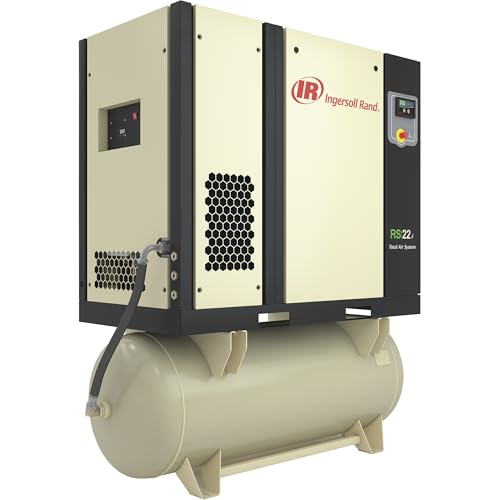
7.5HP VSD Compressor With 30-Gallon Tank
I really like the two-in-one mobility and variable-speed efficiency — you get tank storage plus the benefits of an inverter-driven screw. It’s great for mobile shops, maintenance crews, or small facilities that appreciate lower sound and better efficiency.
Overview
This 7.5HP VSD rotary screw compressor combines inverter-driven efficiency with a 30-gallon tank and casters for mobility. I view it as a flexible unit for smaller shops, on-site service techs, or maintenance teams that need good efficiency and portability.
Why it works well
I’ve seen this style of unit perform well when crews move between jobs or when a shop needs a quieter, more energy-conscious compressor for intermittent tasks like brad nailing, small spray jobs, or cleaning.
Practical tips and limits
Overall, this is my go-to recommendation when you want the economy of VSD plus the practicality of an onboard tank and some mobility.
15HP 230V 3-Phase Industrial Compressor
I appreciate the heavy-duty motor protection and durable bearings that extend service life. It's a solid pick for small manufacturing cells or service bays that need reliable 45 CFM at moderate pressure.
Overview
I consider this 15HP MechMaxx model ideal for small-to-medium industrial uses that require consistent 45 CFM and up to 116 PSI. The unit focuses on component quality — motor insulation, sealed construction, and branded bearings.
What stands out
Those features reduce unexpected downtime. The digital and automatic shut-off functions make it user-friendly for operators who want hands-off control during batch operations.
Practical considerations
Overall, I recommend this if you value component quality and longer service intervals; if you just need a basic compressor for light shop tasks, a simpler model may be more cost-effective.
10HP 230V Rotary Screw Compressor
I find this 10HP compressor is convenient for workshops needing 30–35 CFM without taking up too much footprint. It’s a straightforward, accessible option for steady light industrial use.
Overview
This 10HP 230V rotary screw compressor is aimed at light industrial shops, small production cells, and professional garages that require clean, steady compressed air without the bulk of larger compressors. It’s a value-focused design with practical features like pressure detection.
Notable features
For technicians doing air brushing, drilling, or smaller spraying operations, the unit’s quieter profile and included filtration are big pluses. It’s not a luxury product, but it’s engineered to cover common light-to-moderate shop tasks reliably.
Caveats and recommendations
In short, I’d recommend this for small shops or as a backup/secondary compressor in larger facilities where moderate steady airflow is required.
10HP Fixed-Speed Industrial Rotary Compressor
I see this fixed-speed 10HP model as a simple, dependable choice for shops that prefer mechanical simplicity over advanced electronics. It delivers consistent 33–39 CFM at common industrial pressures with minimal bells and whistles.
Overview
This 10HP fixed-speed rotary screw compressor aims at shops that value rugged, low-complexity machines. It’s an industrial-grade unit built to push steady airflow at common shop pressures without the maintenance overhead of inverter electronics.
Key attributes
In my experience, fixed-speed machines are easier for on-site techs to service when compared to VSD units, but they cost more in electricity over time if your demand varies.
When to choose this unit
It’s a pragmatic pick when uptime and simplicity rank above the potential energy savings of variable-speed systems.
Final Thoughts
I recommend two clear winners based on use case: for heavy continuous production, pick the 50HP 460V High-Capacity Rotary Compressor. I picked it because it delivers roughly 220 CFM and is engineered for 24/7 service — perfect for large industrial lines, heavy blow-off, central plant duty, or any facility with steady high-volume demand and 460V three-phase power.
For shops with variable cycles or where energy savings matter, go with the 20HP Variable Speed Rotary Screw Compressor. I like its VSD for adapting motor output to demand — that means meaningful energy savings, gentler starts, and longer component life in auto shops, paint booths, or mixed-use workshops that don’t run at full load all day.
If you need a 230V option for similar mid-range capacity, consider the 20HP 230V Industrial Rotary Compressor as a runner-up. But if you want my two top picks to cover most real-world needs, it’s the 50HP 460V for nonstop industrial duty and the 20HP VSD for smart, efficient shop use.





This was super helpful! I wanted to highlight something for people choosing between fixed-speed and VSD (variable speed drive) units:
– VSDs (like the 20HP VSD model you included) cut energy costs a lot when duty cycles fluctuate.
– If your demand is constant and near the compressor’s rated CFM, fixed-speed might be simpler and cheaper to maintain.
– Also, smaller shops might prefer the 7.5HP mobile VSD for flexibility.
How often should filters/oil separators be replaced on these rotary screws? I’m scheduling maintenance and want to avoid downtime.
I keep spare spin-on separators for HPDAVV units — quick swap gets you back up fast. Costs add up but beats production downtime.
One more tip: track oil analysis if you can — it’s a great predictive maintenance tool for screw compressors.
Agree with admin. For a dusty shop I changed filters every 3-4 months and the separator every year. Saved a lot on unexpected failures.
Good summary, Olivia. Typical intervals: check air/oil separator and filters every 6 months under regular usage; replace around 12 months or sooner if heavy duty. Always follow the manufacturer’s manual — operating environment (dust, moisture) can shorten service life.
Also check whether the unit has an accessible maintenance panel; some of the cheaper ones are a pain to service.
Lol I kinda want to buy the 50HP just to flex, but realistically my shop runs a couple of nail guns, a paint cabinet, and a sandblaster intermittently.
Real talk:
– For intermittent, light-to-medium loads I’d pick a 15HP or 10HP (MechMaxx 15HP or HPDAVV 10HP) and avoid the energy bill from a 50HP.
– If you have multiple simultaneous processes, step up to 20HP or VSD 20HP.
– Fixed-speed is simpler; VSD saves money long-term if loads vary.
Anyone else made this kind of mistake (buying too big)? 😂
Totally — a bigger tank saved me from upsizing once. Less cycling and smoother air output.
Good anecdote, Noah. Short-cycling is a real issue for oversized compressors. Sizing based on peak simultaneous demand + some headroom (10-20%) is best. VSD helps if you can’t predict duty cycles.
Yep, bought oversized once — short-cycling killed seals and led to higher oil carryover. Learned to match peak demand rather than max possible demand.
Also remember tank volume matters. A larger receiver can buffer intermittent peaks so a smaller compressor can still handle short bursts without cycling.
Great roundup — thanks for putting this together.
I’m leaning toward the MechMaxx 50HP (M50AC460) for a small production line because of that 220 CFM rating, but a few things worry me:
1) My shop has a 460V 3-phase feed but the panel is older — anyone had issues with starting currents or needing soft starters for these big MechMaxx units?
2) Also curious about noise levels during continuous 24/7 runs — is this loud enough to require extra soundproofing?
3) Finally, does Amazon usually include installation support or is that on the buyer?
Any hands-on advice appreciated!
Good questions, Sarah. For the 50HP MechMaxx you’ll often want a soft starter or a VFD if your supply or upstream equipment is sensitive — it reduces inrush and mechanical stress. Noise: industrial 50HP screws are noticeable; check for models with integrated sound enclosures or plan a small acoustic room. Amazon typically sells the unit but not installation; you’ll need a certified electrician/mechanic for hookups and commissioning.
We installed a MechMaxx 50HP last year — used a soft starter as admin suggested and it helped a lot. Noise was manageable with a simple enclosure and rubber mounts. Installer charged extra for commissioning, FYI.
Also, check if your insurance or local code requires vibration isolation pads. Saved us headaches later. 👍
I really liked the writeup on the 7.5HP movable VSD unit — the combo of a tank + casters seems perfect for my mobile service van. Quick question though: anyone tested one of these in cold weather? My vans run in winter and I’m worried about condensation/freezing in the tank. Typos aside, good article 🙂
I’m torn between the MechMaxx 20HP (230V model) and the HPDAVV 20HP (208-230V) — both give ~80 CFM. The MechMaxx seems to have better serviceability, but the HPDAVV price is tempting. Does anyone have a direct comparison for parts availability and long-term reliability?
MechMaxx often emphasizes serviceability and OEM parts; HPDAVV models can be cost-effective but check local parts sources. If uptime is critical, MechMaxx might be worth the premium for easier service. If you’re on a tight capex budget and have good local mechanics, HPDAVV can be a smart choice.
Thanks for including the MechMaxx 15HP — that 45 CFM at 230V seems like a nice middle ground for our small manufacturing cell. A couple of things I’d love to see in future roundups: warranty length comparisons, typical lead times on Amazon, and whether units ship oil-filled/charged. Also, call out whether oil separators are spin-on vs serviceable — makes a difference for maintenance planning.
Nice roundup! I’m interested in the LRSD 10HP VFD unit for my spray booth — the low-noise claim is attractive. Does the VFD help with ramp-up times for paint booths (less pressure spikes when tools are toggled)? Also, are there recommended condensate traps for paint applications? I’m new to compressors 😅
Right — for spray painting, pair the compressor with an adequate dryer and particulate filter. Condensate traps and a proper oil/water separator matter to avoid contamination. LRSD’s touchscreen VFD helps tune pressure bands to reduce frequent cycling.
VFD definitely smooths out pressure changes and reduces spikes. For paint booths, add aftercoolers and proper air dryers (desiccant if needed) — condensate traps with oil/water separators are needed.
Quick shout: for anyone buying HPDAVV 10HP or 20HP, are spare parts (like spin-on oil separators) commonly stocked on Amazon or do you need to source from industrial suppliers? Looking to avoid long lead times.
Many generic spin-on separators and filters are available from third-party suppliers, but OEM parts sometimes take longer. If uptime matters, buy critical spares when you purchase the compressor.