


Which crimper do I reach for first? From tiny pins to heavy lugs — here’s why these 10 never let me down.
I trust my crimp tools more than my morning coffee.
They make messy wires behave and keep connections solid when failure isn’t an option. I’ll walk you through the ten I actually use and why each earned a spot in my kit.
Top Picks




Greenlee 6-Ton Indent Crimper (Li-Ion)
I appreciate how light and compact this crimper is for a 6-ton tool — it gets into places other heavy tools can't. The Intelli-crimp feedback and Bluetooth data make it ideal when traceable, repeatable crimps matter.
Why I reach for this when I need accuracy and feedback
I rely on this Greenlee tool whenever I need a high-force indent crimp where repeatability and documentation matter. It's unusually light for a 6-ton crimper, which makes installation in cramped areas far less painful than heavier hydraulic systems. The Intelli-crimp electronics give me confidence that each crimp met the pressure profile I expect.
Key features that matter to me
Those features reduce rework and make it easy to show a quality-control trail when I’m working on critical cable runs.
Practical benefits and limitations
In practice I like that the tool marks every crimp so I can go back and identify connectors quickly if I need to. The Bluetooth telemetry is genuinely useful when I want to log a batch of crimps. That said, budget-conscious buyers should note the high upfront cost and future battery/service expenses. If you only do a few occasional crimps, a manual or hydraulic option may be more economical.
DMC AFM8 Miniature 8-Indent Crimp Tool
This DMC AFM8 is my choice when precision matters on small machined contacts. It accepts interchangeable positioners and provides very consistent crimps within its AWG range.
Precision when small margins matter
I reach for the DMC AFM8 whenever I’m doing small AWG work (32–20) where contact geometry and repeatability are crucial. It’s a well-made tool with a strong pedigree; in my experience the crimp quality is consistently excellent and comparable to high-end OEMs.
Why it stands out
This is the kind of tool that pays for itself when you’re avoiding rework on delicate connector assemblies.
Practical considerations
If you only occasionally crimp small contacts you might balk at the price, but for professional electronics repair, aerospace, or high-quality custom harnesses this is a top-tier tool. I did notice minor grip slippage on one unit I tested — a small ergonomic issue but not a crimping performance problem.
TEMCo TH0012 Dieless Crimper 8–4/0 AWG
This model gives a wide adjustment range and consistently clean crimps on battery and welder cables. It’s durable and straightforward to operate, which makes it a reliable shop staple.
Where this crimper shines for me
I use the TEMCo TH0012 when I need a single tool to cover everything from 8 AWG up to 4/0 battery and welder cables. The dieless design is great when you want to avoid swapping dies and the adjustable ram makes it easy to set consistent crimp depth across different lug types.
Build and day-to-day features
The solid mechanical feel gives you confidence that the tool will last a long time. Many users comment that the crimps are excellent right out of the box — I found the same.
Practical notes and caveats
My only nitpicks are that the base can tip if you don’t steady it during the crimp and it’s heavier than small hand tools. Those are minor compared with the convenience of one dieless crimper covering a broad spectrum of cable sizes. For van builds, solar installs, and heavy wiring work it’s a very defensible purchase.
TEMCo TH1818 Dieless Hydraulic Crimper
This is my go-to when I need a hydraulic dieless option for a range of lug sizes without fussing with dies. It delivers strong, clean compressions and is easy to use in tight spaces.
Why I like a dieless hydraulic crimper
I bought the TEMCo TH1818 because I wanted a hydraulic tool that didn’t require swapping dies for every lug size. It handles a broad AWG range up through large MCM sizes and puts out strong, repeatable crimps. The hydraulic action reduces the physical effort and gives a much more consistent compression than hammer or manual pliers.
Practical features I use most
The compact footprint matters when you’re working under a dash or in a small compartment. For marine battery cables and heavy gauge connections it’s an excellent mid-price solution.
Tips and limitations
My tip is to test-crimp on a scrap lug and mark your settings — once you dial it in the crimps are consistent. It isn't as light as hand-indent crimpers, and if you need fully portable handheld pliers for very small terminals this is overkill. But for reliable heavy crimps without dies, it’s a great balance of price and performance.
JRready ACT-M309 Adjustable Indent Crimper
This JRready ACT-M309 strikes a good balance for medium-current wiring tasks from 8–18 AWG. The curve-propulsion mechanism and ratchet control make the crimps consistent and robust for marine, solar, and power applications.
Why this fits many industrial uses
I use the ACT-M309 when I need a dependable adjustable indent crimper for mid-current wires and terminals. The four-indenter, curve-propulsion design helps ensure the contact is compressed uniformly and the cycle-controlled ratchet stops each cycle at the same point for consistent results across many crimps.
Features and applications I appreciate
If you need a robust, hand-operated tool for consistent crimps in mid-current work, this is a strong candidate.
Things to consider
It isn’t a replacement for dieless hydraulic tools on very large lugs nor is it suitable for extremely fine micro-pin crimps — it’s squarely in the mid-current, heavier-connector niche. If your workload is production-level, consider complementing it with a pneumatic setup or dedicated gauges to verify crimp quality over time.
JRready YJQ-W2Q Pneumatic Four-Indent Crimper
If you’re building a semi-automated bench or want a pneumatic equivalent of the handheld NEW-ASF1, this JRready body is a smart choice. Note that you must buy positioners, valves, and mounts separately.
Why pneumatic can make sense
I recommend the JRready YJQ-W2Q when you need throughput and consistency beyond what a hand tool gives. The pneumatic body replicates the four-indent action and is ideal for a workstation where you add a pressure regulator, mount, and positioner — the result is much faster, repeatable crimps.
What you'll need and how it performs
Once configured properly with the right downstream components, it reduces variability and operator fatigue dramatically compared with hand crimping.
Limitations and setup notes
It’s important to understand that the package is the tool body only — factor in the extra purchases and setup time. If you want a turnkey pneumatic crimp station, budget for the regulator, valve, fixture, and appropriate positioners, but if you already have some shop pneumatic infrastructure this body integrates nicely.
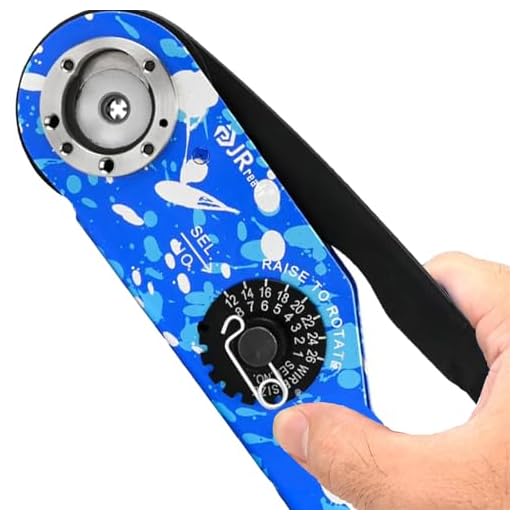
JRready NEW-ASF1 M225201 Hand Crimper
This JRready hand crimper follows M22520/1-01 specs and works well for 12–26 AWG aviation and electric contacts. It gives precise, repeatable crimps at a lower cost than many OEM equivalents.
A practical M22520/1-01 compatible option
When I needed a hand crimper for solid contacts in the 12–26 AWG range, this JRready tool was a great find. It follows the M22520/1-01 (AS22520) standard and accepts a variety of positioners, so it’s flexible across many aviation-style terminals.
What I like about using it
It’s easier to handle than some larger, heavier crimpers and gives a confidence-inspiring crimp with minimal fuss.
Practical caveats
My only real wish is that a quick-check gauge was included to monitor wear over time — that’s an easy aftermarket fix. Overall, this is a sensible, cost-effective alternative to more expensive brand-name crimpers when you want spec-level crimps without the brand premium.
iCrimp IWD-16 Deutsch 4-Way Crimper
This IWISS/iCrimp tool offers great value and consistently good crimps for Deutsch contacts. I’ve used it on small marine and lighting jobs where reliability and weatherproof connections matter.
Why hobbyists and marine folks like it
I frequently recommend the iCrimp IWD-16 to anyone doing custom lighting, marine wiring, or aftermarket LED installs. The kit-level offering and adjustability make it easy to produce consistent, weather-tight crimps once you set the height and force to match your contacts.
Practical features I use most
Users often report excellent results for small projects and repairs. I like that it scales from hobby to light professional use without costing a fortune.
Small shortcomings to watch for
The included pin removal tool is sometimes limited and won’t remove every locking feature on connector shells, so you might need a specialized extractor for some assemblies. Also, expect to do a few test crimps to find the right settings for your particular contact and wire.
GIANNEER Deutsch 4-Way Indent Crimper
This little tool is a solid value for Deutsch and Amphenol closed-barrel terminals in the 14–18 AWG range. It’s compact, precise enough for automotive work, and easy to carry to the field.
What this tool is best at
I keep this GIANNEER crimper in my mobile kit for quick Deutsch/Amphenol repairs. It’s built for closed-barrel terminals in the 14–18 AWG range and produces consistent crimps with its 4-way indent, 8-impression design. The ratchet keeps you from under-crimping and it’s light enough to use on a ladder or engine bay.
Features I regularly use
For hobbyists and techs who need a reliable, inexpensive Deutsch solution, this covers most on-vehicle and equipment repair needs without the bulk.
Real-world notes and limitations
In my experience it’s excellent for small- to medium-sized wiring jobs, and the price-to-performance ratio is hard to beat. If you plan to crimp larger gauge terminals, battery lugs, or heavy-duty cable, you’ll need a different tool — this one simply isn’t sized for that work.
Knoweasy KN-16 Deutsch Closed-Barrel Crimper
This Knoweasy tool gives very good crimps for 14, 16, and 18 AWG Deutsch contacts at an attractive price. It’s a handy addition to an electronics or automotive toolbox for occasional to moderate use.
Why I keep one in my toolbox
I bought the Knoweasy KN-16 because I wanted a dedicated crimper for Deutsch contacts without spending a fortune. For wiring repairs on cars, trailers, or small equipment it delivers clean, reliable crimps and it’s light enough to use in awkward positions.
Useful features and performance
For DIYers and mobile technicians it strikes a solid balance between price and capability. Expect to spend a few minutes dialing in a good setting, but once you do the results are consistent.
Limitations to be aware of
If you need to crimp larger gauge wires or heavy battery lugs, this isn’t the right tool. For continuous professional production environments you’ll want a more heavy-duty, spec-certified option, but for automotive and hobby work it’s excellent value.
Final Thoughts
If you want one tool that covers the most ground for professional work, I reach for the Greenlee 6-Ton Indent Crimper. It’s surprisingly light and compact for a 6-ton tool, gets into tight spots, and its Intelli-crimp feedback plus Bluetooth logging make it perfect for jobs where TRACEABILITY and repeatable crimps matter (field service, telecom, electrical diagnostics).
For precision work on small contacts, the DMC AFM8 Miniature 8-Indent Crimp Tool is my go-to. It’s the best choice for 32–20 AWG machined contacts, accepts interchangeable positioners, and gives extremely consistent crimps—ideal for aerospace, electronics bench work, and any job where tiny, repeatable crimps matter.
Quick pro tip: if your main task is heavy battery or welder cables instead of repeatable traceability, grab the TEMCo TH0012 dieless crimper — it’s the rugged, all-round choice for big conductors.





The iCrimp/IWISS tool has been my go-to for Deutsch connectors on marine lighting. Compact, reasonably priced, and the crimps hold up well in salt spray. I also keep a GIANNEER as a backup when I’m in the field and can’t afford to be without a tool.
Thanks for sharing, Olivia — that’s exactly the use case we had in mind when recommending the iCrimp. Glad it’s held up for marine conditions.
Bought the Knoweasy Deutsch crimper as a cheap spare for the truck, and honestly — it worked fine for a few months but then the ratchet started slipping. For casual field use it’s fine tho.
I guess you get what you pay for. Looking for something slightly more robust but still not $300+. Any recs?
Sorry to hear that, Daniel. If you want more durability without going full pro-grade, the GIANNEER is a good mid-budget step up from Knoweasy and still way cheaper than OEM. For more ruggedness, the IWISS/iCrimp tends to have better long-term reliability.
Thanks — I’ll check the IWISS. Appreciate the honest replies. 👍
Yeah I had the same experience with a cheap tool — the ratchet pawl wore out. Switched to an IWISS and it’s been trouble-free for two years.
Anyone compared the DMC AFM8 to the JRready NEW-ASF1 for really tiny 32–26 AWG crimps? I mostly do small avionics connections and want the most consistent pinch. The review says DMC is best for 32–20 AWG, but price is higher. Thoughts?
This was a fun read — thanks! A few thoughts/questions:
1) I’m tempted by the JRready pneumatic unit for a small production run, but the note about buying positioners/valves separately made me pause. How much extra are we talking realistically?
2) Does anyone use the JRready pneumatic in a semi-automated bench? Is it finicky or pretty plug-and-play?
3) Also, can the pneumatic body accept the same positioners as the hand crimper style NEW-ASF1?
I ask because I’d love to speed up output without throwing a huge budget at OEM gear. Price/performance matters here 😅
You can save by buying generic positioners in bulk from aftermarket sellers. They work fine for non-critical aerospace work.
I set up a small bench with the JRready pneumatic last year. It took a little time to dial in pressure and stroke, but once set it’s consistent. Expect some upfront fiddling, but it’s worth it if volume is moderate.
Good questions, Liam. Typical extras (positioners, quick-connects, mounting brackets) can add a few hundred dollars depending on brand and how many gauge sizes you need. The JRready pneumatic bodies are usually compatible with standard M22520 positioners, but double-check the listing/specs. In our experience they’re not overly finicky — you’ll want a regulator and lubricator inline for best reliability.
Positioners compatibility varies by maker — I recommend emailing the vendor with the positioner part numbers to confirm fit before buying.
One more tip: if you need traceability, plan for a way to log crimp cycles — the pneumatic bodies themselves won’t give you that unless you add sensors or a controller.
Short note: the JRready NEW-ASF1 was a great budget alternative for my avionics hobby projects. It isn’t OEM-perfect but gives repeatable results for 12–26 AWG and saved me a lot of cash. No drama, just crimps.
Good call mentioning the TEMCo TH0012 dieless crimper. I’ve used one for battery cables and large welder leads — solid tool and the 5-year warranty gave me confidence to buy it for the shop.
Pros: wide range, simple operation.
Cons: it’s heavyish, but that comes with the territory.
I picked up the TH0012 for my trailer wiring upgrades — the crimps stayed put through harsh weather. Warranty service was prompt when I needed a replacement seal.
Glad it worked well for you, Sophia. Agreed on the weight — it’s a shop tool more than a grab-and-go field unit, but the durability and consistent crimps are worth it for heavy cable work.
Interesting list. Quick question for those who’ve used both the Greenlee EK6 and the TEMCo TH1818 hydraulic dieless:
– I often work inside cramped panels and under dashboards. The article says Greenlee is ‘best for tight spaces and diagnostics’ — but the TH1818 claims ‘best compact hydraulic crimper for lugs’. Which one is actually easier to use in very tight spots? Any experience comparing the two?
Also, how do the compression strengths compare on larger lugs — is the Greenlee overkill or underpowered vs the TEMCo?
If possible, rent or test both before buying. Fit and feel are very personal, and head geometry matters more than specs sometimes.
Great comparison question, Andrew. For very tight, awkward locations the Greenlee EK6IDLX11 typically wins because it’s designed to be compact and has a slimmer head profile. The TEMCo TH1818 is compact for a hydraulic dieless, but it’s still bulkier than the Greenlee. For raw compression force on very large lugs the TEMCo dieless series can sometimes produce stronger-looking compressions simply because of the hydraulic advantage, but the EK6’s 6-ton capability and repeatability make it excellent for most lug sizes encountered in industrial and field service work. If you frequently work in deep, narrow panels go Greenlee; for shop work with large lugs, TEMCo is a solid pick.
I’ll echo admin — Greenlee for tight spots. I use a TH1818 in the shop for big cable and the Greenlee for field panels where access is miserable.
Thanks everyone — super helpful. Sounds like I might keep both in rotation depending on the job. 👍
Love this roundup — especially the bit about the Greenlee EK6IDLX11. I’ve been hunting for a crimper that actually fits into the cramped panels at my shop.
– The Bluetooth/data logging feature sounds amazing for QC.
– Anyone know how long the Li-Ion battery lasts under medium use?
Also curious if the Intelli-crimp feedback is loud/obvious enough on a noisy bench. Worth the price? 😊
The feedback helped me catch a bad positioner once — saved a rework. If you do diagnostics and need repeatability, it’s worth it.
I have one at my shop — battery lasted a whole day for me too, but if you’re doing continuous production you’ll want a spare pack. The Bluetooth is handy for logging, but setup took me a few tries (app is a bit clunky).
If your bench is loud, bring earbuds 😉 — kidding. But seriously, the LED is easy to spot even in daylight-lit shops.
Thanks, Emily — great question. Battery life on the EK6IDLX11 varies by workload, but in our tests a fully charged pack handled a full day of intermittent crimps (about 6–8 hours). The Intelli-crimp feedback is a distinct click plus an LED indicator — not super loud, but noticeable even in a busy shop. If you need something extremely tactile, some techs prefer the manual ratchet feel, but for traceability the Greenlee is hard to beat.