


Which press will make your drill bits sing — and which will make you question your life choices?
Big drills, small mistakes. I’ve ruined one too many workpieces chasing the right speed and setup, so I went shopping for machines that actually make drilling easy. Short setup, accurate holes, less swearing. That’s the goal.
I tested for smooth variable speed, solid tables, and real-world durability. I call out machines that save time, hold alignment, or double as clever combo tools. No fluff — just the presses I’d put in my own shop.
Top Picks

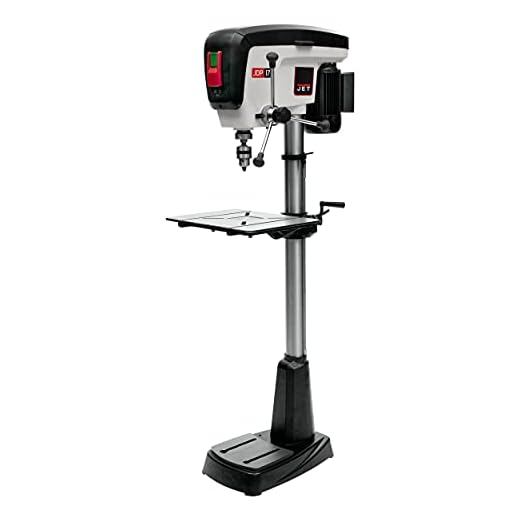
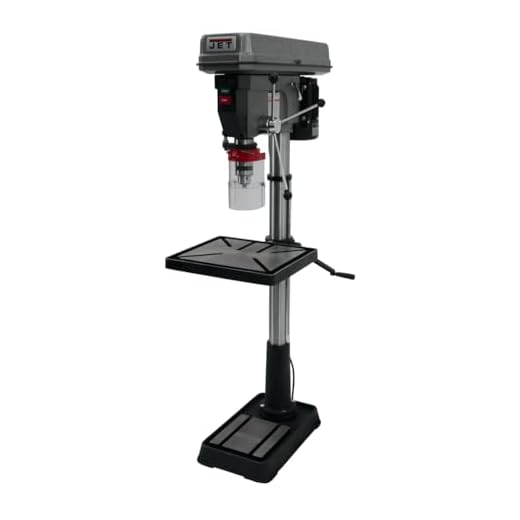

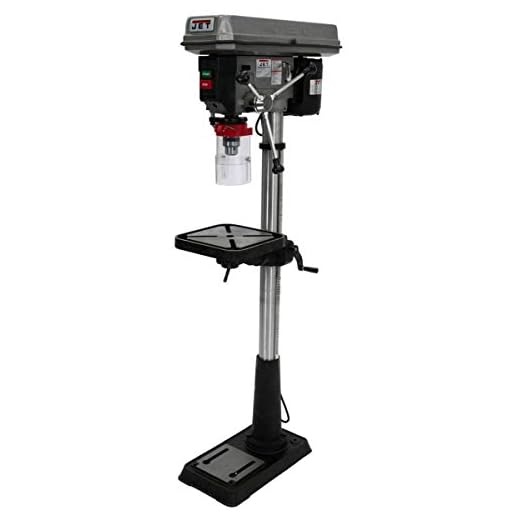

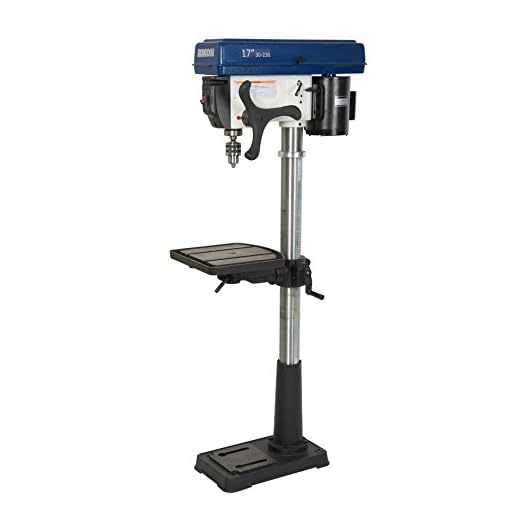


Powermatic PM2800B Variable Speed Press
I love the infinitely variable speed on this Powermatic—it removes belt swapping and keeps workflow smooth. The laser guides and LED worklight make precise layout and drilling much quicker and less fiddly.
Overview
The PM2800B is the kind of drill press I pick when I value smooth, tool-free speed changes and top-tier workshop ergonomics. The variable-speed control means I really do change speeds mid-job instead of avoiding it because of belt hassle.
What stands out to me
In everyday use the variable control is liberating—switching from a slow Forstner cut to a faster metal-drilling operation is just a dial turn. The laser is a handy alignment aid, especially for repetitive jigs.
Benefits, drawbacks, and practical notes
I recommend this press if you want an easy-to-use, precision-focused machine and you’re willing to invest a bit more for convenience and longevity.
JET JDP-17 17-Inch Floor Drill Press
I prefer this 17" Jet for woodworking because of the long quill travel and replaceable table insert. It offers good runout control and a table layout that suits clamps and jig setups well.
Overview
This JET JDP-17 is my top pick when woodworking precision and quill travel matter. The 5" stroke lets me bore deep holes with Forstner bits without constantly adjusting the table, which is a real time-saver.
Why I like it for woodworking
I also appreciate that the T-slots accept woodworking clamps and fences easily—setting up repetitive jigs is straightforward. I keep a set of replacement MDF inserts so I can clamp and drill without worrying about tear-out.
Practical notes and limitations
If you do a lot of bench-top or furniture-style drilling and want a machine that feels purpose-built for wood, this JET is hard to beat in its class.
JET JDP-20 20-Inch Floor Press
I found this press to be rock-solid and capable for large, demanding jobs. It delivers excellent spindle support and a wide speed range, but be prepared for heavy lifting during assembly.
Overview
I view the JET JDP-20 as a workshop workhorse built for longevity and repeatable accuracy. Its 1.5 HP motor and 12-speed pulley system give you a very broad RPM range that handles everything from large Forstner bits in wood to slower metal drilling with cutting oil.
Key features and what they mean for you
I especially appreciate how the machine's mass reduces chatter during long cuts. The spindle support and depth stop system make repeated, deep-hole work less frustrating compared to lighter bench models.
Benefits, limitations, and practical tips
A small practical tip: test-fit any vises or jigs before shipping is complete; the table slot pattern on some units isn't the time-honored standard and may require an adapter plate. Overall, if you want a long-lived, heavy-duty floor drill press and you're OK with the weight and minor finish quirks, this is a solid choice.
Powermatic PM2820EVS 20-Inch Press
I see this as a true production-capable floor press with gear-driven torque and thoughtful accessories like a fence and workstop. It’s precise and stable, though some ergonomic and noise complaints are worth noting.
Overview
The PM2820EVS is a heavy-duty 20-inch floor press designed for shops that demand repeatable accuracy and torque. The gear-drive is the headline: it maintains consistent torque across a range of loads and speeds.
Strengths I rely on
I often use the PM2820EVS when I need to batch-drill identical parts—the included fence and stop greatly reduce setup time. The reversible handles are a small ergonomic detail I appreciated during long runs.
Caveats and real-world experience
If you’re equipping a dedicated production bench and want gear-driven consistency, this Powermatic is a leading option—just plan your shop layout and PPE accordingly.
JET J-2500 15-Inch Floor Press
I find this 15-inch JET to be a practical shop staple that handles metal and wood reliably. It gives good power and a useful 16-speed range for varied tasks with solid build quality.
Overview
This 15-inch JET model is my go-to when I need a no-nonsense shop drill press that won’t eat space or budget. The 3-1/8" quill stroke and 16 speeds make it flexible enough for both metal and woodworking needs.
Features I care about
I like how straightforward the controls are: speed changes are the classic belt/pulley arrangement and table adjustments are intuitive. That simplicity can be a big advantage when you want to focus on the job instead of fiddling with electronics.
Benefits, limitations, and workflow tips
If you want a shop-grade press without stepping into the very heavy / very expensive class, this delivers dependable performance and a sensible balance of features.
Shop Fox W1848 Oscillating Floor Press
I appreciate the oscillating spindle that converts this drill press into a contour sander quickly. For woodworkers who want a compact combination tool, it’s a clever and cost-effective option.
Overview
Shop Fox’s W1848 is the larger floor version of their popular oscillating benchtop models, and I find it most appealing if you want a compact press that doubles as a contour sander. It’s a useful space-saver for small shops that still need both functions.
What it offers
I’ve used oscillating sanding on curved moldings and it reduces the "lap" lines you get with pure rotary sanding. For light production sanding combined with standard drilling tasks, this is a cleverly designed hybrid.
Caveats and practical tips
If you want a multifunction tool and expect to do lots of curved sanding in addition to drilling, this model gives you real utility. If your workload is heavy-duty metal fabrication, though, a dedicated industrial press will serve you better.
RIKON 30-230 17-Inch Floor Press
I see this RIKON as a well-built, straightforward floor drill press that delivers steady performance. It’s a good middle ground for users wanting 1 HP and rack-and-pinion table control without premium pricing.
Overview
The RIKON 30-230 is my recommended choice when you want a dependable 1 HP floor drill press at a reasonable price. It focuses on solid mechanical fundamentals—good motor, sturdy column, and a convenient speed range.
Features I find useful
Users report the depth stop and built-in light are handy additions. I recommend verifying electrical compatibility (230V vs. 115V models) and inspecting the motor operation promptly after delivery to catch any shipping damage.
Practical tips and limitations
For general workshop use—woodworking and moderate metal work—this RIKON offers a balanced mix of performance, durability, and a reasonable warranty.
WEN 4227T 12-Speed Floor Drill Press
I find this WEN unit to be a surprisingly sturdy machine for the money, with a large table and respectable torque. It has mixed quality control reports, but overall it’s a solid mid-range purchase if you follow set-up tips.
Overview
The WEN 4227T is the model I recommend when you need a capable floor press without stepping into the higher-end price bracket. Its large table and generous travel make it a practical general-purpose shop machine.
Features I use most often
What I appreciate is that the machine has a heavy feel—this reduces chatter and helps accuracy. I do advise carefully following the manual during assembly because a few owners ran into a seized motor-release bolt or needed customer support to free the motor for belt changes.
Tips and limitations
For hobbyists and small shops that want a capable, stable press with useful features (laser, large table), the WEN balances cost and capability well—just be ready for a careful initial setup.
Klutch 16-Speed 13in 3/4 HP Press
I recommend this Klutch as an affordable entry-level floor press that covers basic drilling needs. It’s functional and offers decent torque for light shop use, though fit-and-finish and documentation are modest.
Overview
The Klutch 16-speed floor drill press is the option I turn to when cost is a primary constraint but I still want floor-stand capability. It won’t match premium machines in longevity or precision, but for light-to-moderate hobby use it delivers solid performance.
Why you might choose it
In my experience, new owners should expect to spend a bit of time during assembly and perhaps source a missing fastener or two. The small gooseneck work light is a nice touch and the unit performs well for the money.
Practical advice and limitations
If your usage is occasional and you prize value over premium fit-and-finish, this is a solid starter press that will get many jobs done without breaking the bank.
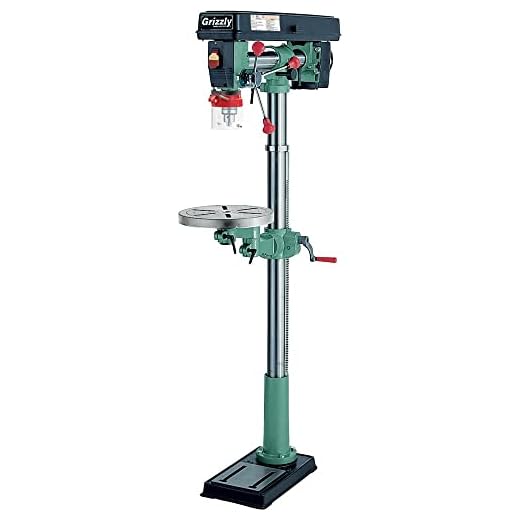
Grizzly G7946 34" Radial Drill Press
I like this radial model for its large 34" swing and pivoting head that lets you drill at odd angles and reach large workpieces. It's a niche tool that shines in layout and fabrication work rather than fine woodworking.
Overview
The Grizzly G7946 is a radial-style drill that I reach for when I need to get a bit into awkwardly positioned or oversized parts. The long swing and pivoting head make it ideal for shop projects where repositioning the work is impractical.
Standout capabilities
I appreciate the radial layout because it reduces the need to flip or reclamp large assemblies. For fabricators or hobbyists working with big sheet pieces or chassis parts, this design speeds up setup.
Practical considerations
Overall, buy this if your workflow involves large, awkward parts or frequent angle drilling; skip it if your tasks demand heavy cutting power or a wide accessory market.
Final Thoughts
My clear top pick is the Powermatic PM2800B Variable Speed Press. I recommend it for most woodworkers and small-shop pros who want the cleanest workflow. Its infinitely variable speed removes belt changes, the laser guides speed up layout, and the LED worklight keeps accuracy high. If you want one machine that cuts setup time and improves hole quality, get the PM2800B.
If you run higher-volume or production work, go for the Powermatic PM2820EVS 20-Inch Press as your second choice. It’s gear-driven for consistent torque, has a fence and workstop for repeatability, and offers the stability you need for long runs. Note the machine is louder and a bit heavier in feel, but that tradeoff buys real precision and endurance for shop or light production use.







Huge fan of the Shop Fox W1848 Oscillating Floor Drill Press — turned mine into a sander/drill combo and it saved me the cost of a separate spindle sander 😍. Great for contours and small furniture parts. Only tip: keep the oscillating mechanism clear of resin build-up if you sand a lot.
Excellent tip about resin — periodic cleaning increases service life. The W1848 is a clever space-saver for woodworkers.
I used 80 -> 120 -> 180 for quick smoothing, then hand-sand fine areas. Works well on curved chair parts.
Love this — I’ve been considering that exact switch for my shop. What grit progression do you use when contour-sanding?
Big fan of the JET 17-Inch Floor Drill Press (JDP-17) — the long quill travel is a game changer for Forstner bits and bigger dowel holes. Runout has been minimal for me. Anyone else use it for jig-heavy woodworking? I’m thinking about a custom fence.
Yes, the JDP-17’s table and quill travel make it ideal for jig work. A replaceable table insert and a T-track fence can make repeatable setups much quicker.
If you make a fence, add a toggle clamp for safety — nothing worse than a piece sliding when you’re mid-drill.
I added an MDF sacrificial fence with a couple of paraloid clamps — works well for repetitive tasks. Quill travel means I can use larger Forstner bits without clearing the table constantly.
Confirmed: the laser guides on the Powermatic 18″ really speed up layout. I used them for dowel jigs and they saved me a bunch of time. Small gripe — the laser housing could use better dust sealing, mine got a little fuzzy after a dusty day.
Overall: worth the premium for the convenience if you value accuracy.
Good to know about the dust — quick wipe-down after dusty ops usually helps. Glad the laser paid off for your jigs!
Mine collects dust too; I mounted a clear plastic shield around it and that helped a lot.
Great roundup — thanks! I’m seriously eyeing the Powermatic 18-Inch Floor Drill Press (PM2800B) for my small shop. I like the infinitely variable speed feature and the laser guides sound awesome.
Question: does anyone regret getting the variable-speed model because of maintenance or repair costs vs a belt-driven model? Also curious about footprint — will it fit comfortably in a 10×10 garage with a workbench nearby?
If you plan to use large Forstner bits, try to leave some extra open space in front for clamping and maneuvering pieces.
Good questions, Claire. Variable-speed motors like the PM2800B usually mean fewer belt adjustments and better convenience — but if the electronic controller fails, repairs can be costlier than swapping belts. For a 10×10 garage, it should fit fine if you keep the bench to one side; allow clearance for the table and chuck removal. Many users put a small mobile base under it for flexibility.
I have a PM2800B in a similar-sized shop. Zero regrets about the variable speed — saves me so much time. Only thing: keep dust off the controller and it’ll be fine. Mobile base is a great idea.
RIKON 30-230 17-Inch looks like a great middle-ground. I’m curious about table size and any common upgrades (fence, LED worklight, dust boot) people add. Planning to do some metal and denser hardwoods.
I added an aftermarket LED and a shop-made fence — both inexpensive and very useful.
The RIKON table is a good size for most hobby tasks. Common upgrades include a T-track fence, an LED light, and a dust collection shroud. For metal, consider a decent coolant or cutting fluid and a slow-speed approach with clamps.
Long-ish post — hope it’s helpful:
I recently bought the JET 20-Inch Floor Drill Press (JDP-20MF) after reading about its heavy-duty capabilities. Assembly was a beast (two friend lifts recommended!), but once set up it’s rock-solid. I used it for metal work and large laminates — spindle support is legit.
Downside: it takes up a lot of floor space and the crate was HEAVY. If you live alone and hate moving gear, budget some extra time or hire movers. Anyone else feel assembly was the worst part?
Ha, I wrestled mine alone and paid for it later. Moral: get help 😂
Thanks for the detailed experience, Jill — that’s exactly the kind of real-world feedback readers need. For solo builders, a mechanical lift or engine hoist can save your back during assembly.
Totally agree — used an engine hoist to position the head on mine. Saved hours and a few bruises.
Assembly was rough for me too. Also double-check all fasteners after the first few hours of use — heavy machines can settle and bolts can loosen.
Trying to decide between the JET 15-Inch (J-2500) and the JET 17-Inch (JDP-17) for a small shop that does both metal and wood. Is the extra size/price of the JDP-17 worth it if I only occasionally need larger capacity?
I have the J-2500 and it’s handled metal and wood fine. If you foresee more frequent big bits, go with the 17″ — otherwise the 15″ is a sweet spot.
If you occasionally need the larger capacity and want better Forstner/Forstner-like performance, the JDP-17 is a solid upgrade. The J-2500 is a great all-rounder at a lower cost if your projects stay smaller.
Anyone else had QC issues with the WEN 4227T? I picked one up because of the price and it feels surprisingly solid, but the pulley alignment was off out of the box. Took an hour to re-align and shim things. Any pro setup tips for this model?
WEN often needs a careful initial setup. Check belt alignment, pulley set screws, and tighten all bolts. Use a dial indicator to check runout if you can — small adjustments go a long way.
Yep — I shimmed the pulley and greased the rack-and-pinion. After that it ran much truer. Not perfect, but good value for the money.
About the Klutch Floor Drill Press (13in 3/4 HP) — it’s super budget-friendly but the documentation is tiny and the fit-and-finish is meh. For light hobby projects it’s fine, but don’t expect precision machine-shop tolerances.
Is it worth getting if you’re a casual hobbyist? Has anyone upgraded the bearings or added a better chuck to squeeze more life out of it?
Thanks — those mods sound doable. Good to know it’s a good learning platform before upgrading.
I swapped the stock chuck for a Jacobs and replaced a couple of bearings. Night-and-day improvement for accuracy.
If you only do occasional drilling, save up for a JET or Powermatic later. But modding the Klutch is a fun weekend project if you’re handy.
For casual hobbyists, the Klutch is a reasonable starter. Upgrading bearings and installing a better chuck can improve accuracy and longevity. Also consider a proper setup and alignment when you receive it.
Assembly anxiety: planning to buy the JET 20-Inch (JDP-20MF). Any tips for solo assembly? I don’t have friends who can lift heavy stuff on short notice. Would renting a hoist or hiring local help be overkill?
Not overkill at all — renting a small hoist or hiring a helper for a few hours is worth the cost to avoid injury. An engine hoist or small shop crane makes head and table installs much easier.
Also: take photos during disassembly if you uncrate in stages. Saved me when I forgot where a washer went 😂
I used furniture sliders to move pieces into rough position and then a hoist for the final lift. Don’t rush the bolt torque sequence.
Engine hoist worked great for me. Also lay out all hardware first and read the manual fully before starting.
Grizzly radial drill: for when your project thinks it’s a battleship. 😆
Seriously though, the 34″ swing and pivoting head are brilliant for big steel plates and odd angles. It’s completely unnecessary for my dowel-making phase but I still want one.
Pro tip: don’t buy this unless you have a dedicated space. It will become the center of your shop’s gravitational field.
Ha — accurate. The Grizzly radial is a niche but indispensable tool for large fabrication. Plan the space and foundation before buying.
If you work on large workpieces regularly, it’s worth it. But for furniture or small parts, skip it.
Love this description 😂 — sounds like the kind of tool that forces commitment to a project.
The Powermatic 20-Inch (PM2820EVS) looks perfect for small production runs, but I keep reading noise and ergonomics complaints. Does the gear-driven torque actually make that much difference for production vs the standard belt-driven model? I’m leaning toward production precision but don’t want to fight the machine every day.
Gear-driven models like the PM2820EVS deliver more consistent torque under load and are often better for production drilling. Noise and ergonomics are subjective — some users add isolation pads or soundproofing, and adjust handle positions for comfort.
If you value repeatability, go gear-driven. I added a simple rubber mat and my shop is quieter. Worth it for long sessions.
Mixed feelings after reading — I like the Klutch for budget reasons but the WEN and RIKON sound more reliable. My workspace is a one-car garage and I mostly do small furniture repairs. Any straight recommendations for a reliable, compact machine that won’t break the bank?
For a one-car garage and small furniture work, consider the JET 15-Inch (J-2500) or the WEN 4227T if you’re on a tighter budget and willing to do careful setup. The JET offers better long-term reliability out of the box.
If budget is tight and you don’t mind fiddling, the WEN is fine. If you can stretch a bit, the JET will feel more professional and require less tuning.