


Nine floor beasts — one corner of your shop. Which one earns the anchor spot?
Stop wobble. Start drilling. I’ve ruined too many bits with a shaky hand drill and spent afternoons re-centering holes. A solid floor drill press makes holes fast, straight, and repeatable.
I ran these machines through common shop tasks — Forstner bits, through-holes, and metal pilot holes. Expect real-world notes on SPEED range, build, and how easy each press is to set up and use.
Top Picks


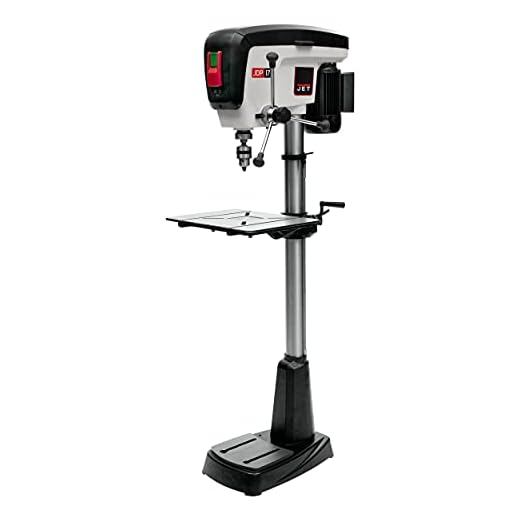

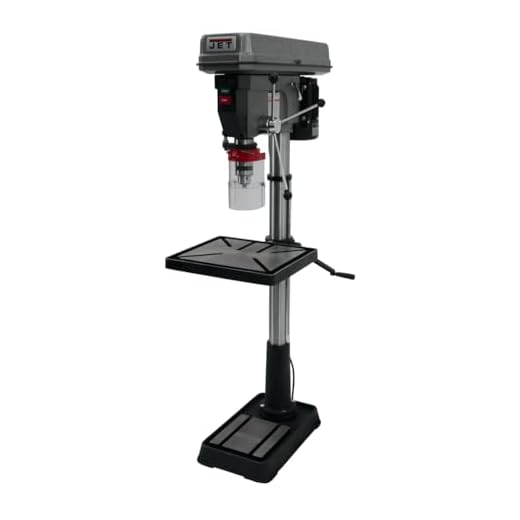
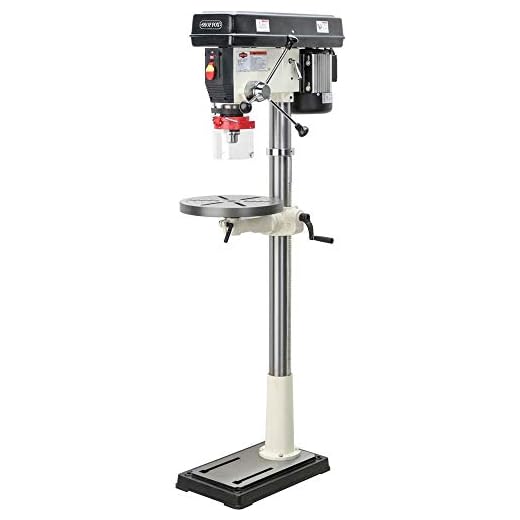
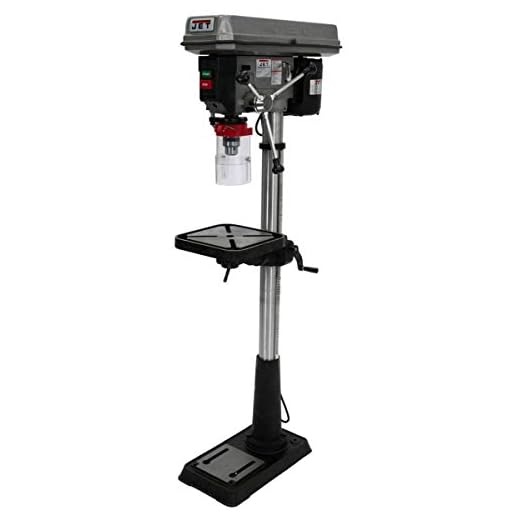


Powermatic 18-Inch Variable-Speed Press
I find the Powermatic PM2800B to be the most user-friendly variable-speed floor press in this roundup — the controls, lighting, and fence make setup fast and intuitive. It’s a polished machine with a premium feel and thoughtful features.
Overview
I consider the Powermatic PM2800B a premium, user-focused drill press built with woodworkers and pros in mind. Its infinitely-variable speed eliminates belt juggling, and the machine’s ergonomics — fence, reversible handles, and bright lights — speed up repetitive setups.
Standout usability features
The laser guide and integrated LED work light are practical additions I use every time I set bits and align parts. The keyless chuck and easy-to-use crank system add to the day-to-day convenience.
Real-world performance and tradeoffs
In use, the Powermatic is smooth, quiet, and precise; I appreciate how quickly I can change speeds and dial in stop depths. The tradeoff is cost and weight: it’s heavier and pricier than hobbyist presses, so it’s an investment best suited to serious hobbyists or pro shops that will use the features daily.
JET 15-Inch Variable-Speed Floor Press
I love the handwheel variable-speed control — it makes dialing in the exact RPM easy and intuitive while working. It’s a heavy, precision machine that shines when you want fine control without stopping to change belts.
Overview
I rate the Jet J-A5816 highly because it blends the old-school durability of step-pulley heads with a modern variable-speed transmission and an easy-to-read handwheel. That combination gives you continuously variable speed from about 400 to 5,000 RPM without electronic drives.
What stands out in daily use
The handwheel makes on-the-fly speed changes simple and precise, so I find myself adjusting speed to suit different bits and materials instead of tolerating one compromise setting. The 6" quill stroke is a real advantage when you need deep-hole capacity without splitting the table into awkward positions.
Practical considerations
The unit is heavy — excellent for stability but a pain to move — and the belt/transmission makes some noise at low points in the range. It’s a great choice for users who value mechanical control and precision over electronic convenience. If you need the slowest possible RPMs for very large cutters, check the low-end spec carefully, but for most wood and metal uses this is superb.
JET 17-Inch 16-Speed Floor Press
I find the JDP-17 to be an excellent all-around shop press for woodworkers — long quill travel, a large table, and good low-speed capability for Forstner bits. It balances power and precision at a fair price for its class.
Overview
I picked the Jet JDP-17 because it hits the sweet spot for serious hobbyist woodworkers and small shops: long quill travel, a large table with T-slots, and a speed range that handles both delicate and aggressive drilling tasks.
Features that help in the shop
The 5" spindle travel removes a lot of table juggling for deep cuts, and the one-handed belt tensioning plus LED work light are conveniences I actually use. The table’s replaceable MDF insert is a nice touch when I need a sacrificial surface.
Practical considerations
The JDP-17 is heavy and needs help during assembly, and I recommend watching a couple of assembly videos to smooth the process. Once set up, it’s smooth and accurate — I’ve used it extensively with Forstner bits and large brad-point bits with great results.
JET 15-Inch 6-Speed Floor Press
I appreciate this machine for its beefy construction and consistent quill support that makes metal drilling predictable and accurate. It's a workhorse that holds tolerance well and feels built to last.
Overview
I find this Jet 15-inch six-speed model to be a classic heavy-duty drill press made for metalworkers who need repeatable accuracy and little fuss. The oversized head, widely-spaced bearing surfaces, and larger quill are obvious design choices aimed at stiffness and minimal runout.
Why I like it
The six-speed step-pulley arrangement covers low and high RPM needs without exotic electronics, and the machine gives a very solid feel under load.
Real-world use and limitations
I use this press when I need a no-nonsense machine that will take bigger bits and hold tight tolerances. The downside is its weight and size — you'll want at least one assistant (or a hoist) during installation, and it demands a dedicated shop corner. It also lacks continuously variable speed, so mid-speed tuning requires belt changes.
Practical insight
If your work is steel fabrication, jig drilling, or repeated shop-critical holes, this Jet delivers rugged repeatability. If you need frequent on-the-fly speed changes or a smaller footprint, a variable-speed model might be more convenient.
JET 20-Inch 12-Speed Floor Press
This 20-inch Jet brings extra swing, a powerful motor, and a wide 12-speed range that’s well suited to big workpieces and shop-heavy tasks. It’s heavy and solid—great when tool stability matters most.
Overview
I treat the Jet JDP-20MF as a shop-class press for users who need more swing and muscle. The 20" swing and 1.5 HP motor allow larger stock and more aggressive cuts than smaller presses, and the 12-speed range is flexible for both wood and metal tasks.
Features that matter in the shop
I value the external depth stop, quality spindle bearings, and substantial table. The machine’s solidity is ideal when you rely on repetitive accurate holes on big parts.
Practical tips and limits
This is a heavy investment: expect to need help or an engine hoist to assemble and position it. Some owners report sharp table edges and quirky slot patterns which may require a little cleanup or adapter plates for vises. For a production-oriented woodworking or metal shop that needs larger capacity, it’s a strong, reliable choice.
Shop Fox 17-Inch 1HP Floor Press
This Shop Fox is a great choice if you want reliable low-RPM torque for metalwork without breaking the bank. It's a no-frills machine that emphasizes accuracy, sealed bearings, and the ability to run larger direct-mount bits.
Overview
I consider the Shop Fox W1680 a practical, value-oriented floor drill press aimed at small shops that need reliable metal drilling without a premium price tag. It balances a robust motor and accurate spindle support with straightforward mechanical controls.
Key features I use most
The 1 HP motor and low RPM capability make this press ideal for drilling thicker metals and slowing down for larger bits. The MT#3 spindle gives flexibility to use larger tooling without awkward adapters.
Practical notes and caveats
In use, the drill performs well for metal and mixed shop tasks; belt changes are straightforward and the feel under load is reassuring. Assembly can be fiddly — a stuck set screw in the column ring has been reported — so plan time and a second pair of hands for setup. Fit-and-finish isn't flawless but it doesn't hurt performance.
Verdict for buyers
If you want a dependable metal-capable floor press with meaningful slow speeds and solid build for the money, this Shop Fox is a sensible pick. For those who need premium fit-and-finish or very high top speeds, consider stepping up to higher-end models.
JET 15-Inch 16-Speed Floor Press
This Jet J-2500 is a solid mid-range option that offers a generous speed spread via 16 speeds and a deep quill stroke. I find it versatile for mixed wood and metal shop tasks without costing a premium.
Overview
For a balanced machine that sits between entry-level and premium, I like the Jet J-2500. It brings a wider speed selection than many budget presses and retains a rigid build that reduces runout for most shop tasks.
Practical features I rely on
The 16-speed system and the 3-1/8" stroke are useful whether I'm drilling deep holes or dialing down speed for larger bits. The cast-iron head and ground column add a reassuring stability when cutting tougher materials.
Use-case notes
This is a great all-round press if you need versatility and don't require an infinitely-variable gearbox. Expect to make room for its footprint and to have assistance mounting the heavy head. If you want the convenience of electronics or laser guides, look to higher-spec models.
JET 15-Inch 16-Speed JDP-15F Press
This compact Jet provides a strong balance of capability and shop footprint, with 16 speeds and a useful 3-1/8" spindle travel. I like it for smaller shops where space is limited but accuracy still matters.
Overview
I recommend the JET JDP-15F as a compact floor-model drill press for small shops that still need a capable and accurate machine. It offers many of the useful features from larger presses in a smaller, more affordable package.
Useful features in practice
The 16-speed poly-v belt system and one-handed tensioner make changing speeds quick, and the replaceable table insert is handy when I need a sacrificial drilling surface. The laser alignment helps with quick layout, though I still verify alignment with a test drill on critical parts.
Final thoughts
If you need a capable floor press but have limited space, this model is a practical pick. Be prepared for a hands-on assembly and keep an eye on smaller plastic trim parts; they may require gentle handling or replacement over time, but the core drilling performance is solid.
WEN 13-Amp 12-Speed Floor Press
I recommend the WEN 4227T when budget is the main constraint and you need decent capability for general shop tasks. It provides adequate torque and table size for woodworking and light metal work at an attractive price.
Overview
I see the WEN 4227T as a solid, budget-conscious floor drill press that gives smaller shops and hobbyists a lot of capability for the money. It offers adequate power and a generous table, making it versatile across wood, plastic, and light metal drilling.
What you get and what you don't
WEN focuses on giving good functionality at a lower price — you’ll get decent spindle travel and speed options, but not the refined fit-and-finish or long warranties of premium models.
Practical advice
If you’re working in a home shop and want a floor press without a big capital outlay, this is a compelling option. For heavy daily production or when precision to the thousandth is required, consider investing in a higher-end unit instead.
Final Thoughts
I recommend the Powermatic 18-Inch Variable-Speed Press (PM2800B) as my top pick. It’s the most user-friendly variable-speed press here — polished controls, good lighting, and a fence that makes setup fast. Choose the Powermatic if you want premium feel, seamless speed changes for sanding or large Forstner bits, and a machine that speeds up repeatable, precision work in a professional or serious hobby shop.
If you want a slightly more affordable machine that still excels at traditional woodworking tasks, go with the JET 17-Inch 16-Speed Floor Press (JDP-17). It’s the best all-around woodworking press in this roundup: long quill travel, a large table, and good low-speed capability for Forstner bits. Pick the JDP-17 when you need capacity and accuracy for cabinetry, jig work, and bigger pieces without stepping up to the premium price tier.





I have a tiny shop and space is sacred, so the JET JDP-15F caught my eye as the “Best Compact Floor Model.” I’m mostly into small furniture and guitar building.
Couple of practical Qs:
1) The roundup lists 3-1/8″ spindle travel — is that really enough for deeper work like routing-type operations or longer Forstner bits?
2) Anyone swapped the table for a larger aftermarket one to support long pieces?
3) Any vibration issues when clamping thinner workpieces?
Would love some real-world feedback — thanks! 🙏
If you plan to do routing-like plunge operations often, consider a press with deeper quill travel (like the JDP-17) or a drill press with a quill-lift extension. For guitar building, many folks prefer the compact footprint of the JDP-15F with a table extension — saves space and does the job.
Great questions, Hannah. 3-1/8″ travel is enough for most small furniture and inlay/guitar tasks, but it’s limiting for very deep Forstner bits or plunging operations that require extra depth. Many owners do upgrade to a larger aftermarket tilting table or build a platform that bolts to the existing table to support longer pieces. Vibration is usually minimal if you bolt the press to the floor or a heavy base and use proper clamping.
Also watch the chuck/runout on compact models — a quick dial-test with a center punch helps catch any wobble before you ruin a piece.
I had thin-slab vibration issues until I added a sacrificial MDF backing board under clamps — keeps the work flatter and reduces chatter. FYI, measured travel on mine was exactly as spec’d.
I added a larger cast-iron table with an extension I made out of hardwood and T-tracks. It helped a ton for long neck blanks. Also bolting the press down removed most vibration — was night and day.
I’m torn between the Shop Fox W1680 and the WEN 4227T for mostly metal brake work and occasional woodworking. The Shop Fox is tagged “Best Slow-Speed Metal Drilling” which sounds great, but the WEN’s price is tempting.
Has anyone used both for tapping holes or running large-diameter twist bits? Any comments on bearing longevity or chuck runout? tyvm 😊
Also consider the availability of replacement parts — Shop Fox parts are easy to source and their bearings are sealed well. WEN is ok if you’re on a tight budget; just baby it and don’t push huge bits.
I owned the WEN for a few years in a small shop. For occasional metal work it was fine, but after lots of tapping and big HSS drills the spindle developed a small wobble. If you plan heavy metal use, invest in the Shop Fox.
Good comparison point. The Shop Fox generally has stiffer bearings and lower-end torque (good for slow-speed metal tasks), so it often wins for repetitive metal drilling and tapping. The WEN is a great value for lighter-duty tasks but can show more chuck runout over time if used heavily with large bits.
If tapping is a major part of your work, consider using a drill press only for drill/drill-spot and then switch to a tapping head or a drill press with better quill support. That saves the spindle long-term.
The JET JDP-17 being called “Best All-Around Woodworking Press” matches my experience. I use mine for doweling, Forstner bits, and precise joinery. The long quill travel is a lifesaver for deep bits.
Question for woodworkers: any recommendations for a bit sharpening routine specifically for Forstner bits used on hardwoods? I’ve tried a few things but they always seem to tear out unless I go painfully slow.
Forstner bits need a sharp rim and cutting edge. I recommend a fine diamond hone for the rim and a light file on the cutting lips — keep the geometry identical. Also using backer boards and a slow feed helps reduce tearout in hardwoods.
I sharpen Forstners with a small carbide scraper and then lap the rim on a flat stone. Also plunge in two stages: a shallow pilot cut first, then finish to depth. That cut reduces tearout a lot.
Curious about the stepped 16-speed JET models vs the variable-speed Powermatic and JET handwheel models. I like the idea of smooth variable speed for avoiding belt changes, but is the variable control worth the premium if most of my work is general woodworking and the occasional metal plate drill? Any pros/cons around heat, maintenance, or precision?
I have a stepped JET and a Powermatic variable-speed in different shops. The Powermatic is more user-friendly and saves time; the stepped drive has less that can fail and a slightly better power transfer for really heavy cuts. If budget allows, variable speed is worth it for a mixed shop.
Variable-speed systems are great for convenience and fine rpm control — especially when you switch between wood and metal or use large bits. Handwheel variable-speed (like the JET with handwheel) gives precise mechanical control without the electronics. Stepped belt drives are mechanically simple and often more robust/cheaper to maintain, but they require stopping to change belts for big rpm shifts.
One more note: variable-speed belts that use a motor with an inverter can introduce electrical complexity; if your shop power is finicky, a mechanical handwheel variable-speed is a nice middle ground.
The JET 20-Inch JDP-20MF looks like a tank. I can just picture my lower back after trying to move that thing into place 😂
Anyone moved one of these solo? Do you need a skid, lift, or a friend with strong arms? I’m trying to avoid renting heavy equipment if possible.
Most folks don’t move a 20-inch floor press solo. Use an appliance dolly with straps and at least one helper. A pallet and a shop crane make it far easier if you have access. Also consider leaving feet off until it’s in final position to shim and level more easily.
Moved a JDP-20MF last year with two other buddies and an appliance dolly. Definitely bring straps and gloves — the column catches on door frames. If you can disassemble the table/head you can reduce weight and awkwardness.
I’m really leaning toward the Powermatic PM2800B after reading this — the “Best User-Friendly Variable Speed” badge sold me.
A couple of questions for folks who’ve used one: does anyone here run it on 115v or 230v in a home shop? I’m worried about wiring and whether the extra power at 230 would be overkill for mostly cabinetmaking and occasional large-bore bits. Also how loud is it compared to older JETs? Thanks!
I have one on 115V in my garage and it’s been fantastic for cabinetry. Don’t forget to check your breaker panel capacity if you switch to 230V — installer charged me extra to run the line. Tip: good lubrication and a sharp bit make more difference to noise and effort than the voltage.
If you ever plan to add a mortising or heavy metalwork attachment down the line, go 230V. Otherwise 115V is fine and easier to install. Also, Powermatic lighting is legit — makes setup WAY faster.
Great question, Jessica — glad the roundup helped. Many home shops run the PM2800B on 115V without issue if you don’t frequently use very large Forstner bits or heavy metalwork. If you plan to consistently drill big diameters or dense hardwoods, 230V gives more headroom and cooler motor operation. Noise-wise it’s about on par with other floor presses in its class — solid but not unusually loud; the cabinet-style construction helps dampen vibration.