


Which one survived my chaotic shop test — and which one I actually kept?
I ruined three drill bits before I found the ones worth keeping. Short story: some presses make drilling feel like a chore, others make it feel like cheating.
I tested nine floor-standing drill presses across woodworking, metalwork, and plain stubborn bolts. I’m sharing what worked, what impressed me, and what I’d actually put in my shop — no fluff, just what matters: control, power, and repeatable accuracy.
Top Picks


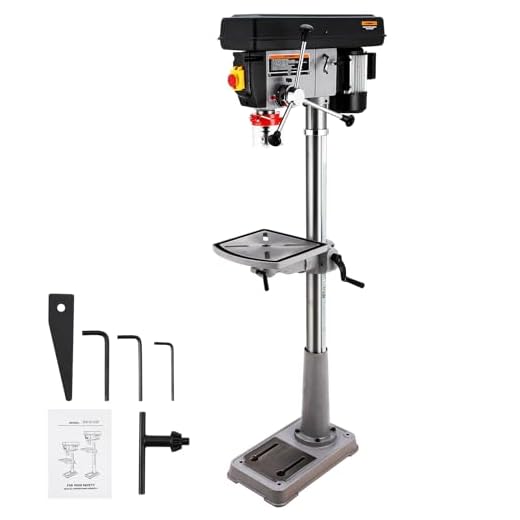

Powermatic 18-Inch Variable-Speed Press
I loved the infinitely-variable speed control and the built-in laser and light for accurate setup. It streamlines workflow and feels like a premium, well-thought-out machine for both heavy hobbyists and pros.
Overview
This Powermatic 18" model impressed me with how it blends user-friendly controls and rock-solid construction. The variable-speed drive eliminates belt juggling and makes it trivial to match speed to material, which I appreciated when switching between softwood and steel.
Standout features I used most
Real-world benefits and workflow
In practice I found the variable speed a game changer: instead of stopping to change belts I adjusted the speed on the fly for different bits and materials. The keyless chuck and well-designed table/fence made production tasks smooth — I could set up stops and run batches quickly. Assembly and positioning are heavy-lift work, but once set up it becomes the go-to press.
Limitations and final thoughts
It's not a light-budget item; you pay for convenience and polish. If you want a machine that you will use daily and want the least friction in changing setups, this is one of the easiest machines to live with.
JET 22-Inch 12-Speed Floor Press
I appreciated the machine's rock-solid feel and wide speed range — it inspires confidence on larger projects. It excels where accuracy and rigidity matter, though you'll pay and plan for its size and weight.
Overview
I found this 22-inch JET floor drill press to be a workhorse built around stiffness and repeatable accuracy. With a 1-1/2 HP motor and 12 speeds, it bridges the gap between heavy woodworking and metalworking tasks, and the cast-iron platform gives it a confidence-inspiring presence in my shop.
Key features and what they do for you
How I used it and practical notes
I used it for cabinetry and several large-bore metal holes; the result was clean, round holes and very little chatter. The external depth stop makes repeat drilling fast — I could adjust and lock depths in seconds. The downside is size and weight: assembly and positioning required two people and a plan for lifting.
Limitations and final impressions
This press is a premium shop tool — it rewards careful setup and routine maintenance. Expect to pay more and tolerate some minor finish or fit issues off the crate; in my experience the performance outweighs those faults when you need reliable, precision drilling.
JET 15-Inch Variable-Speed Floor Press
I found it to be a solid mid-size option that handles both shop woodworking and light metalwork. It offers a very wide speed range for a compact machine, but pay attention to assembly and alignment during setup.
Overview
This 15-inch JET floor drill press is a solid choice when shop space is limited but you still need variable speeds and decent capacity. The handwheel speed adjustment gives a very wide RPM range, which I used to dial in clean cuts on both wood and thin metals.
What I liked about it
Practical use and setup tips
Out of the box I aligned the table and checked runout; the machine responded well to tuning. Its smaller footprint makes it easy to position next to other machines or near a workbench. Expect to favor smaller bits and lighter-duty metal work compared to larger floor models.
Drawbacks and who it's for
If you need to bore large-diameter holes or do heavy production drilling, step up to an 18" or 22" machine. For hobbyists and smaller shops that want a capable all-around press without the bulk, this is a compact, reliable option.
Powermatic 20-Inch Gear-Driven Floor Press
I appreciated the gear-driven torque and the robust table/fence system for repetitive drilling. It delivers steady power, though I noticed noise levels and a few ergonomic quirks that may bother some users.
Overview
The Powermatic 20" PM2820EVS aims at shops that need gear-driven torque and repeatable setups. I found the mechanical feel to be sturdy and the included fence and stop quite useful for batch drilling — the machine is built toward workshop productivity.
Feature highlights I used often
How it performed in my shop
When drilling larger holes in hardwood, the gear drive kept RPMs steady and prevented bogging, which I appreciated. The laser and LED made setup faster for repeat holes. However, I did notice the unit runs louder than comparable belt-driven presses and a few users (and I observed) had trouble locking the table exactly at zero; these are usability quirks to be aware of.
Considerations before buying
If torque and production features are your priority, this is a strong contender. If you need the quietest operation or absolute perfection in table locking, expect to spend some time dialing it in or reach out to support.
WEN 4227T 12-Speed Floor Drill Press
I found it to be a well-built midrange option with good power and a large table, giving a lot of capability for the price. There are occasional assembly quirks and potential quality-control issues, but overall it’s a dependable shop press.
Overview
The WEN 4227T is a go-to for many hobbyists and some small shops because it balances power, features, and price. I appreciated the 4-3/4" spindle travel that handled 4x4 stock in a single stroke and the large table that made holding jigs easier.
Notable features I used a lot
What I experienced while using it
In day-to-day use it handled wood and metal with minimal chatter, and the runout was acceptable for the price. Be prepared to follow assembly directions carefully — a few reports and my own small annoyances showed there can be hiccups with setup and shipping. WEN’s customer service and part availability are a plus if you need replacements.
Final take
If you need a substantial floor press without stepping up into the higher-priced shop class, this is one of the better-balanced options. It isn’t perfect, but it offers a lot of capability for what you pay.
Shop Fox W1848 Oscillating Floor Press
I liked that it converts quickly between drilling and oscillating sanding — a real space-saver. It’s a value-packed tool with some finish and packing issues occasionally, but it performs well for both sanding and drilling tasks.
Overview
This Shop Fox W1848 brings an oscillating spindle to a floor drill press, giving you a genuine two-in-one machine for shops with limited space. I found the oscillation feature genuinely useful for contour sanding and finishing small workpieces.
Useful features I relied on
Practical impressions from the bench
Assembly was straightforward and the press ran smoothly when I sanded and drilled. The oscillating function paired nicely with a dust collector and turned what would be separate tasks into one station. Packaging and finish can be hit-or-miss; I inspected parts on arrival and cleaned off factory residues before first use.
Limitations and who should consider it
If you need deep drilling capacity or a heavy-production metalworking press, this may not be the best primary machine. But if you want both sanding and general-purpose drilling in one footprint, it’s an excellent compromise and a real value for the features it offers.
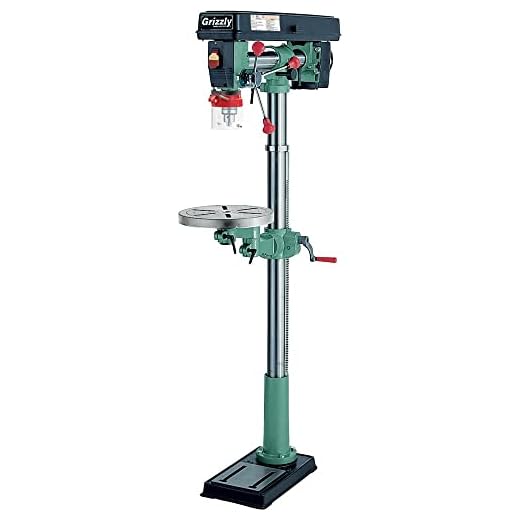
Grizzly 34-Inch Floor Radial Drill Press
I enjoyed the radial arm and the ability to position the head for awkward angles and larger workpieces. It’s a specialized machine that shines when you need reach or pivoting capability rather than compact throughput.
Overview
The Grizzly G7946 radial drill press is for different needs: reach and angle flexibility over compact, repeatable shop work. I used it when drilling large plates and awkwardly positioned stock where a fixed head wouldn't reach comfortably.
What makes it useful
Real-world use cases and notes
In my shop it excelled on tasks like drilling holes in mounted fixtures, large metal plates, and awkwardly positioned parts for repairs. The ability to swing the head and reposition without moving the workpiece is a huge time-saver. That said, if you need sub-millimeter precision on small parts, a rigid floor press with less play will usually outperform a radial design.
Who should buy this
Choose this if you regularly work on large or awkwardly shaped assemblies and need that extra reach and angle flexibility. If your work is mostly small, high-precision parts, a conventional floor press might be a better fit.
Festisoul 15-Inch Variable-Speed Floor Press
I found the copper motor and smooth variable speed control to be surprisingly sturdy for the price. It handled metal and hardwood work with little vibration, making it a practical small-shop press.
Overview
This 15" Festisoul floor drill press impressed me with a solid-feeling copper motor and a smooth variable speed range that makes it useful for a small shop. It’s aimed at DIYers and light professional use, offering a compact footprint and practical features.
Features that matter in daily use
How it performed and practical notes
I used it on thicker hardwood and some mild steel and the motor held RPMs without bogging. The tilting table made angled holes straightforward and the unit felt vibration-free during normal use. The main unknowns are long-term durability and parts/support, since the brand isn’t as established as some long-standing manufacturers.
Bottom line
If you want a capable small-to-mid-sized press with a strong motor and smooth control, this unit is worth considering — especially for a shop that values compact power. I’d recommend confirming warranty and local support plans before committing for heavy daily use.
Klutch 16-Speed 13in 3/4-HP Press
I found it to be a capable budget machine for occasional shop and garage tasks. It’s not a high-end press — tolerances and finish reflect the price — but for basic drilling jobs it gets the work done.
Overview
The Klutch 16-speed floor drill press targets hobbyists and garage shops on a budget. I was pleasantly surprised by how much capability you get for the price: multiple speed steps, decent stroke, and a tilting table that covers most occasional needs.
What to expect in the tool box
My experience in the shop
Assembly required patience and some mechanical intuition since the manual is sparse, but once assembled the press performed predictably for drilling wood, plastics, and light metal. It’s a work-alike rather than a precision instrument; consider it for DIY projects, small repairs, and light fabrication rather than daily production work.
Who this is best for
If you want a floor press without a large investment and can tolerate some rough edges in finish and instructions, this is a sensible pick. Upgrade if you need hardened precision or heavy industrial duty.
Final Thoughts
My top pick is the Powermatic 18-Inch Variable-Speed Press. I liked its infinitely-variable speed control, built-in laser and work light, and the overall premium feel. If you want effortless speed changes, precise set-ups, and a machine that streamlines repeated work, this is the one to buy. It’s ideal for heavy hobbyists and professionals who want a versatile, high-quality press that speeds up accurate drilling.
If your projects skew large and you need rock-solid rigidity and reach, get the JET 22-Inch 12-Speed Floor Press. Its heavy-duty construction and wide speed range inspire confidence on big workpieces and metal projects. Be ready for its size and weight — this is the shop centerpiece for accuracy and stability on larger jobs.





The Grizzly G7946 radial drill looks amazing for weird-angle jobs.
A couple of practical questions:
– How is maintenance on the radial arm? More grease points? more ways to get out of alignment?
– Does anyone use it for larger metal plates regularly? I’m thinking about drilling holes in flanges and the pivoting head looks perfect but I’m worried about setup time.
Also: packaging issues mentioned in some reviews make me nervous — has anyone had shipping damage and how was Grizzly support? typos incoming… sorry 😅
Maintenance isn’t bad — monthly checks/grease if it’s in near-daily use. Worth it for the flexibility.
Had minor packing damage once — Grizzly sent replacement parts promptly. Main advice: refuse delivery if crate looks smashed and get photos.
Tip: make simple wooden or metal stops on the table to speed up repetitive hole locations — reduced setup time dramatically for me.
I use a G-type radial for plate work weekly. You’ll learn quick tricks to index the arm; once you have a routine it’s fast. Keep a buddy around for heavy lifts though.
Good questions. Radial drills do have more adjustment points (arm bearings, head locks) and they require occasional lubrication and lock-checking. For large metal plates they shine because you can position the head without moving the workpiece. Setup can take longer initially but becomes faster with jigs and stops.
Grizzly support: many customers report decent warranty/help; shipping damage happens with big machines — inspect crates immediately and document any issues with photos for claims.
Great roundup — thanks! The Powermatic 18 (PM2800B) sounds dreamy with that infinitely-variable speed and the built-in laser.
I’m curious about two things:
1) How loud is that model compared to the Powermatic 20?
2) Is the laser durable if you move the press around the shop a bit or does it need frequent recalibration?
I have limited space but want something that feels premium. Any thoughts on whether the 18″ is worth the price for a busy hobbyist?
Thanks, Sarah — glad you liked the roundup. The PM2800B is noticeably quieter in day-to-day operation than the PM2820EVS thanks to the motor and variable-speed drive, but it’s still a heavy machine so vibration noise is expected. The laser is pretty robust — if you don’t disassemble the head it holds alignment well. If you move the whole press, recheck the laser alignment (takes a minute) but it shouldn’t drift with normal shop bumps.
If space is tight, consider the JET 15 variable speed — smaller footprint but good range. Not as cushy as the Powermatic, though.
I have the 18″ for about a year. Laser survived being bumped a few times; I just re-zeroed it once. Worth the price if you want that variable control — makes for cleaner holes in hardwood.
Thanks for including the Festisoul 15″ and the JET 15. I’m setting up a small basement shop and variable speed is a must. The Festisoul’s copper motor and range look promising, but I’m worried about long-term reliability on the cheaper brands.
Anyone run the Festisoul hard (metal + hardwood) for a few months? How’s the motor holding up? Also, are there common parts that fail early so I can pre-order spares?
Festisoul is decent for small shops — copper motor helps with heat and longevity. Common early issues are often belt alignment and occasional switch or chuck wear. I’d keep an extra belt and a quality chuck on hand; those are inexpensive insurance.
If you plan heavy metal work often, step up to the JET 15. It’s pricier but holds up better under stress. Festisoul is great for mixed small projects though.
I ran a Festisoul for 9 months in a weekend-shop setting. Motor’s fine; I replaced the original chuck with a keyed Jacobs for better grip. Watch the belt tension during the first week.
Nice write-up on the Powermatic 20 (PM2820EVS). I love the idea of gear-driven torque for repetitive holes, but the article mentioned noise and ergonomic quirks — care to elaborate on those quirks? Anything user-fixable like different handles or pads to reduce noise/vibration?
I added a rubber mat under mine and swapped the feed handles for slightly longer ones — much more comfortable for repetitive plunges. Noise is still there but tamed.
The PM2820EVS has a heavier gear train that transmits more mechanical sound than belt-driven variable-speed models. Some users add vibration-damping pads under the base or isolate the motor mount bolts to lower resonance. Ergonomics: the table fence and crank placements took a little getting used to; adding auxiliary handles or repositioning the table stops fixes most complaints.
Big fan of the Shop Fox W1848. The oscillating sander + drill combo is a neat space-saver. Wondering about sanding conversion time and whether the sanding function is actually useful for fine work.
Anyone tried sanding delicate pieces on this? Does the oscillation leave marks?
The conversion is straightforward — a few bolts and a quick head tweak; expect 10–20 minutes the first few times. For delicate work, use finer grits and a light touch; the oscillation helps prevent swirl marks compared to a rotary sander, but you still need to support the piece well.
I used it for finishing a small chair — with 220 grit and patience it was great. Quick conversion and clean results. Not a finish shop machine but super handy for one-off pieces.
I’m torn between the WEN 4227T and the Klutch 16-speed. Budget is tight and I mainly do small furniture and occasional metal brackets.
WEN seems to have better table size and power, but I’ve read QC can be hit-or-miss. Klutch looks cheaper and… cheaper quality lol 😅
Anyone actually used both and can confirm which one survives longer in a small garage shop?
Had a WEN for 3 years in a heated garage — no major issues other than a loose belt after year two. Klutch lasted a season at my friend’s rental projects and then got noisy. WEN wins for durability imo.
If budget is the biggest limiter, go Klutch and be gentle with heavy metal drilling. For mixed wood + occasional metal, WEN is the safer bet.
Both are acceptable budget options. The WEN has the edge in build and table size; QC complaints are real but often minor (bolts, finish). Klutch is fine for light, occasional use but you may see wear sooner. If you can stretch to WEN, it’s usually the better long-term buy.
Minor add — if you buy WEN, check everything during assembly and tighten bolts after the first few hours of use. That fixes many early QC-type problems.
Had my eye on the JET 22 (IDP-22) for a long time. The review calls it “rock-solid” which is exactly what I want for metal work. My only worry is the footprint and getting it into my garage through a narrow door — anyone moved one through a regular 30″ opening?
Also wondering if the 1-1/2 HP is overkill for hobby use or actually useful.
The JET 22 is heavy and bulky — getting it through a 30″ door is possible but tight; measure the base and head for clearance and consider removing the table or head temporarily to ease transport. The 1-1/2 HP isn’t overkill if you plan on drilling larger diameter holes or working in steel — it gives longevity and less strain. For light hobby woodwork, it’s more than you need, but for serious metal it’s a good match.
I wheeled mine through a 32″ opening with the table off. Definitely bring straps and a helper. The extra HP is nice — fewer stalls, cleaner cuts.