

Can 40 volts beat gas? I tested 10 cordless mowers so your lawn doesn’t have to suffer the learning curve.
I dumped the gas can and let a battery do the heavy lifting.
I tested 10 cordless 40V mowers on real lawns—tall patches, slopes, and the usual stubborn corners. I was looking for real-world power, runtime that doesn’t quit mid-lawn, and mowers I’d actually want to push.
Some surprised me. A few were perfect for tiny yards. A couple felt like they could replace a gas mower without the noise or smell. Here are the winners I kept reaching for.
Top Picks
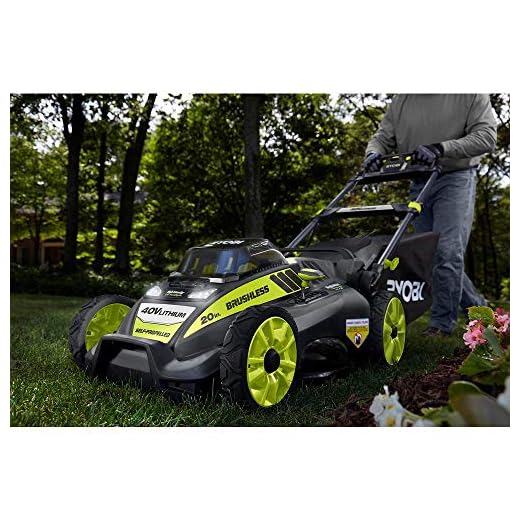






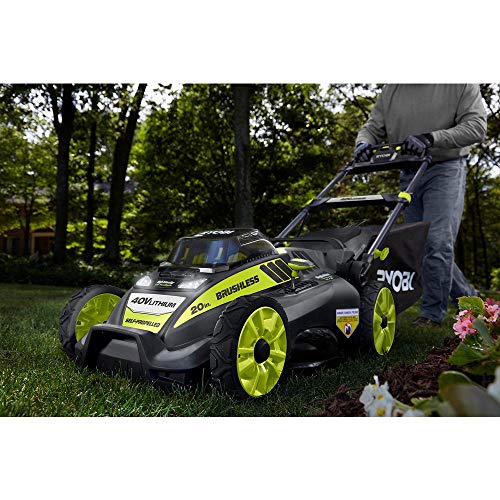
Ryobi 20" 40V Brushless Self-Propelled
I loved the load-sensing brushless motor that keeps cutting speed steady under heavier loads. The rear-wheel drive self-propel makes it easy to tackle hills and larger yards without constant pushing.
Overview and use case
I picked the Ryobi 20" when I needed a mower that could behave like a small gas unit but without the maintenance. The intelligent brushless motor is the key innovation — it senses load and steps up power so the blade speed stays steady through thick spots.
Why it stands out
In real use the mower felt very composed on uneven ground and kept a steady cut through damp or thick grass. The self-propel system reduced the effort needed on longer runs — I didn’t feel fatigued after a full pass.
Practical advice and limitations
If you want near-gas performance with smart motor technology and excellent traction, this Ryobi is one of the strongest options I tried.
Greenworks 40V 20" Brushless Cordless Mower
I liked the 4-in-1 flexibility and the LED headlight that extends mow time into dawn or dusk. The 20" brushless setup delivers consistent performance across a range of grass conditions.
Why it stood out to me
This 20" Greenworks impressed me with its versatility — the 4-in-1 capability means I could switch from mulching to bagging or side discharge depending on season and yard needs. The LED headlight was unexpectedly useful for early-morning touch-ups.
Performance and features I tested
In real-world use I appreciated that the mower maintained blade speed through thicker areas thanks to the brushless motor. The LED light allowed me to finish a late-afternoon job without squinting at low contrast spots.
Practical notes and limitations
Overall, if you want a flexible, well-rounded cordless mower with thoughtful features (like the headlight) and a strong brushless motor, this Greenworks is one of the most capable options I tested.
Greenworks 40V 21" Brushless Self-Propelled
I found this self-propelled brushless mower to be the smoothest and most capable of the Greenworks lineup in this test. It handles slopes and thicker patches with confidence while delivering good runtime.
Why I recommend it
This 21" brushless, self-propelled Greenworks model felt like the best all-around choice for typical suburban lawns. The brushless motor gives the mower more torque when you need it while preserving battery life under lighter loads.
Performance highlights
On my lawn the self-propelled feature made a noticeable difference across uneven terrain; I wasn’t pushing as hard uphill and the mower kept a consistent cutting speed. The included 5.0Ah battery provided solid runtime for most residential properties.
Useful tips and limitations
Overall, if you want a near-gas performance without the engine maintenance, this mower is a great choice.
Greenworks 40V 20" Dual-Battery Mower
I appreciated the dual battery port setup that automatically switches to a second pack, giving real-world extended runtime. It’s a good middle ground between portability and longer mowing sessions.
What I used it for
I picked the 20" Greenworks when I needed to cover a medium-sized yard without stopping for battery swaps. The dual-battery port is the standout here — it automatically switches to the backup battery so the cut continues.
Standout features
In practice the dual-battery system is convenient: I didn’t have to babysit the charge or manually swap packs. The extra minutes translate into finishing bigger yards in one go.
Who this fits and what to watch for
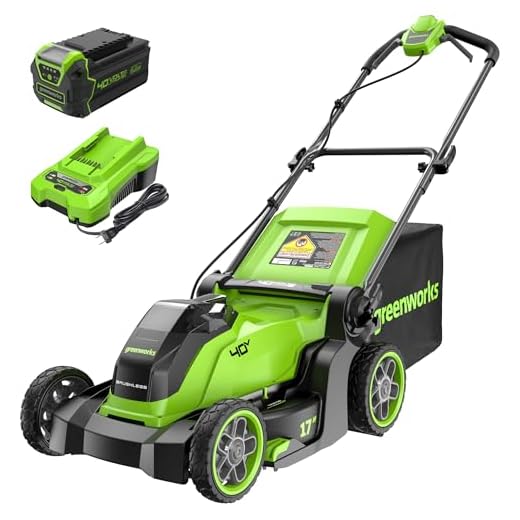
Greenworks 40V 17" Brushless Push Mower
I appreciated the brushless motor’s balance of torque and quietness; it’s noticeably less noisy than gas and holds up well for regular maintenance. The 17" deck is a nice middle ground for maneuverability and coverage.
Why I gravitated to this model
I used the 17" Greenworks when I wanted a mower that combined quiet brushless power with a deck size that’s easy to work around flower beds. It’s an everyday mower for homeowners who mow frequently and prefer a tidy, low-noise machine.
Key features I noticed
On my lawn the unit produced even clippings and left a clean appearance after mowing. It’s ideal if you mow regularly and want a pleasant, quiet experience for weekday or early-morning work.
Considerations
For typical suburban yards where quiet and consistent cutting matter, this Greenworks strikes a dependable balance.
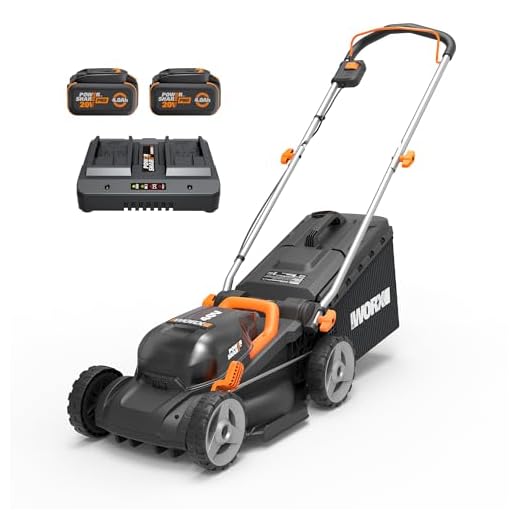
WORX 14" 40V Dual-Battery Mower WG779
I found this to be an easy, dependable mower for small yards; it’s quiet and very maneuverable. The PowerShare battery platform and onboard charge indicator were practical touches during use.
Why I reached for it
This WORX WG779 is a model I consistently picked for smaller yards where quiet operation and storage convenience matter. It’s designed to pair with the PowerShare ecosystem, which is handy if you already own WORX batteries.
Core strengths
During mowing I appreciated the quiet operation — conversations could continue nearby without issues — and the cut-to-edge capability made border work less time-consuming. The onboard battery indicator gave me confidence about when to swap or charge.
Limitations to consider
Overall, it’s a reliable compact mower and a top seller for good reason: it balances performance, battery ecosystem convenience, and quiet operation.
Greenworks 40V 16" Push Mower
I found this mower to be a reliable, easy-to-use option for homeowners with small lawns. It balances short runtime with quiet, gas-free operation and is very easy to store.
What this mower is for
I reached for this 16" Greenworks when I needed a quick, fuss-free mow on a small yard. It’s designed for homeowners who want gas-like cutting without the noise, fumes, or maintenance.
Key features and how they matter
I liked how fast I could get started: one click and I was mowing instead of dealing with a choke or pull cord. The lightweight body made it easy to push around narrow beds and between obstacles.
Practical strengths and limitations
If your yard is small and you value simplicity and storage convenience, this mower gives a lot for the price. For large yards or very thick grass, consider a bigger deck or dual-battery option.
WORX 14" 40V Brushless Push Mower
I liked how easy this mower was to store and push; it’s optimized for small yards and tight spaces. Runtime is reasonable for the deck size, and the cut-to-edge design reduces trimming work.
Ideal user and scenarios
I pulled the WORX 14" out for small, busy yards where storage is tight and neat edges matter. It’s a compact, lightweight mower designed to make quick work of tight spaces and fence-line cuts.
Notable features I liked
In practice the two included batteries gave me flexibility to swap if needed, and the slim deck made it simple to maneuver around obstacles. The collection bag is large relative to the deck size, so I spent less time emptying clippings.
Trade-offs
If you have a tight city lot or frequently store equipment in a small garage, this WORX is a practical, portable choice.
KraftSense 18" Dual Battery Brushless Mower
I was impressed by the brushless motor performance for the price — it gave gas-like cuts in a few passes. The main trade-off is shorter runtime and a relatively small support network for parts.
Who this mower is for
I reached for the KraftSense 18" when I needed a budget-friendly brushless option that still offered respectable cutting power. It’s aimed at budget-conscious owners who want better-than-basic performance without a big investment.
Features that stood out to me
In hands-on mowing I noticed clean single-pass results on moderate grass; dense, tall grass needed a second pass. The dual batteries are useful, but on the heaviest conditions I still planned for a recharge mid-job.
Practical considerations
If you’re on a tight budget but want brushless torque and included batteries, this is a compelling option — just manage expectations on runtime and long-term support.
Grelawner 16" 40V Brushless Push Mower
I found this mower to be a straightforward, no-frills option that handles routine mowing on small lawns. It’s light and foldable, but the brand’s relative obscurity means you should check warranty support in your area.
Who should consider this mower
I tried the Grelawner when I wanted an affordable brushless mower that’s easy to store. It’s aimed at casual homeowners with small lawns who want the convenience of cordless without spending a lot.
What it offers
In use the mower delivered clean results on moderately dense grass and was particularly pleasant to maneuver because of its light weight. The foldable design made it simple to slip into a tight garage corner after mowing.
Caveats and practical notes
If you’re budget-conscious and have a small, well-maintained lawn, this is a reasonable, space-saving choice — just confirm local support and warranty terms before buying.
Final Thoughts
Top pick — Ryobi 20" 40V Brushless Self-Propelled (9.3/10)
I recommend the Ryobi as my overall winner. Its load-sensing brushless motor holds RPMs under heavy grass, and the rear-wheel self-propel makes hills and larger yards genuinely easier. If your yard is bigger than about a third of an acre, or you have slopes and thick patches, this is the one to grab. Pair it with a higher-capacity Ryobi 40V battery (at least 4.0Ah) for reliable single-charge runs.
Best versatile option — Greenworks 40V 20" Brushless Cordless Mower (9.1/10)
If you want flexibility, choose the Greenworks 20" brushless. The 4-in-1 deck and handy LED headlight let you mulch, bag, side-discharge, and even mow at dusk. It’s a great middle ground for medium yards (up to about half an acre) where you want consistent cutting performance and extras like the light and multiple discharge modes.
Honorable mention: Greenworks 40V 21" Brushless Self-Propelled (9.0) if you want the smoothest self-propel experience, or the Greenworks 40V 20" Dual-Battery model (8.7) if absolute runtime is your priority.






One more newbie question: for all these cordless mowers, how often do you sharpen the blades? I’m used to gas mowers and sharpen every season, but I’m not sure if the brushless torque changes wear patterns.
Also — any tips for storage over winter that are different for battery mowers?
Great questions. Blade sharpening frequency is similar — sharpen once per season for regular homeowners, or twice if you mow very frequently or hit lots of sticks/grit. For battery storage: remove batteries and store them in a cool, dry place charged to about 30-50% for long-term storage. Don’t leave batteries in a cold garage for months if possible.
Agree with admin. I also spray a light coat of lube on pivot points and clean clippings off the deck before storage. Batteries went into the house last winter and stayed fine.
Super helpful breakdown — thanks! Quick compatibility question: multiple Greenworks items mention “75+ tool compatibility.” Does that typically mean the same 40V battery fits all Greenworks tools (trimmers, blowers, etc.)? Or are there exceptions? I want to buy into a platform but not end up with incompatible batteries.
Thanks — that’s great to hear. Saves me from buying duplicate chargers 😂
One more tip: if you plan to expand, consider keeping at least two batteries so you can swap while one is charging.
Good question, Maya. For most Greenworks 40V lines that call out 75+ compatibility, the batteries are part of a shared 40V platform and should work across those tools. Double-check product pages — sometimes there are legacy lines or different connectors, but generally the modern 40V tools are cross-compatible.
Yep — bought the 4.0Ah and used it on a trimmer and blower no problem. Only hiccup was older models from 2014 that used a different connector, but new stuff is usually fine.
Nice guide. Quick thought — the article mentioned mulching/bagging on several models. For those who alternate, which deck size do you find gives the best balance between mulching performance and speed (less passes)?
I was surprised the Greenworks 21″ got such high marks — I found the self-propelled wheel adjustment to be a bit fiddly on uneven ground. Maybe I’m just old-school but I prefer a simpler drive train. Otherwise the cut was great.
Totally fair point, Liam. Self-propel mechanisms vary; some handle ruts and uneven terrain better than others. If you have a lot of rough ground, a rear-wheel drive or even a heavier-duty model might be worth considering.
Great roundup — thanks for doing the legwork! I actually own the Ryobi 20″ RY40190 and the Greenworks 21″ self-propelled (different seasons, different needs).
Pros I noticed with the Ryobi:
– The brushless motor really keeps power under load (hills = less bogging).
– Self-propel is surprisingly smooth.
Cons:
– Battery shows runtime droop in really thick patches (but still better than my old gas unit for quick jobs).
Question for others: has anyone swapped in a larger Ah pack to extend runtime on the Ryobi? Thinking about buying a second 5Ah but wondering if 7.5Ah packs are worth it. Also — love the detailed expert verdicts in the article 🙂
Totally agree on the hills — Ryobi saved my legs. FWIW, I charge one while mowing with the other to keep the workflow going.
I put a second 5Ah on rotation instead of a heavier 7.5Ah. Cheaper and gives me two full mows back-to-back. If you have a big yard, the bigger pack is nice but heavier to handle.
Thanks, Emily — great firsthand notes. We tested the Ryobi mostly with the included 5.0Ah; a higher-capacity pack (if compatible with the platform) will definitely extend runtime but adds weight. Make sure the model of battery you buy is the same Ryobi 40V platform to avoid compatibility issues.
Loved the deep dive on runtime and dual batteries. I switched to the Greenworks 20″ Twin Blade primarily for the dual battery ports and here’s my experience:
I mow about half an acre with a few slopes. The automatic switch from one battery to the second is borderline magical — no stopping to swap packs mid-mow. Deck handles medium-thick grass well and mulching is decent. It’s not ultra-light, but for the convenience of extended runtime it’s been worth it.
Also: heads-up — check Amazon for bundle deals. I saved ~15% by getting a battery combo during a sale.
If anyone wants, I can include a roundup of current bundles in the article’s update. Would that be helpful?
Ooh, which battery combo did you snag on Amazon? Link please? 😅
I have a similar yard and the twin battery setup saved me from buying a second charger. FYI: keep the batteries cool in summer, they deplete faster if they overheat.
I bought the 4.0Ah + 2.0Ah bundle during Prime Days. Not huge savings but enough to justify the switch. Will DM a screenshot of the order to anyone interested.
Fantastic note on the dual-battery switching — that’s one of the underrated features we found. Good tip about watching Amazon bundles; promotions can change the value proposition.
I’m still not over how quiet these 40V brushless mowers are compared to gas. My neighbor’s face when I mowed at 7am and he didn’t hear a thing — priceless 😂
That said, the 17″ Greenworks looks tempting for maneuverability. Anyone using the 17″ on bumpy lawns?
Quiet is one of the unexpected perks — you can definitely get earlier/late mowing windows. The 17″ is nimble for obstacles, but smaller decks mean more passes. On very bumpy lawns, heavier decks tend to track better; the 17″ is fine for moderate bumps.
I used a 17″ on a yard with some mole hills — it handled OK but required a tad more elbow grease to keep a consistent cut height.
Thanks! I’ll probably go with the 17″ just to avoid trimming around flower beds all weekend.
Has anyone tried the Grelawner 16″? It’s tempting as a budget option on Amazon but I’m worried about parts/support if something breaks. The review badge is “Good budget brushless mower for casual users” — what does casual mean in practice?
Casual usually means: good for regular small-lawn maintenance (short grass, not heavy weeds, no large slopes) but not ideal for heavy-duty or commercial use. With lesser-known brands, check seller ratings and warranty details. Keep receipts and consider extended warranty if you’re nervous.
I bought one for a small townhouse yard last summer. It worked fine for 2 seasons; the only issue was a plastic latch that cracked — cheap fix with an aftermarket part. If you’re mechanically handy, it’s a decent value.
The 18″ brushless with dual 5.0Ah batteries seemed like a steal on Amazon when it popped up in the results. My take: surprisingly powerful for the price, but support is hit-or-miss. If you want gas-like cuts without the smell, it’s a good try — just keep expectations reasonable on longevity.
That’s consistent with our verdict — good value performance but smaller aftermarket/support network. Keep receipts and check warranty terms when buying lesser-known models.
Nice article. For anyone with an apartment lawn or tiny yard, the WORX 14″ models seem like the logical choice. Quiet, compact, and the dual battery setup is clutch. Only gripe: the cut width means more passes. Still, beats lugging a gas mower down stairs 😂