

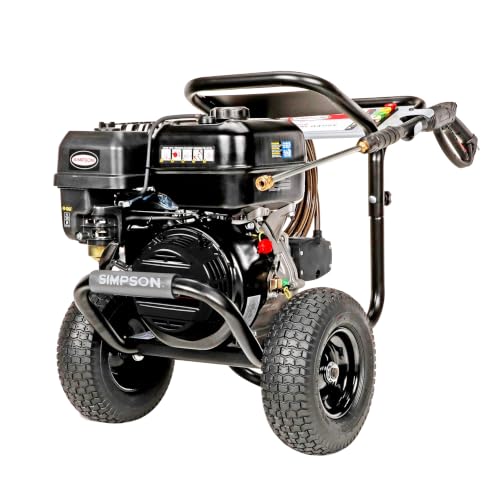
A workhorse that shreds stubborn grime — powerful and jobsite-ready, but not for casual users.
I’ve burned hours trying to get moss, oil stains, and baked-on dirt off my driveway and siding with smaller pressure washers — and still ended up with streaks and disappointment. For anyone who needs professional-level cleaning without endless elbow grease, that’s a real pain.
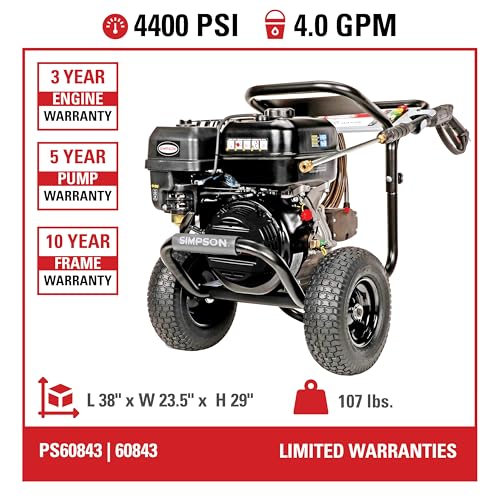
The Simpson 4400 PSI Gas Pressure Washer promises to solve that: 4400 PSI at 4.0 GPM, a commercial AAA triplex pump, 50′ hose, and a welded steel frame built for jobsite use. I put it to work on heavy grime and learned quickly that it delivers pro results — but it’s hefty and has a small learning curve to start and handle smoothly.
Simpson 4400 PSI PowerShot Gas Washer
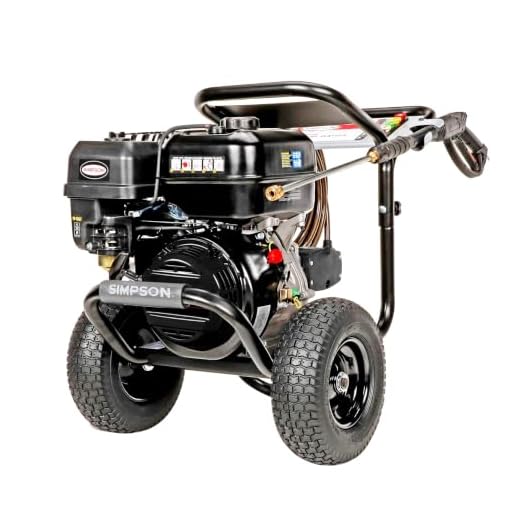
I think this unit is built for people who need professional results fast — it demolishes moss, grime, and baked-on dirt that smaller machines struggle with. It’s a workhorse that demands respect: great performance, a bit of heft, and a small learning curve for smooth operation.
Overview
I’ve used a lot of pressure washers over the years, from lightweight electric units to heavy-duty rental machines, and the Simpson PowerShot (PS60843) sits firmly in the commercial-class corner. This machine isn’t about convenience or light-duty weekend jobs — it’s about clearing tough, large-scale grime quickly and reliably. In this write-up I’ll walk through what makes it powerful, where it shines on job sites, what to watch out for, and how to maintain it so it delivers years of service.
What the machine is (and who I think it’s for)
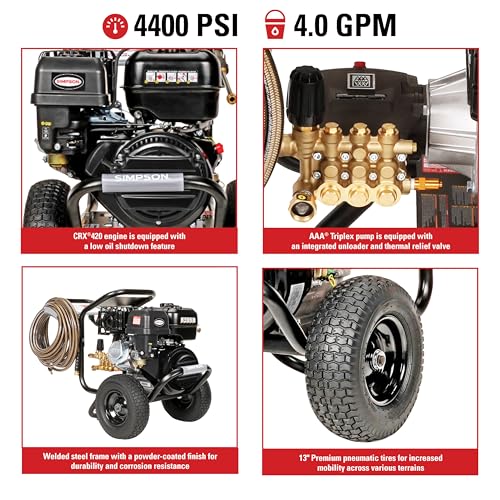
If you’re a contractor, pro-sumer, fleet manager, or a homeowner with acres of hardscape and stubborn organic buildup, this Simpson is designed for you. With 4400 PSI and 4.0 GPM, it moves a lot of water at high pressure — the combination that gives you real cleaning speed compared with consumer models.
Key specifications at a glance
| Spec | Detail |
|---|---|
| Maximum Pressure | 4400 PSI |
| Maximum Flow | 4.0 GPM |
| Engine | CRX 420cc commercial-grade (Simpson-branded commercial engine) |
| Pump | AAA industrial triplex plunger pump (thermal relief included) |
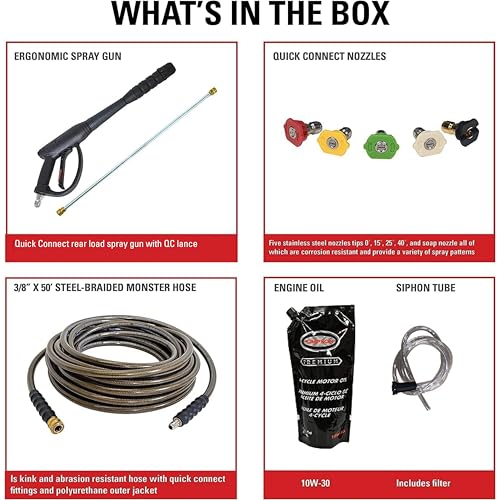
| Hose | 3/8″ x 50′ kink & abrasion resistant hose |
| Wand | 31-inch steel wand/lance |
| Wheels | 13″ pneumatic tires |
| Fuel Tank | 4 gallons |
| Unit Weight | ~135 lbs (61.23 kg) |
| Warranty | 3-yr engine / 5-yr pump / 10-yr frame |
Primary features I pay attention to
Real-world performance notes
I used this washer for a mix of heavy driveway/moss removal, deck restoration, and equipment cleaning. The first thing I noticed is the sheer time savings: areas that took hours with a 2000–3000 PSI unit were finished much faster. The 4.0 GPM flow is what moves the debris away quickly — PSI breaks the adhesion and GPM flushes it.
A few practical points from my time using it:
Included accessories and setup

How assembly and first start go
Assembly is straightforward: attach the handlebars, hose caddy, wheels, and wand — most people will have it together in under 15 minutes. The real learning moment is the starting and priming behavior: because of pump pressure, some users find it easier to pull the starter while depressing the spray trigger to allow the engine to catch. Once you’re used to that rhythm, it starts reliably.
Durability and build considerations
The welded frame and powder coat finish look and feel robust. The 13″ pneumatic tires make it much easier to move on gravel and uneven yards compared to small solid casters. Shipping damage has been reported in some reviews — I suggest inspecting packaging on arrival and testing before heavy use. If anything arrives bent or missing, document photos and contact the seller immediately.
Maintenance schedule I follow
Performance tips I’ve learned
Safety and common-sense reminders
Final thoughts
If you need professional-level cleaning speed and durability, this Simpson PowerShot delivers. It’s not the lightest or quietest machine, and it demands respect for safe operation, but the trade-offs are exactly what pros expect: power, uptime, and a frame that can handle the daily grind. For commercial work or big property maintenance, it’s a tool I’d recommend adding to the arsenal — just plan for transport and storage, and invest a little time in tuning your technique.
FAQ
No special fuel is required — it runs on regular unleaded gasoline. For the engine oil, I follow the manufacturer’s recommendations (usually SAE 30 or 10W-30 depending on outside temperature). I also change the oil after the initial break-in hours and then on a regular schedule to keep the engine happy.
You can, but with caution. I always start with a wider spray tip (40°) and keep more distance when cleaning painted surfaces or vehicles. The unit’s pressure is high enough to strip paint or damage soft surfaces, so test a small area first and consider using an inline pressure regulator or a lower-pressure washer for delicate jobs.
Absolutely — if you plan to clean driveways, sidewalks, patios, or large flat areas. In my experience a properly sized surface cleaner paired with this unit multiplies productivity and gives a more uniform result than wand work alone.
It’s heavy and substantial; two people make loading and unloading much easier. The pneumatic tires help maneuver on rough ground, but I recommend ramps or a dolly for single-person transport into a pickup bed.
Often starting quirks come from the pump building pressure or a choke/fuel setting. I prime the pump, ensure fuel and oil are at proper levels, and use the technique of slowly engaging the trigger while pulling the starter when necessary. Clean spark plugs and fresh fuel also prevent many headaches.
With proper maintenance and regular oil changes, the triplex pump and commercial-grade engine can give thousands of hours of service. The product’s multi-year limited warranties reflect Simpson’s confidence, but life expectancy depends a lot on service frequency and how hard the machine is worked.
Some buyers report shipping damage, mainly to external components. I recommend inspecting the unit immediately on delivery, taking photos if anything looks bent or missing, and contacting the seller or Amazon quickly to document any issues. Many problems can be resolved, but early documentation speeds the process.




How flexible is the included 50′ hose? I might need to go around a lot of landscaping — any chance of kinks?
The 50′ hose is fairly flexible but can kink if wrapped tightly. Use hose guides and keep it uncoiled while working. You can also buy an extra hose rated for the same PSI if you need more reach without drag.
Just bought one after reading this — wow. Blew through years of grime on my driveway in under an hour. Worth the price if you need heavy-duty results. 👍
Thinking of this for a small commercial cleaning route — storefronts, sidewalks, light graffiti removal. A few questions:
– Is 4.0 GPM enough for quick turnaround on multiple small jobs?
– Is the PowerShot feature easy to use between tasks?
– Any commercial users here with uptime/repair experience?
I need reliability more than brute force. Would love firsthand experiences.
Usually 4–6 small jobs with minimal transit. If you’re doing pressure intensive tasks all day, expect more maintenance intervals.
If you’d like, I can share a simple maintenance checklist and a suggested spare parts kit tailored to commercial routes.
I run a small route with a similar Simpson — it’s reliable. Biggest downtime was due to old gas (no stabilizer) and a clogged fuel filter. Keep spares and you’ll be fine.
Great set of questions. 4.0 GPM is a good balance — fast enough for sidewalks and storefronts while keeping water consumption reasonable. PowerShot gives you a temporary boost for stubborn spots but isn’t meant to be run constantly.
For commercial use: keep a maintenance log, change oil/filters per schedule, and have a spare nozzle set and fuel filter on hand. Many small operators report strong reliability when they stay on top of routine maintenance.
Thanks @Evan Ross — useful to know. How many jobs per day do you average?
Demolishes grime? More like annihilates it. I pointed this at my old patio and now I’ve got a patio that looks 10 years younger and a neighbor who wants mine. Pricey, but theatrical. 😂
Theatrical is right. My whole backyard looked like a TV ad after I was done.
Also remember not to use too narrow a nozzle on delicate surfaces — can etch stone/wood if you’re not careful.
Ha — glad it gave you a makeover! It’s definitely dramatic when you see the before/after.
@Vanessa Reed Maybe we should make flyers: ‘Patio Makeovers by Oliver’ 😆
Maintenance question: how often do you need to change oil, spark plugs, and how finicky is the carb on these? I don’t want something that sits and then refuses to start in spring.
Thanks — any tips on winterizing the pump specifically? I heard pump antifreeze is recommended.
Good maintenance routine: oil change after the break-in (first 5 hours) then every 50 hours or seasonally. Spark plug once a season or every 100 hours. Stabilize fuel if storing >30 days and run the carb dry or use fuel stabilizer — that helps avoid starting issues.
Also store indoors if possible. Moisture and freezing are the real enemies.
Appreciate it everyone — these tips make me less nervous about buying one.
I’ve kept mine happy by running a tank with fuel stabilizer before long storage and it starts right up in spring.
Yes, flush the detergent, then pump RV/antifreeze through the pump per manual. Avoid household antifreeze (ethylene glycol) if not specified — use products made for pumps.
I’ve been using a Simpson 4400-ish model for a few months now and here’s what I learned:
1) It eats moss and oil stains like nothing else.
2) The wand has a noticeable kick — you need good footing.
3) Maintenance isn’t hard but do follow the manual on winterizing.
4) The 50′ hose is a lifesaver; no constant moving of the machine.
Long story short: not for casual weekends only, but if you do a lot of surfaces it’s a solid investment.
Appreciate the tip about footing — almost lost my balance the first time I used mine.
@Luis Mendoza Yep! Wear boots with grip and brace the wand against your hip for stability. Learned that the hard way 😅
Thanks for the detailed run-down, Maya — very helpful to readers considering frequent use.
I kept going back and forth between this gas unit and a high-end electric. Pros: real power, mobility (no cords), and the 4.0 GPM is a work-saver. Cons: gas maintenance, noise, and heavier to move. If you mostly do light cleaning, an electric might be kinder. If you run a small biz or have large areas, this Simpson pays off.
@Jake Turner Smart setup. I might copy that approach.
If anyone wants battery-powered suggestions for quieter options, I can add a short list.
Agreed — my small pressure washing side gig uses a gas unit like this for big jobs and a quiet electric for client sites that need low noise.
Nice comparison, Sophie. That’s exactly the decision many users face — choose power and runtime vs convenience and quiet.
Yes please! I wanna see battery options for light-medium jobs.
Listing shows Item Weight: 61.23 Kilograms. That’s like 135 lbs. How do people move it around at a job site? I’m picturing the old two-wheeled dolly, but does the Simpson have good wheels? Concerned about back strain.
I use a small ramp and a folding handtruck/dolly. Much easier than lifting. Also, place it near the end of the day so you don’t move it much during the job.
You’re correct on weight — it’s hefty. The unit has solid pneumatic tires and a sturdy frame, making it possible to roll over uneven ground. For loading/unloading, use a ramp or dolly and team up if lifting into a truck bed.
Good tips — will get a ramp. Thanks!
Solid review overall. A few things I wanted to add:
– Buy a decent spray gun and quick-connects if you’re doing frequent nozzle changes.
– Carry spare o-rings and a few nozzle tips.
– If you’re cleaning painted surfaces, test a small patch first.
Also, minor nit: the model number on the box is easy to miss, double-check when ordering. typos happen lol
If anyone wants a checklist of spare parts to keep on hand, I can draft one.
@Luke Ford Yep. I once blasted a fence and revealed raw wood I didn’t expect 😂
Agree on testing painted surfaces — high PSI will strip paint if you’re too aggressive.
Please do — that would be handy.
Excellent practical additions, Greg. Consumables and spares save time on jobs.
Short and sweet: this thing makes short work of concrete and siding. A little heavy but steady. Anyone tried using it with a surface cleaner attachment?
Surface cleaner works great for driveways and patios — saves time and gives a uniform finish. Just match the pressure rating of the attachment to the washer.
Thanks! I’ll pick one up. 🙂
Love the power specs (4400 PSI, 4.0 GPM). I paid $899 on Amazon too. How loud is this thing compared to cheaper models? I work in a townhome neighborhood and don’t want to upset neighbors.
It’s loud. Gas engines at that power level will roar. I usually run it mid-morning and give neighbors a heads-up — they appreciate that more than noise complaints lol.
Noise is above average for gas commercial units. You can mitigate a little with proper muffler check and keep run times reasonable. Consider ear protection for yourself.
Great write-up. I’m curious about portability — the listing says ~61 kg. Can one person realistically load this into a pickup bed alone, or is it a two-person job?
Good question, Linda. It’s definitely on the heavy side — doable solo if you use a ramp and a bit of care, but two people make it much easier and safer.