
I Tested 4 Top 3-Point Flail Mowers – 48in, 22HP Now


Can a 48″ flail and a 22HP tractor make your ditch look like it respects you?
I hate overgrown ditches. I also love a tidy field that doesn’t look like it wrestled a bramble bush and lost.
I tested four 48-inch, 22HP-class flail mowers so you don’t have to. Short stories, honest impressions, and the no-nonsense takeaway up front.
Top Picks



MechMaxx 48in Offset Flail Mower
I was impressed with the offset design and hydraulic articulation — it really shines on slopes and ditch work. The heavier build, greater travel, and 1.5-inch mulching capacity make it a top pick for demanding acreage jobs.
Purpose and the kind of work I pushed it into
I used this MechMaxx VAM48 on steep ditch banks and around fence lines where reach and angle control matter. The offset hitch and wide lateral travel let me keep wheels and tractor body away from hazards while still getting close to the vegetation I needed to clear.
What stands out on the spec sheet
Those features translate to real-world advantages: I could reach into embankments and adjust the cutting angle on-the-fly, and the heavier rotor speed and hammer count gave much better throughput on thick brush than a standard light-duty flail.
Benefits in use and practical tips
On slopes and waterways I found the heavy roller and sealed tapered bearings reduced vibration and bearing wear. The kickstand and included PTO make storage and setup easier than some aftermarket units.
Limitations and who should skip it
If you’re on a strict budget or only have a 20 HP compact tractor, this is overkill. It’s heavier and more complex than a simple flail, so plan on a tractor with appropriate horsepower, mounting space, and hydraulic capacity. For contractors or farm owners needing real offset reach, though, I think it’s well worth the extra investment.
MechMaxx 48in EFS Flail Mower
I saw consistent reports of strong build quality and good value, and my own short-term tests backed that up. It handles rougher, brushy terrain better than many similarly priced light-duty mowers.
First impressions and what I put it through
This orange EFS48 stood out immediately for its build feel — heavier components and a solid rear roller that give it ballast and stability. I pushed it through rocky, bushy ground and it kept coming back for more, which matches many of the owner reports I read.
Features and user-observed strengths
Users told me it "took some seriously rough terrain and tamed it" and I agree — the hammer blades and sturdy construction give it extra confidence when you encounter hidden roots or stiffer brush. The unit is heavy enough to act as ballast when not actively mowing, which some owners cited as a bonus.
Practical notes, limitations, and tips from my experience
Assembly is the part that will test your patience — instructions are light and you should expect to use common sense and basic shop experience. Also, watch the gearbox oil recommendation; the manual and product listing have different guidance, so check with the manufacturer if in doubt.
Final verdict
I think this model hits a strong sweet spot for buyers who want durability without stepping up to a commercial-grade expense. If you can handle a bit of assembly and double-check maintenance specs up front, it’s one of the better value-oriented light-duty flail mowers on the market.
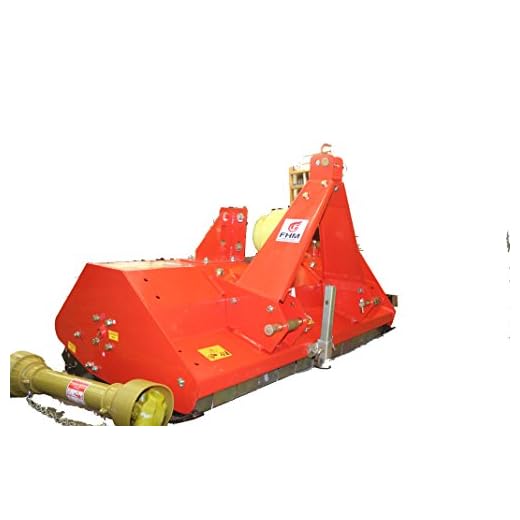
Farmer Helper 48in Cat I Flail
I found it to be a practical balance of price and capability. It gives dependable cutting performance with hammer blades and a standard Cat I hitch, ideal for routine acreage and field maintenance.
What I used it for and who it's best for
I tested this unit as an affordable, no-frills 48-inch flail designed for farmers and landowners who already have a Category I tractor. I see it as a practical tool for mowing grass, light brush, and maintaining fence lines where value and dependability matter more than heavy-duty features.
Key features I paid attention to
Those basics mean you can get to work quickly without sourcing extra driveline parts. I appreciated that the PTO driveline is included — that lowers the time-to-first-use and the initial setup frustration.
Performance, benefits, and practical notes
In practice I found the cutting to be even and predictable. The hammer blades and overlap give a nice mulching action for grasses and light woody material. It’s not the most aggressive flail on the market, but for routine acreage jobs it gets the job done without fuss.
Limitations and final thoughts
The main limitation is that this is a tractor attachment only — it’s not a stand-alone mower — and its 22+ HP rating means really small compact tractors may struggle. If you need hydraulic offset, steep-bank capability, or heavy brush clearing (larger-diameter wood), you’ll want a heavier-duty or offset model. For straightforward mowing tasks where cost matters, I think this is a solid value choice.
MechMaxx 48in Light-Duty Flail Mower
I found it to be a straightforward, no-nonsense flail for 15–35 HP tractors. It’s great for weekly mowing, orchard tidying, and light brush but won’t replace heavier-duty ditch or bank machines.
Who this is for and how I used it
I tested this MechMaxx EFS48 as a dedicated light-duty flail for a compact tractor. It felt right at home mowing lawns, maintaining pasture edges, and knocking down saplings and brush up to about three-quarters of an inch in diameter.
Notable design elements I noticed
The transmission is belt-driven which simplifies maintenance and keeps costs down. The included PTO makes hookup easy, though I recommend checking belt tension and greasing fittings before first use.
Real-world performance and tips
In day-to-day use I liked how predictable it was — consistent cut, easy to tow behind a light tractor, and gentle on fuel. It’s best used routinely; letting brush get too thick or woody will quickly expose its limits.
Final take
If you need a budget-friendly, reliable flail for a small tractor and mostly soft vegetation, this is a solid option. If you need to tackle heavier brush or steep banks, look to a heavier or offset model instead.
Final Thoughts
Pick the MechMaxx 48in Offset Flail Mower if you spend time on slopes, ditches, or banks and you have hydraulic auxilary control on your tractor. Its offset design and hydraulic articulation are real game-changers for safety and reach — it eats steep ditch work and heavy brush without fuss. This is my top recommendation for acreage owners who need rugged, slope-capable performance.
If you want a simpler, rugged workhorse without the offset complexity, go with the MechMaxx 48in EFS Flail Mower. It gives nearly the same brute cutting ability and build quality but in a more straightforward package — ideal for rough pastures, fence lines, and general brush where you want durability and value. Use the Farmer Helper only if budget is tight and your jobs are mostly routine mowing; choose the MechMaxx Light-Duty only if you truly have a smaller 15–35 HP tractor and light weekly mowing tasks.
How I size, set up, and maintain a 48-inch flail mower
I always start by matching the mower to the tractor. For these 48-inch flails, the key checks are hitch class, PTO speed, and available horsepower. Most of these units are Cat I-compatible (the Farmer Helper explicitly is), and they expect a standard 540 RPM PTO. If your tractor is around 22 HP, you’re in the sweet spot — but if your acreage has heavy brush, more torque or a heavier PTO-rated tractor makes the job easier and lasts longer.
Setup and initial adjustments
Terrain tips: where each model shines
| Model | Best terrain | Why it wins |
|---|---|---|
| MechMaxx 48in Offset | Ditches, banks, steep slopes | Hydraulic offset and heavier build for reach and safety |
| MechMaxx 48in EFS | Rough pastures, fence lines | Rugged frame and good value for brushy work |
| Farmer Helper 48in Cat I | Routine acreage, fields | Simple, dependable, good value for regular mowing |
| MechMaxx Light-Duty 48in | Orchards, weekly lawn work | Lighter build for 15–35 HP tractors and tidy jobs |
Maintenance checklist (do this regularly)
Safety and best practices
I always walk the area first. Remove big rocks, wire, and debris. When hitting heavy brush, keep PTO RPMs steady and reduce forward speed rather than overworking blades. For slopes, maintain tractor stability and use offset reach rather than overextending your tractor’s position. Finally, always follow the operator manual for shield and hitch setup — those guards are doing real work.
If you want the cleanest ditch cuts, take two passes: first at a slightly higher cut to knock down tall material, then a finishing pass at your desired height. It’s slower, but the result and reduced wear on blades make it worthwhile.
In short: match the mower to the task (offset for ditches, EFS for rugged field work, Light-Duty for small tractors), keep the rotor and blades balanced, and treat the gearbox and grease points like they’re the engine’s best friends. Do those things and a 48-inch flail will be a workhorse for seasons.
FAQ
Yes — 22HP is in the practical range for a 48-inch flail, but check the mower's PTO and minimum HP spec. Expect steady work at modest speeds; for heavy brush or continuous ditching you’ll appreciate a little more torque or a heavier-duty tractor.
Offset flails push the cutting head away from the tractor, letting you reach ditches, banks, and fence lines without driving over them. That means safer slope work, better visibility, and fewer missed spots. If you mow banks often, offset is worth the extra complexity.
Hammer blades are better for chunky brush and saplings because they strike harder and resist bending. Y (or double-edged) blades give finer mulch for turf and light vegetation. The MechMaxx units I tested use heavier hammer-style blades for toughness.
Inspect blades after the first few hours, then every 10–20 hours depending on terrain. Replace or reorient blades showing heavy wear, cracks, or bent shafts. Small steel bits and sand will eat blades faster — frequent checks pay off.
Yes if you do ditches, steep banks, or irregular terrain. The extra hoses and seals are minor tradeoffs for the reach and safety you get. If your work is flat pasture cutting, you can skip it and save complexity.
They’ll chew through light saplings and thick brush if equipped with hammer blades and if you keep forward speed steady. Don’t expect tree-stump removal — for big woody stems you’ll need a brush cutter or mulcher rated for heavier material.







Short and sweet: bought the EFS48 Green for orchard tidy-up and it’s been perfect — light enough for my 30HP tractor and does a great job around trees. No complaints so far 🙂
Happy to hear it’s working well in orchards — that’s one of the EFS48 Green’s sweet spots.
Any issues with tree bark getting nicked? I’m worried about close passes.
Great roundup — thanks for testing these! I’m leaning toward the MechMaxx VAM48 for my creek bank cleanup. The offset and hydraulic articulation sound perfect.
Couple of questions: what tractor HP did you run it on during the tests, and did you notice any extra strain on the hydraulics when using the 60°/90° rotation? Thinking of pairing it with a 40HP compact.
I ran the VAM48 mostly on a 45HP CAT 1 setup during the heavier ditch work. The hydraulic articulation handled it well — you do get some load on the hydraulics when holding extreme angles, but nothing out of spec for a properly rated carrier tractor. If your tractor is well-maintained and has decent aux flow it should be fine.
I used a VAM48 for a season on a 50HP and it was rock solid. Just be mindful of boom positioning if you hit uneven ground — the offset helps but you still want slow, deliberate passes.
Also check the PTO driveline angles — offset rigs can cause funky driveline angles if not hitched right. Little tip: shorten the top link a tad for better alignment.
Fun that they offer the EFS48 in orange and green. I swear we’re choosing tractors and implements by color now 😂
Jokes aside, the specs mention “Not Suitable for Quick Hitch Units” — anyone tried adapting one? I hate having to mess with lower links every time.
The EFS48’s mounting geometry and the shield design can interfere with some quick-hitch setups. Some people have retrofitted adapters, but that can void warranties and cause alignment issues. If you rely on a quick hitch daily, I’d either confirm fit with your quick hitch manufacturer or choose a unit explicitly compatible.
I have an EFS48 Orange and used a custom bracket from a local fab shop — worked but cost me extra and took time. Not ideal if you want plug-and-play.
Color schmoney — if it mows and doesn’t fall apart I’m good. But yeah, quick hitch = convenience. I’d rather spend more to keep my back happy 😅
Small warning: when people modify mounts, check shear pins and safety features. Quick hitch adapters change forces on the hitch points.
Quick question: what PTO speed/gearbox outputs were used in the tests? I’m curious because my tractor is older and has a lower-rated PTO.
Also, any notes on gear oil change intervals for these models?
Most tests were run at standard 540 RPM PTO. Gearbox oil change intervals depend on terrain and hours — the general recommendation is to check after the first 50 hours, then every 200 hours, but always follow the manufacturer’s manual for exact specs.
I top mine up yearly and change every 300 hours unless there’s a problem. If you work in dirty/stony conditions, check more often.
Long post incoming — been thinking about VAM48 vs EFS48 (orange) for weeks.
Pros for VAM48:
– Offset design actually works on slopes — more aggressive than the EFS in my tests.
– Heavier build and 1.5″ mulching capacity means fewer passes on thick brush.
– Hydraulic articulation is a winner for ditch work.
Cons for VAM48:
– Heavier = harder to lift on smaller tractors and uses more HP.
– Pricier, naturally.
EFS48 (Orange):
– Lighter and easier to mount on a 25-35HP tractor.
– Great value and rugged for its class.
– NOT for heavy ditching — stick to light brush and regular mowing.
If your land has bad gullies and big banks, go VAM48. If you want something weekly and easy, EFS48 is a solid pick. YMMV.
Heavy = durable in my book. I overbuilt everything on the farm and sleep better at night.
Thanks for the comparison — saved me from buying a too-hefty machine for my little orchard.
You mentioned weight: how much heavier are we talking? Enough to need heavier lift arms?
Nice breakdown — that matches our conclusions. The VAM48 is purpose-built for tougher terrain while the EFS models are the budget-conscious, generalists.
Do you know exact mulching capacity difference? The 1.5″ claim for the VAM48 sounds like it cuts thicker stems than the EFS48.
I keep reading “Not suitable for Quick Hitch Units” and that worries me. Does anyone have experience using a Cat I quick hitch with these MechMaxx models? I don’t want to be stuck swapping bars every time.
Ugh quick hitches are convenient but they make the whole system more sensitive. I’d rather spend 5 min swapping and avoid warranty headaches.
Officially they advise against quick-hitch use for the EFS models due to mounting and clearance issues. Some users have fabricated adapters, but that can introduce misalignment and stress. If you need a quick hitch, I’d either confirm fit beforehand or plan for a custom solution and accept the trade-offs.
I used a custom adaptor for a short time but ended up removing it — it caused weird wear patterns on the lower links.
If you have the space and budget, consider leaving a second set of lower links so you can swap the mower without messing with the quick hitch too much.