


Which grapple saved my back (and my weekend)? Spoiler: size matters — and so does the tines.
Rocks RUIN projects. One bad pass and your grading looks like a bad haircut. I’ve spent more Saturdays picking stones than I care to admit.
Our Top Picks


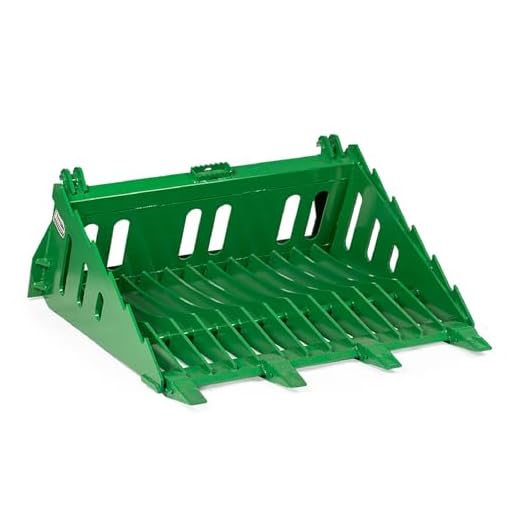


82" Fine Grade Skeleton Rock Grapple
I turn to the 82" variant when I have wide swaths to clear or bigger material to move — the extra width saves passes and boosts productivity. It’s heavy-duty and made for work that demands reach and capacity.
Who should consider this grapple
If you have large acreage, commercial jobs, or want to reduce the number of passes on a big site, this 82" grapple is an excellent choice. I use it when throughput matters — moving more material per pass saves time and fuel.
Notable features and design cues
The wide frame lets you handle larger piles and longer logs more effectively than narrower buckets. Some users mentioned the saw-tooth side can make picking rounded logs harder — I’ve found trimming or smoothing those areas can make it more versatile for mixed debris.
Field performance and caveats
On a large machine the grapple feels durable and predictable. Because of the size, make sure you have a carrier with sufficient hydraulic flow and weight. For smaller operators, the 82" model is a big commitment; you’ll want to match machine capability to the bucket’s demands.
Quick tips from experience
72" Fine Grade Skeleton Rock Grapple
I appreciate how well this grapple separates rocks from soil while holding larger debris securely. It balances heavy-duty construction with fine-grade performance for landscapers and contractors who need both sifting and moving capability.
What this tool does and who it's for
I reach for this grapple when I want to move rock and still leave a fine finish behind. The skeleton design lets dirt fall through while keeping rocks and debris in the bucket, which makes it a great choice for stone clearing, driveway prep, and landscaping where grading matters.
Key features and build
The heavy-duty steel and reinforcement give a confidence-inspiring feel when I swing it around a pile of rock. The replaceable teeth are a small but important detail — when you’re moving abrasive materials those teeth take the wear, not the bucket lip.
Practical benefits and limitations
I like that the deep-well rock dam holds material as I back up and shake out dirt. The spacing is well suited for separating rocks from soil without clogging, which means less manual picking after a pass. That said, this unit is heavy and the cylinders and hoses need correct routing on some machines — plan for adequate counterweight and check your hydraulic plumbing so you don’t step on fittings.
Real-world usage tips
72" Grade 50 Skeleton Rock Grapple Bucket
I like this bucket when I’m working with hook & pin John Deere tractors — the fitment and build quality suit those machines well. It balances strength and fine-grade capability for many landscaping and farm chores.
Fit and intended use
I recommend this Grade 50 skeleton bucket specifically when you’re running a hook & pin John Deere tractor and need a reliable rock grapple. It’s a sensible mix of strength and fine-grade sifting, so it handles both landscaping and rock clearing tasks well.
Build highlights
The sturdiness is noticeable when you pick up heavy loads. The sifting design allows dirt to fall through while rocks and bigger debris stay put, which is helpful when you want to leave a cleaner finished surface.
Things to watch for
Because it’s a heavier attachment you should confirm your tractor’s lifting capacity and add counterweight if needed. If you plan to use it across different couplers, verify adapter compatibility to avoid downtime.
Practical usage pointers
48" Fine Grade Skeleton Rock Bucket
I like this 48" bucket for operators with mid-size tractors who want fine-grade sifting without the bulk of larger grapples. It’s a balanced tool for landscapers who need precise finishing and rock removal.
Where this bucket shines
I use the 48" fine grade bucket when I want a balance between maneuverability and sifting capability. It’s ideal for landscape contractors, small farms, and homeowners with larger compact tractors who need a clean finish without overworking the machine.
Notable design elements
The feel in the field is that of a well-thought-out compromise — you get solid sifting and rock retention without the footprint of the largest grapples. The lower overall weight makes it a realistic option for mid-size tractors, but you should still evaluate ballast requirements.
Practical considerations and tips
Usage suggestions
72" Rock Grapple Bucket - Heavy Duty
I find this grapple gives a lot of capability for the dollar — it’s strong, practical, and optimized for handling rocks, brush, and heavy materials. It’s a solid pick when you need a workhorse attachment without paying top-tier prices.
Purpose and intended users
I recommend this grapple to people who need a rugged attachment for land clearing, site prep, and moving heavy debris without breaking the bank. Its 72" width and closely spaced tines make it useful for separating dirt while grabbing bigger material.
Construction and standout elements
This unit feels stout when you use it, and the deeper tines prevent small rocks from escaping when you’re transporting material. I like that it’s designed to be a direct-fit for many popular machines, which reduces downtime during swaps.
Limitations and practical advice
Because it’s built to handle big loads it’s not featherweight — make sure your machine’s hydraulics and ballast are up to the task. Also, if you run it on several different carrier models, double-check mounting plate clearances and hose routing to avoid interference or premature wear.
How I use it in the field
36" Heavy Duty Rock Lifting Tongs
I reach for tongs like these when I need a simple, mechanical way to lift and move single stones or logs without a hydraulic grapple. They’re inexpensive and effective for occasional lifting tasks when used correctly.
Purpose and appropriate uses
I keep a set of heavy-duty tongs in the toolbox for the times I need to lift a single boulder, rock, or log without firing up a grapple. They’re great for targeted moves, sawmill loads, or repositioning stones for landscaping.
Key specs and strengths
These tools are deceptively simple — the mechanics are straightforward but very effective when you use the right technique. I always make sure the gripping surfaces are clean and the stone or log is balanced before lifting.
Limitations and safety notes
They’re not a substitute for a grapple when you have lots of material to clear — tongs are for discrete lifting tasks. Also, you must pay attention to balance and bite angle; an off-center lift can let the load slip.
Field tips and best practices
60" 3-Point Landscape Rock Rake
I consider this rake a budget-friendly option for light-duty rock and debris clearing on category 1 tractors. It’s useful for smaller jobs but has limits on build heft and durability for heavy rock work.
Intended use and user profile
I recommend this 60" 3-point rake when you need a low-cost tool for light surface work: moving small rocks, leveling soil, and general site cleanup on smaller tractors. It’s a good option for homeowners and landscapers who don’t need industrial strength.
Design highlights and real-world feedback
Users report that the rake is light and easy to handle, but that tines can bend if you try to use it on rocks larger than about an inch. Packaging and assembly have been flagged in reviews, so expect some time to assemble and possibly contact support if parts arrive damaged.
Practical limitations and tips
If your primary job is moving large stones or heavy debris, this unit will feel underbuilt. For light cleanup and occasional raking it’s economical and works well. I suggest reinforcing tines or carrying spares if you expect to encounter heavier material frequently.
How I use it effectively
Final Thoughts
My top pick is the 82" Fine Grade Skeleton Rock Grapple (9/10). I choose it when I need to clear wide swaths, move heavy piles, or finish big acreage fast. The extra width cuts down on passes and the heavy-duty build handles bigger material without fuss — ideal for larger tractors and contractors who need productivity and reach.
If you want a more precise all-rounder, the 72" Fine Grade Skeleton Rock Grapple (8.8/10) is my go-to. It excels at separating rocks from soil, holds larger debris securely, and strikes a great balance between strength and fine-grade performance. Perfect for landscapers and mid-size tractor owners who need clean finishes and reliable sifting.
Honorable mentions in short: the 72" Grade 50 Skeleton is the fit-for-purpose pick if you run a John Deere hook & pin setup; the 48" Fine Grade is best for compact tractors and tight landscaping work; 36" lifting tongs are handy for occasional single-boulder moves; and the 72" Heavy Duty grapple offers the best value if you mostly move heavy debris and want a budget-friendly workhorse.
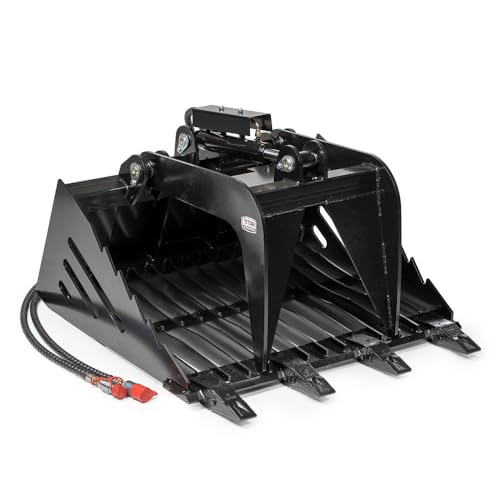






Quick question: are open-tined bottoms (all these grapples have them) good in really sandy soils? I worry about losing too much sand through the gaps when grading.
Open-tined bottoms are designed to allow fine material to pass for sifting — in sandy soils you will lose some fines through the tines. If you need to retain sand, consider a solid-bottom bucket or using the grapple primarily for rock removal and then a different attachment for final sand grading.
I use the Titan for rock removal and then a box blade to redistribute sand — two-step process but keeps more sand in place.
The 48″ for compact tractors looks perfect for my small property. Anyone tried it on a sub-compact Kubota? I’m mostly removing medium-sized rocks and doing fine grading around garden beds.
Heads-up: the teeth are replaceable but small — cost-effective, but keep spares if you’re working rocky ground a lot.
Also, if your garden has a lot of roots, the 48″ tines will pull stuff up — double-check before grading!
I have it on a Kubota BX series — works well for beds and pathways. Just go slow when you’re sifting heavier material.
The 48″ is aimed at mid/compact tractors and should suit a sub-compact Kubota if your loader has proper lift and flow. It’s great for finishing/grading — not ideal for lots of big boulders though.
I bought the Titan 72″ Fine Grade for a landscaping business. It’s fantastic at sifting stones from topsoil — saves me soooo much time on prep. The reinforced side cutters make a difference when I’m popping out roots and flotsam.
Only nitpick: a little heavy to lift at the hitch if you don’t have assistance. But overall 9/10 for my use.
Jason: I added two 40 lb wheel weights when I started hauling heavier loads. Not mandatory but it helped balance things during digging.
Appreciate this — I’m a one-man crew too. Did you install any extra counterweights after getting the 72″?
Thanks for the real-world feedback, Sarah. Good tip about the hitch lift — we recommend having a helper or using a lift fixture during install to avoid strain.
Has anyone compared the Titan 72″ Fine Grade vs the Landhonor 72″ for heavy debris? The Landhonor is cheaper on Amazon and claims 4000 PSI; tempted by the value play.
Curious about weld quality and longevity.
Landhonor offers strong value, and many users report good performance. Titan typically has a bit more refinement in fit and welds. If your budget is tight and you expect heavy but intermittent use, Landhonor is a solid pick; for high-hour, contract-style work Titan edges out for durability.
I went Landhonor to save cash and it’s been bulletproof for brush and rock piles. Not quite ‘TITAN’ polish but you get a lot for the money.
If you plan to resell or want higher resale value, people prefer Titan branding — less about quality sometimes, more about buyer confidence.
Love that the article listed the John Deere-specific fit. Saved me from ordering the wrong mount. My only complaint: more pics of the tines and teeth would help decide between the 72″ and the Grade 50 bucket.
One more thing — anybody swapped to a different tooth profile for better digging?
I tried a blunter, wider tooth for longevity and lost a bit of penetration but gained life. Tradeoffs!
Good point on photos — we’ll add more closeups in the next update. Some users swap to tougher tooth profiles for aggressive digging; check manufacturer compatibility first.
I swapped to a chisel-style tooth on an older bucket and it cut better in compacted clay. Just make sure the replacement seats correctly.
Short and sweet: if you do a lot of brush AND rocks, get the Landhonor or Titan 72/82. If you only do occasional rock lifting, the Rock Tongs and 48″ bucket for finer jobs will keep costs down.
Also: measure twice, buy once. 😅
Agree. I tried to be clever and ordered without measuring — ended up with a week of returns and a sore back.
Excellent summary, Olivia. The ‘measure twice’ line should be on a poster in every shop.
Been using the Titan 72″ Grade 50 bucket (the John Deere hook & pin fit) — works like a charm on my 5-series JD. Fitment was dead-on, no adapter needed.
FYI: check pin diameters and spacing before ordering; a little variance on older tractors can cause headaches.
Emily: just regular pivot grease on the pins. No special treatment required so far.
Nice tip about checking pins — we included that recommendation in the article, but callers still forget. Always measure and compare to the product listing.
Raj — did you need to grease anything special at hookup? I’m nervous about metal-on-metal wear.
Anyone else think the YINTATECH 60″ rake is a bit optimistic calling it heavy-duty? Bought it for light clearing and it’s okay, but if you try to yank embedded rocks it’ll flex.
Great price though. For the money I wouldn’t expect miracle metal.
I use mine mainly for topsoil prep and loose gravel. It does the job! But yeah, don’t bite off big rocks with it.
That’s a fair take — the YINTATECH rake is a budget option aimed at light-duty work. For heavy stony ground I’d recommend one of the Titan or Landhonor grapples.
Pro tip: weld a small reinforcement plate on the tine bar if you really want to step up durability. Not factory advice but works for me 😂
Great roundup — thanks! I’ve been eyeing the Titan 82″ for a while. I mainly clear pasture fence lines and the extra width seems like a time-saver.
Couple questions: how tough are the replaceable teeth in rocky ground? I don’t want to be swapping them every week. Also, anyone used the 82″ on a tractor under 100 HP? Concerned about lift and visibility.
Teeth lasted a season on my lot (mostly gravel). I keep a spare set in the shed — easy swap if you have basic tools. 👍
I run an older 95 HP tractor and the 82″ works but you’ll definitely notice slower cycles and more stress on the hydraulics. If you have to work solo a lot, the 72″ is more manageable.
Good questions, Michael. The teeth on the 82″ are heavy-duty and meant for real work — you’ll get months of use depending on soil/rock severity. For tractors under 100 HP the 82″ might be a handful; consider the 72″ or the John Deere-fit 72″ variant if fitment and lift are concerns.
Funny little side note: I used the Rock Tongs (36in) for a giant landscaping boulder and it made the job so satisfying. No hydraulics needed and zero drama.
Not a daily tool, but worth having for odd jobs. Just be careful—those serrated claws bite hard. 😬
Agreed — used them once to reposition a stone wall cap. Wrapped a strap as backup and it was fine. Safety first!
Love hearing practical uses like that, Laura. Rock tongs are underrated for occasional boulders — cheap insurance compared to a hydraulic grapple.