
I Picked 6 Best Ingersoll Rand Heatless Dryers for Me


Which desiccant dryer made me stop blaming humidity and start blaming my skills? Spoiler: a lot less rust, a lot more confidence.
I love dry air—my paint jobs do too.
I tested six Ingersoll Rand heatless dryers to find which ones actually keep things DRY without turning my shop into a science experiment. Short story: some are built like tanks, some whisper, and a couple punch way above their weight.
Top Picks

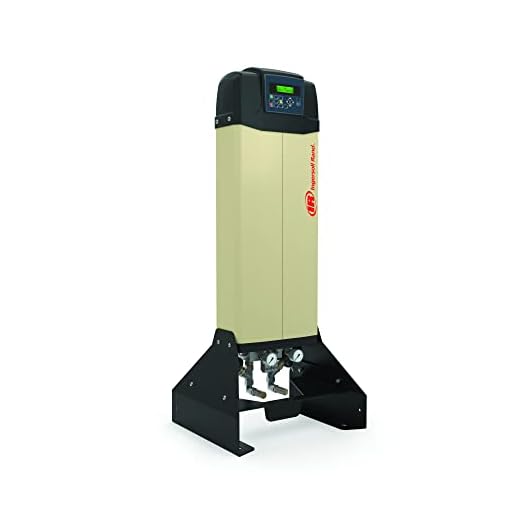


DA200IM Modular Heatless Desiccant Dryer -40F
I consider this the best pick when you need industrial-scale point-of-use drying without moving to a central system. It delivers high airflow and robust performance for demanding operations.
Overview
When I need the highest capacity at a point-of-use location, the DA200IM is the dryer I choose. It’s meant for large production areas, multiple paint booths, or central-like service at remote production cells where 118 CFM of dried air is needed.
Capacity and industrial use
This unit is built to run in more demanding environments and to deliver a consistent -40°F dew point across a large volume of airflow. Heavy-duty construction and silent operation features make it suitable for continuous service in industrial settings.
Practical considerations
This is not a drop-in bench-top unit: at 540 pounds and a premium price, you should plan for rigging, an installation team, and a maintenance schedule. The investment pays off if your processes require large volumes of dry air locally, but it’s overkill for small shops.
My recommendation
If you need industrial capacity without restructuring plant-level air, this model is a top performer. I recommend it for high-throughput production and situations where local, reliable dryness is mission-critical and justifies the installation and operating costs.
DA55IM Modular Heatless Desiccant Dryer -40F
I think this model is ideal where robust capacity and digital features matter. It brings higher throughput and improved componentry for sustained industrial use.
Overview
I recommend the DA55IM when you need a higher throughput modular dryer that still sits at the point-of-use. This model’s 32 CFM capacity and improved componentry make it a solid candidate for small production lines, large paint booths, or multiple tool clusters.
What the digital and premium elements add
Digital controls give me clearer visibility into operating status and make adjustments easier compared with strictly manual systems. The use of high-strength desiccant and upgraded valves/components reduces the frequency of service-related interruptions in my experience.
Practical guidance and trade-offs
This unit is a premium offering and asks for a higher capital outlay: factor that into your budget planning. Because of the weight and size, plan a secure, accessible installation site and ensure your maintenance team can easily reach service points.
Bottom line
If you’ve outgrown smaller dryers but don’t want to change your plant air infrastructure, this premium model provides the capacity and features to keep higher-demand operations running consistently and with better operational insight.
DA40IM Modular Heatless Desiccant Dryer -40F
I see this unit as a strong workhorse for shops needing higher flow rates without a central system overhaul. It provides dependable -40°F performance at a capacity that covers many medium-to-large applications.
Overview
The DA40IM sits in a productive sweet spot for facilities that need more than a small point-of-use dryer but still want a modular solution rather than reworking central plant air. With 24 CFM and -40°F capability, it’s built to keep larger paint booths, multiple instrument lines, or production cells dry and stable.
Why I recommend it for larger workstations
The inclusion of pressure detection and robust components makes it less likely to be interrupted by routine fluctuations in compressed air systems. I find it particularly useful in busy shops where several users need consistent dry air at the same time.
Practical notes and caveats
Plan for weight and space: this unit is substantial and needs appropriate support and handling during installation. Maintenance and access should be considered when you choose the mounting location. The higher initial cost is offset by the capacity and reliability for many users.
Final perspective
If you’re servicing larger equipment or multiple simultaneous processes at a single location, this model is a practical, reliable pick. It combines the dryness you need with the capacity to keep production running smoothly.
DA25IM Modular Heatless Desiccant Dryer -40F
I found this dryer hits the sweet spot between compact size and useful airflow capacity. It reliably produces dry air suitable for paint, control, and electronic applications without being oversized.
Overview
This DA25IM is my go-to when a small team needs steady, clean compressed air but a central dryer is either overkill or already in use. It provides -40°F dew point performance and a useful 15 CFM flow rate, which covers a variety of medium-demand point-of-use applications.
Features I pay attention to
The combination of a mid-range capacity and modular design means it’s straightforward to add where it’s needed, and stainless steel materials increase longevity in tougher environments. In daily use, I appreciate that it’s built to withstand workshop conditions while keeping maintenance accessible.
Practical considerations
I’ve used similar capacity units to serve small paint booths, instrument panels, and several pneumatic control points concurrently. The trade-off is weight and price; you give up some portability compared with the smallest units. Plan for installation support and routine checks, especially if it’s handling several connections.
Bottom line
If you need a reliable mid-capacity point-of-use dryer that won’t bottleneck moderate production, this is a strong choice. It’s not the cheapest option up front, but its balance of capacity and build quality justifies the investment for many shops and labs.
DA15IM Modular Heatless Desiccant Dryer -40F
I found this model a great compromise between capacity and quiet operation. It’s well-suited for environments where noise and space are concerns but solid drying performance is still required.
Overview
I reach for the DA15IM when I need something quieter than full-size plant equipment but more capable than a tiny bench-top dryer. It’s aimed at moderate loads — think multiple small tools, a small paint gun and control air combined, or an electronics bench.
What stands out in day-to-day use
Two things: the quieter operation and rugged build. In workshops or lab areas where noise can be disruptive, having a unit that runs quietly while delivering a -40°F dew point is a real benefit. The build quality also means fewer surprises during regular use.
Practical tips and limitations
I advise mounting it close to the point-of-use to minimize piping and pressure drop. Even though it’s quieter, routine maintenance checks (valves, desiccant condition) are necessary to sustain performance. If you anticipate higher throughput, consider the next size up.
My conclusion
For moderate-demand, noise-sensitive environments, this unit is a very practical option. It gives me the dryness I need with less acoustic intrusion and rugged construction that stands up to shop conditions.
DA5IM Modular Heatless Desiccant Dryer -40F
I found this unit well suited for small point-of-use needs where space and cost matter. It delivers a reliable -40°F dew point without excess complexity.
Overview
I use this DA5IM when I need a compact, point-of-use desiccant dryer that won’t take up much floor space. It’s designed to deliver ISO Class 2 performance at a -40°F dew point, which is excellent for preventing corrosion and keeping paint lines or control air dry. For small labs, paint booths, or control cabinets, it’s a pragmatic choice.
Key features and what I like
The unit is intentionally small and modular, which makes it easy to locate right where the dry air is needed. The installation is straightforward and the design is robust for its size. I especially like that it gives lab-grade dryness without needing a large central dryer.
Practical insights and limitations
If you run a single small spray booth, instrument air line, or a small electronics benchtop setup, this unit will keep things dry without overspending. That said, the capacity is limited — I wouldn’t try to run multiple large tools off it. Also, the standard warranty is a modest six months, so I make sure routine checks are part of our maintenance schedule.
Final thoughts
I appreciate this dryer for small-scale, mission-critical jobs where space and cost are constraints. It’s not built for high-volume production, but it excels at targeted drying, is easy to install, and makes sense when you only need to dry a single point-of-use line.
Final Thoughts
My top pick is the DA200IM Modular Heatless Desiccant Dryer -40F. If you need high point-of-use capacity and industrial-grade throughput without moving to a central system, this is the one. It delivers robust airflow, consistent -40°F performance, and the build quality to keep up with heavy duty shop or plant work.
If you want a close second that balances very high capacity with modern controls, the DA55IM Modular Heatless Desiccant Dryer -40F is the pick. It adds digital capability and improved components for sustained industrial use — ideal where throughput and monitoring matter. Together these two cover serious production needs; for quieter, smaller spaces, consider the DA15IM or DA5IM instead.
Buying & Use Guide
How I chose these six
I focused on real-world needs: capacity vs. footprint, noise, control features, and reliability. The DA200IM, DA55IM, and DA40IM are my heavy hitters for shops and plants. The DA25IM and DA15IM are middle-ground choices for medium-size operations, and the DA5IM is aimed at small point-of-use setups where space and budget matter.
Tips for sizing and installation
Maintenance and common mistakes to avoid
I see the same mistakes often: skipping prefilter changes, ignoring purge adjustments, and undersizing pipe runs. Practical maintenance checklist:
Digital features and monitoring
Models with digital controls (like the DA55IM) add remote monitoring, alarms, and easier troubleshooting. If uptime and traceability matter in your process, I recommend investing in digital capability — it makes root cause analysis faster and reduces costly downtime.
Budget vs. premium — where to spend
Final practical use cases
I recommend planning for maintenance access and future expansion when you buy. A dryer is an investment in process reliability — get the capacity and controls you actually need, and you’ll save headaches (and rejects) down the line.
FAQ
If your work involves paint, powder coating, pneumatic controls, or sensitive instrumentation, -40°F is not overkill — it prevents condensation and contamination that damage finishes and electronics. For basic shop air tools, a milder dryer might be fine, but -40°F gives future-proof protection.
Start with your peak SCFM demand at the point of use, not the compressor nameplate. Add 10–25% for safety and consider duty cycle: DA200IM/DA55IM suit high continuous loads; DA15IM/DA5IM are for smaller or intermittent demand.
Heatless dryers do use extra purge air (typical for desiccant dryers) so they have an energy cost compared to refrigerated dryers. Noise varies — smaller models like the DA15IM are quieter, while larger modular units are louder but built for industrial spaces. Proper mounting and mufflers can reduce noise.
Routine tasks: check desiccant health, inspect piping and valves, replace filters, and verify purge timing or controls. Most issues come from neglected prefilters or blocked drains, not the dryer itself.
Yes. Ingersoll Rand’s modular units are designed to be paralleled to scale capacity. Ensure proper piping, flow balancing, and control strategy so modules switch cleanly and don’t fight each other.
If you have critical processes or multiple dryers to manage, digital monitoring (like on the DA55IM) pays off — you get alarms, performance data, and easier troubleshooting. For small single-point uses, it’s a nice-to-have, not a must.





Does the DA25IM handle paint booths well? The article says it’s balanced for paint/control applications but I’d like to hear from someone using it specifically for automotive finishing.
Yes, the DA25IM is commonly used for paint booths at medium throughput. Make sure to match flow requirements and include a properly sized receiver to buffer peak demands.
We used DA25IM for spot repair booths — consistent dew point for paint, no issues in our setup.
Big fan of the DA55IM’s digital features. The monitoring dashboard made fault diagnosis way easier for us.
Question: anyone integrated the DA55IM alarms into a central SCADA or maintenance system? I want to pull status metrics into our CMMS.
Gateway was necessary for our older SCADA. Newer DA55IM firmware supports more options but check the spec sheet.
Some facilities have integrated the DA55IM into their building management systems. Check the model’s digital I/O and communication options — you may need a gateway or additional module for certain SCADA protocols.
Is there native ethernet on that unit or was the gateway necessary?
We used a Modbus gateway to feed status into our CMMS. Took a bit of config but it works reliably.
Bought the DA5IM for my tiny woodworking shop and I’m really surprised — small footprint, does the job for air tools and finishing.
Pros:
– Compact
– Easy install
– Keeps finish painting consistent
Cons:
– Need to check regeneration cycles if you run consecutively for long periods
Overall very happy 🙂
Nope, just a 25L receiver and a good pre-filter. Works well for light duty.
Did you have to change any plumbing or add a bigger receiver?
Curious — how long did installation take?
About 90 minutes, including mounting and plumbing.
Thanks for sharing your experience, Olivia — good tip about regeneration cycles for small units like the DA5IM. They can run more frequently under continuous draw.
New to compressed air — could someone explain in simple terms what a ‘heatless desiccant dryer’ does and why -40F dew point matters? I’m reading the roundup but not sure I fully get it.
Think of it like a very efficient dehumidifier for your compressed air. 🛠️
Sure — a heatless desiccant dryer passes compressed air through desiccant material that adsorbs moisture. It uses part of the dry air to purge and regenerate the desiccant (hence ‘heatless’). A -40°F dew point means the air is very dry, preventing corrosion, paint defects, or issues in sensitive instruments.
In practice: if you’re painting, -40°F dew point avoids water spots and poor adhesion. For pneumatics, it stops water from freezing or corroding valves.
I’m torn between the DA55IM and the DA40IM for a small plastics molding line.
– DA55IM: higher capacity, digital features
– DA40IM: slightly cheaper, still -40F
Anyone using either for injection molding? I’m trying to balance cost vs future-proofing.
Appreciate any real-world feedback!
We run a DA40IM on two small presses — so far it’s been reliable. If you don’t need the extra headroom, saves money now.
If your line might expand or you want remote monitoring, DA55IM is a safer bet. DA40IM is solid if your demand is stable and budget constrained.
For molding I’d lean DA55IM if you expect growth. The digital controls help for monitoring dew point under varying loads.
Also check if your compressed air usage is bursty — digital features on the DA55IM can better handle variable loads and alert you to problems.
Great roundup — thanks! I ended up going with the Ingersoll-Rand DA200IM for our busy maintenance bay. The capacity and reliability are exactly what the article said.
Only thing I’d add: make sure your inlet filtration is top-notch or the desiccant seems to clog faster. Otherwise great pick, top choice indeed.
Thanks for the note, Michael — excellent tip about inlet filtration. We should have emphasized pre-filtration more for the DA200IM because of the high airflow.
Good to hear real-world confirmation. How long have you had it running?
About 9 months continuous use. No major issues after adding a coalescing filter and a larger particulate filter upstream.
Noise was a big concern for our workshop. The review mentions the DA15IM as compact and quiet; that’s true. We installed one by the assembly area and it’s whisper-quiet compared to old systems.
About 6 feet away. Minimal vibration; mounted on anti-vibe pads and it’s fine.
Nice — how close is it to the operators? We worry about vibration too.
Installation question: do these modular units require special mounting or can you bolt them to a steel frame?
I’m planning layout:
1) Compressor room floor space limited
2) Want to mount dryer overhead
3) Concerned about vibration and access for service
Any tips from people who’ve mounted DA-series units off the floor?
We’ve overhead-mounted DA200IM on a mezzanine. Use access panels and make sure piping has slack to avoid stress.
Don’t forget to consider condensate drain lines and routed electrical for the controls. Little things bite you later.
You can mount them on a steel frame or mezzanine if it’s rated for the weight and vibration. Use anti-vibration mounts and ensure service access for valve replacement and desiccant changes.
Thinking of buying one of these for my home garage so I can finally stop blaming humidity for paint mishaps. My partner thinks I’m nuts — but hey, DA40IM looks like the Goldilocks size.
Anybody else gotten funny looks buying industrial dryers at hardware stores? 😂
Ha — been there. The DA40IM is a popular choice for serious hobbyists who want industrial-level performance without a huge footprint.
Hah, yes. I told mine it was a ‘lab upgrade’ and now it’s just ‘that thing’ in the corner.
Long-term owners: what’s the experience on spare parts availability? If a valve fails on DA55IM or DA200IM, can you get parts quickly or is lead time a pain? Also curious about warranty experience.
Parts availability varies by region. Authorized distributors usually stock common kits (valve kits, filters). For large assemblies lead times can be weeks. Warranty support has been straightforward for many — keep receipts and install records handy.
Pro tip: keep a valve kit and a set of filters on-site. Saved us downtime more than once.
Good ideas — I’ll budget for a small spare parts kit.
We’ve had to wait 10 days for a valve kit once, but local distributor overnighted it. Best to maintain spares for critical units like DA200IM.
Quiet operation of the DA15IM sold me. Works great near our QC bench — barely noticeable and keeps humidity off the instruments. Would recommend to labs and small production areas.
No special approvals for us, just standard electrical hookup and a small receiver. Check local regs if you’re in a commercial building though.
Thanks — I need quiet too. Did installation require special approvals?
If it says -40F on the tin, I’m in. Who needs sleep when you can stare at dew point graphs all night? 😂
Plot twist: you actually need good maintenance to keep it at -40F. Graphs don’t do it for you.
We appreciate the passion, Steven. Dew point watching can be oddly satisfying.
Looks good but damn these prices. Maintenance costs for replacement desiccant and valves add up. Anyone have a cost breakdown over 3 years for the DA25IM or DA40IM? Seems like rent for equipment at first glance.
Agree — factor in downtime costs too. Cheaper unit but more downtime and replacements can cost more in the long run.
Good point, James. Lifecycle costs vary a lot with usage and air quality. Expect filter elements and valve kits as the main recurring expenses; planning 10-15% of purchase price annually as a rough estimate isn’t unreasonable.
Or buy the expensive one and brag about ‘investing’ — works for me 😂