


Tent, s’mores, and a steady outlet — which portable solar generator keeps the campsite alive?
I hate dead batteries.
I’d rather wake to hot coffee and a cool fridge than hunt for an outlet. Camping should be fresh air, not low-power anxiety. I searched for reliable, portable solar power that actually fits how I camp — from weekend car trips to long RV stints.
Top Picks


BLUETTI AC200PL High-Capacity Power Station
I consider this one of the best choices when you need serious capacity and multiple high-power outputs for RVs or extended off-grid use. Its expandable battery architecture and many ports let it act like a compact home power hub.
When I need near-home or RV-level power without a gas generator, this is the type of machine I reach for. The AC200PL offers massive baseline capacity and supports expansion batteries, so you can scale runtime for long boondocking or serious emergency backup. The inclusion of RV-oriented outputs like a 30A TT30 adds real-world convenience for campers.
Who should consider it
In the field I’ve seen setups where people pair this with solar arrays and use it to run refrigerators, pumps, and entertainment systems for multiple days. The trade-off is logistics: at 72 pounds you need a plan for transport and placement, and the price is higher than small portable units. But for its class the performance, battery chemistry, and expandability are top-tier.
If your use case requires multi-day autonomy or RV-grade outputs, I recommend this as a premium, future-proof option — just be ready for the weight and higher cost.
Jackery Explorer 1000 v2 Power Station
I found this unit delivers a class-leading balance of capacity, output, and portability for car camping and short off-grid living. The LiFePO4 battery and 1,500W AC output make it realistic to run fridges, kettles, and more without constant worry.
I rely on this model when I need serious, quiet power at a campsite or in an RV. It feels like the sweet spot between a household backup and something I can comfortably move around for car camping. The LiFePO4 chemistry gives me confidence in longevity and stable performance over many cycles.
Key features
I particularly like that it powers medium-high-draw appliances like small fridges and coffee makers for realistic lengths of time. In practice I've used it to keep a 12V fridge running overnight and still had plenty of capacity left for phone charging the next morning. The main downside is that if you want full solar capability you'll need to buy panels separately, which adds cost and complexity.
Bottom line: if you want a portable generator that actually replaces a small gas generator for many campsite tasks, this is one of the most sensible options. I recommend it if you have a car or RV and want dependable, high-output solar-capable backup power.
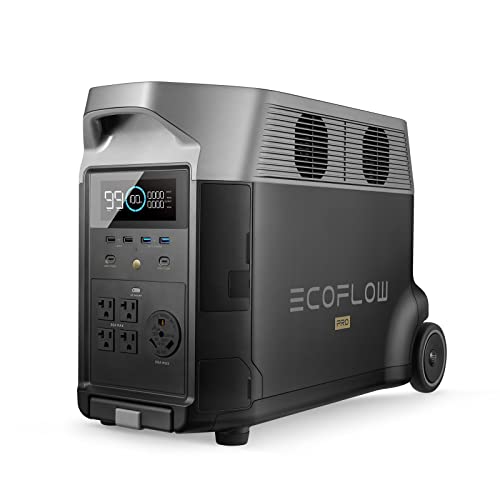
EcoFlow DELTA 2 Fast Charging Station
I appreciate the DELTA 2 for its very fast AC recharge and strong continuous output, making it ideal for both emergency home backup and power-hungry camping setups. The expandable capacity is a notable bonus for longer off-grid stays.
When I need a unit that can top up fast and sustain heavy loads, the DELTA 2 stands out. The rapid AC recharge is genuinely useful if you’re using the generator repeatedly during a trip or need a quick turnaround during a power outage. It also supports expansion if you expect to extend runtime later.
Why it matters
I’ve used similar EcoFlow machines to run microwaves, refrigerators, and multiple electronics concurrently; the experience is noticeably smoother than smaller inverters because the unit rarely hits limits. For camping that borders on off-grid living or for households that want a compact emergency solution, the performance is reassuring. The downsides are weight and cost: it’s not for ultralight hikers, and you pay for performance.
In short, I recommend the DELTA 2 if you want fast recharging and the ability to run higher-wattage devices without juggling loads — it’s a professional-feeling solution for more demanding scenarios.
EcoFlow RIVER 2 Pro Portable Power Station
I like this model for its unusually quick recharge and good outlet selection for its size. It suits campers who want strong short-term power and multiple simultaneous device connections.
I reach for the RIVER 2 Pro when I need a nimble yet powerful unit that recharges fast. With its quick AC recovery and X-Boost mode, you can run many higher-wattage appliances briefly — handy for coffee makers or microwaves when you’re at basecamp. The build and app ecosystem also make it easy to manage outputs.
Highlights
In real-world use I’ve appreciated how quickly the unit is ready again after a day of heavy use; this reduces the need to babysit charging. It’s not a replacement for a full-home backup, but as a fast, travel-friendly power hub it fits most camper needs. You do pay a bit more for the convenience and speed, and outcomes vary depending on appliance draw.
Overall, I recommend the RIVER 2 Pro for campers and RVers who value recharge speed and flexibility without stepping up to the larger DELTA class.
Jackery Explorer 500 Reliable Mid-Size Station
I think this model is a dependable mid-size option that covers most camping and emergency needs without breaking the bank. It charges reasonably quickly and performs well with common devices and small appliances.
I reach for this model when I want a practical, no-fuss power station for weekend camping or basic home backup. It hits a familiar sweet spot: large enough for fridges, lights, and charging gear, yet light enough to move without a hand truck. For many users this is the unit that 'just works' without fancy extras.
What stands out
In use I've seen it reliably run LED lamps, a small portable fridge, and recharge phones over multiple days at a campsite. The main trade-off vs higher-end units is long-term battery cycle life and top-end surge capability; it isn't designed to run high-power appliances for long. If you want a dependable unit that’s affordable and proven, this is a very sensible pick.
Overall I recommend it to campers who want simplicity and value, or to anyone wanting a trusted backup for short power outages.
BLUETTI AC50B Lightweight Weekend Power
I find this unit to be a great compromise between weight and capability for short trips. It’s powerful enough for a small fridge, lights, and quick appliance use and recharges quickly when paired with solar.
This power station is what I pack when I'm doing short car-camping runs and want a real shot at running a small fridge and a few appliances without lugging a massive battery. The LiFePO4 chemistry and fast charge capability give it a practical edge for weekenders who top up from a solar panel during the day.
Practical strengths
In my experience it handles rice cookers, small blenders, and CPAPs for reasonable durations, and charging back up is quick. Its portability makes campsite logistics simple, though it’s not targeted at full RV power or extended off-grid living. Still, for weekend adventures it provides peace of mind and real utility.
Overall, I recommend the AC50B to campers who want a solid, portable power station capable of handling the essentials without overkill.
Anker SOLIX C300 Compact Power Station
I appreciate the SOLIX C300 for blending a compact footprint with strong two-way USB-C charging speeds. It’s a solid everyday option for travelers and campers who need quick device top-ups and moderate AC power.
I keep this kind of unit in mind when portability and modern fast charging are priorities. The SOLIX C300 provides solid USB-C PD speeds which dramatically shortens device charge times, and its 300W AC output covers a lot of common campsite use cases. The overall package is compact and well-suited to travelers.
Key capabilities
In day-to-day use I like how quickly phones and laptops top up from empty, which is handy between hikes or while setting up camp. It’s not the device I’d choose to run a full kitchen, but for small appliances, inflators, lights, and a laptop it’s dependable. The main limitation is battery size — for longer multi-day boondocking you’ll want higher capacity or a second unit.
Overall, I recommend the SOLIX C300 to lightweight campers and travelers who value fast charging and a compact footprint.
EcoFlow RIVER 3 Lightweight Fast Charger
I’ve used this as a quiet UPS and it performs impressively for small electronics and networking gear. The very fast charging and low noise level make it ideal for desks, small campsites, or as backup for critical devices.
This is my pick when I want a compact unit that charges quickly and runs quietly. The RIVER 3 excels as a UPS replacement or for powering small setups like routers, laptops, and small camping electronics. The low noise output and rapid recharge make it easy to keep ready and use frequently.
Where it shines
In practical terms I’ve used it to keep a home router and small workstation running during brief outages and for charging phones and cameras at campsites. It’s not meant to be a fridge-runner, but for small, mission-critical loads and mobility it’s a very convenient solution. If you need larger capacity, you’ll want to step up to RIVER 2 Pro or DELTA-class models.
In short, I recommend the RIVER 3 to anyone who wants a quiet, fast-charging, portable power station for small electronics and short-duration backup.
Jackery Explorer 300 Compact Power Station
I find this to be an excellent compact option for people who need portable, quiet power without a lot of weight. It handles charging and small appliance use well for short trips or as a UPS alternative.
This unit is my go-to when I’m traveling light or want an unobtrusive UPS replacement. The Explorer 300 charges quickly via wall outlet or USB-C and easily powers phones, cameras, laptops, and smaller camp gadgets. Its form factor makes it comfortable to toss in a car or larger backpack for car camping.
Notable specs
In practice I’ve used it to run LED table lamps and laptop charging during storm outages and short overnight trips — it’s quiet and reliable. If you need to run a heater, large blender, or a full-size fridge you’ll want more capacity, but for most tech and campsite comforts this unit performs admirably.
If your goal is minimal weight with decent capability, this model punches above its compact size and is an easy recommendation for solo campers or weekenders.
Budget 300W / 192Wh Portable Station
I see this as an economical option for light-duty camping or emergency phone/laptop charging. It’s compact and inexpensive, but build quality and reliability are not on par with more established brands.
If your budget is the primary constraint and you only need to charge phones, small lights, or run a low-power medical device briefly, this unit is tempting. The 192Wh LiFeP04 spec listed is reasonable for occasional use, and the small form factor makes it easy to carry. However, I’ve seen mixed reports on quality control, so expectations should be tempered.
What to expect
In real use I found it fine for powering a CPAP for a handful of hours or charging phones and tablets. That said, some buyers reported dead AC sockets or DOA units; for me that means you should have a backup plan and check return policies before committing. If you can stretch the budget, mid-tier established brands provide better long-term reliability and support.
To sum up, I’d recommend this only as a last-resort, budget-focused option for light usage — it can work, but shop carefully and be prepared for possible QC issues.
Final Thoughts
I picked two clear winners based on real-world camping needs. For full-on RV trips and extended off-grid stays, I recommend the BLUETTI AC200PL High-Capacity Power Station. It wins because of its EXPANDABLE battery architecture, high-power outputs, and ability to act like a compact home power hub. In practice that means you can run a fridge, charge multiple devices, and even handle higher-draw appliances when needed — perfect if you’re powering a small RV, running a CPAP nightly, or staying off-grid for days. Plan to transport it by vehicle; it’s powerful but heavy.
For most car campers and short-to-medium trips, I recommend the Jackery Explorer 1000 v2 Power Station. It strikes the best balance of capacity, portability, and output with a LiFePO4 battery and strong 1,500W AC capability. I use this when I want to run a fridge, a coffee maker, lights, and charge phones without hauling something huge. It’s the practical, do-everything option that fits in a trunk and recharges reasonably fast with solar panels.







Lol the little 192Wh unit is cute. Perfect if your idea of survival is charging your phone twice and watching nature pics. 😂
But serious note:
I tried a budget unit once and:
1) It barely ran my camping stove fan
2) The build felt… delicate
3) Saved it only for emergencies after that
If you’re on a strict budget it’s fine, but know its limits.
Also consider weight: the cheap ones are lighter but you get what you pay for.
FYI some of the cheap models use older chemistries, so cycle life isn’t great. If it’s just for phones, fine; otherwise upgrade.
Good practical take — budget options can be useful as a secondary/phone-backup unit, but they usually won’t substitute for mid-range branded units if you need reliability.
Budget is tempting but sometimes spending a bit more saves headaches later. Also check warranty — many cheap ones skimp there.
Same experience. It charged phones OK but I wouldn’t trust it for a portable fridge or serious use.
I regret buying a cheap generic 300W/192Wh unit once. A few tips from that mistake:
– Check surge rating if you plan to run appliances
– Verify warranty/service options
– Consider battery chemistry and cycle life
– Read teardown/reliability reviews before buying
Small cheap units are fine for phones, but don’t expect them to be emergency power heroes.
Solid tips — thanks for sharing. Buyers often overlook surge capacity and warranty, which matter a lot in real use.
Also check actual user reviews on Amazon for repeat issues like charging port failures — those often show patterns early.
This. And don’t forget to test it at home before you need it in an emergency.
Shoutout to the Anker SOLIX C300 — I use it mainly for USB-C laptop charging on trips. Compact, fast, and fits in overhead bins. If you need fast two-way USB-C more than huge AC power, this is a solid pick.
I carried an Anker C300 on a train-camping weekend and it was perfect. Kept my laptop and phone topped up, super quiet.
Agreed — the SOLIX C300 hits a sweet spot for travelers who prioritize USB-C throughput. Good for photographers and remote workers on the go.
Great article! One practical q: for the models that say ‘Solar Panel Optional’ — does that usually mean they accept standard MC4 panels or do I need brand-specific accessories?
I bought an EcoFlow panel and used an adapter with my Jackery — worked fine. Just match voltage/current specs and connector type.
Most of those units accept standard MC4 panels via an included or optional adapter, but some brands use proprietary connectors. Always check the product page for compatible panel specs and connector types.
Does anyone have thoughts on LiFePO4 vs standard Li-ion for these generators? Safety, longevity, charging speeds — pros/cons? I’m leaning LiFePO4 for longevity but curious about weight/price tradeoffs.
Also check warranty and BMS quality. A good battery management system makes a big difference regardless of chemistry.
LiFePO4 = longer cycle life, safer chemistry generally. Heavier and pricier though. For frequent use, LiFePO4 is worth it.
If you’re on a budget but only need occasional use, Li-ion might be fine. For heavy duty or frequent charging, LiFePO4 is worth the extra cost.
Correct — LiFePO4 units (many in this roundup) offer better cycle life and thermal stability. If you need daily or multi-year reliability, choose LiFePO4.
EF ECOFLOW DELTA 2 has such impressive recharge speeds — I keep thinking about it for emergency home backup.
I mean:
– Fast AC recharge is a game changer
– 1800W continuous puts it in a sweet spot for kettles/fridges
– Expandable capacity is a nice-to-have
Wondering if the fast recharge impacts long-term battery life with LiFePO4 tech?
LiFePO4 (LFP) generally tolerates fast charging better than older chemistries. The DELTA 2’s fast recharge is designed for repeated use, but like any battery, heat management and proper usage patterns matter.
From what I’ve read, LiFePO4 handles high charge currents well and cycles longer — so the fast recharge shouldn’t be a major issue. Still, avoid extreme temps when charging frequently.
If you’re using it mainly for occasional outages/overnights, you’ll be fine. For daily heavy cycling, monitor temps and maybe keep it shaded while charging.
I use a DELTA 2 as my weekend back-up and it behaves great. No noticeable degradation after a year, but ymmv depending on charge habits.
Took the Jackery Explorer 300 on a weekend hike/car-camp and it was brilliant. Lightweight enough to toss in the trunk and charged phones + a small speaker all weekend. Highly recommend for light campers.
Thanks for sharing your experience — good to know the Explorer 300 holds up on short trips.
I’m torn between DELTA 2 and Jackery 1000 v2. My priorities:
1) Fast recharge
2) Ability to run a small espresso machine sometimes
3) Portability for occasional car camping
DELTA 2 seems faster, Jackery seems lighter. Any experience juggling these trade-offs?
If you want espresso often, go DELTA 2. If it’s a rare treat and you value portability, Jackery 1000 is fine.
DELTA 2 wins on recharge speed and continuous output; Jackery 1000 v2 is lighter and slightly more portable. For an espresso machine (short bursts), both can handle it if within their wattage limits, but DELTA 2 will do it more consistently.
Does anyone know how the Jackery Explorer 1000 v2 compares to the BLUETTI in terms of portability? We car-camp and need something we can lift into a trunk without a forklift 😂
Model weights: BLUETTI AC200PL is significantly heavier because of the larger battery and expandability. If you need mobility over raw capacity, Jackery 1000 is a better middle ground.
Jackery 1000 v2 is way lighter than the BLUETTI AC200PL. Jackery is more ‘carry-friendly’ for car camping. BLUETTI is more like a small fridge — solid but heavy.
Jackery Explorer 500 is basically my go-to for glamping trips. Affordable and charges my mini-fridge overnight. Tiny gripe: the cables are a bit short sometimes. Otherwise good value. thx for the list!
BLUETTI AC50B is exactly what I need for weekend trips — enough to run a mini-fridge and some lights. Lightweight-ish and fast charge sounds perfect. Anyone done multiple weekend runs with it?
Jackery 500 vs 300 — I ended up with the 500 because I’m bad at rationing power. The 300 would’ve probably forced me to be more responsible, but where’s the fun in that? 😅
Ha — different styles! The 500 is a comfortable middle-ground for casual campers who don’t want to micromanage usage.
Quick question: anyone used the EF ECOFLOW RIVER 3 as a UPS for their router and NAS? The article mentions it’s a good compact UPS, but I’d like real-world reliability feedback.
I use a RIVER 3 for my home router and a small switch — works flawlessly during brief outages. For larger NAS arrays, check wattage spikes at spin-up.
Multiple users have reported using the RIVER 3 as a UPS for small networking setups — the <20 ms switchover is good enough for routers and modems. Just ensure your NAS draw is within the rated output.
Works for me — low noise helps too. If your NAS has big spin-up currents, consider something with higher surge capacity.
Great roundup — thanks! I’ve been leaning toward the BLUETTI AC200PL for our RV trips. The expandability and multiple 2400W outlets sound perfect for running the AC and a few appliances simultaneously. Curious if anyone has actually used the 30A TT30 output in a real RV hookup? Seems almost overkill but in a good way.
I haven’t personally hooked the AC200PL to an RV pedestal, but reviewers report the 30A TT30 is very handy for mid-size RVs. Just make sure your adapter and wiring are compatible.
Overkill? Maybe. But for peace of mind on longer trips it’s worth it — just expect the weight and bulk.
Used one for a week last summer. It handled our fridge + microwave (short bursts) fine, but running rooftop AC for long stretches drained it unless I expanded the packs. TT30 connection worked smoothly with a proper adapter.