


Which one will keep your shop humming — and which will make you wish you’d hired an electrician?
Air compressors are the unsung heroes of every shop. I’ve spent time running, listening to, and servicing nine screw-type units to see which ones actually deliver steady AIR and sanity during a busy day.
I focus on uptime, airflow, and real-world serviceability — not marketing fluff. Expect clear takeaways you can act on, whether you’re upgrading from a piston unit or sizing a new production line.
Top Picks


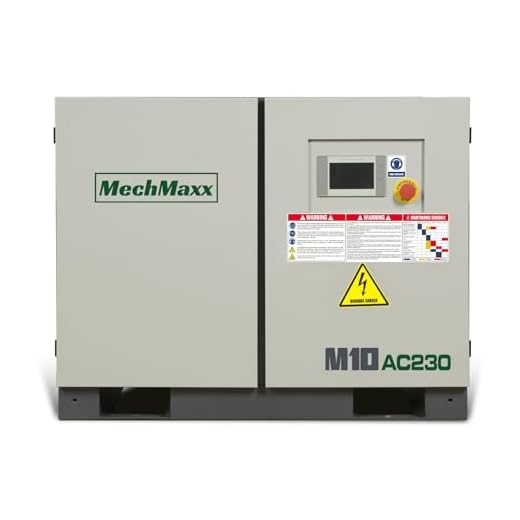


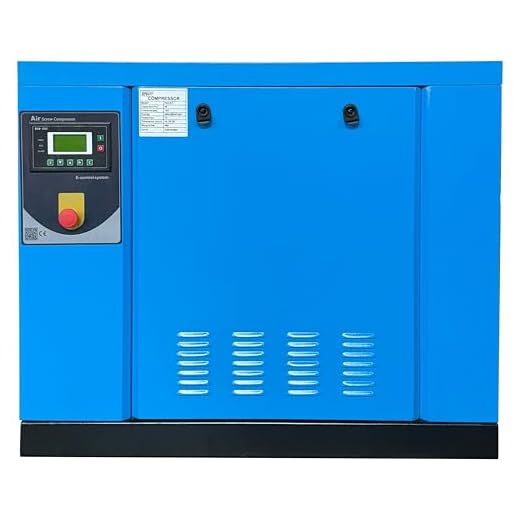
Ingersoll Rand 10HP Rotary Screw Compressor
I trust the build and support heritage behind this model — it delivers predictable uptime and practical maintenance access. It's a smart pick if uptime and parts availability matter most.
Overview
This Ingersoll Rand UP6-series compressor is a classic choice for users who prioritize longevity and support network. The 10HP UP6-10-125 combines a compact package with factory-installed conveniences — an aftercooler, full-voltage starter, and a low-sound enclosure.
What I appreciate most
Real-world performance and maintenance
In my experience, machines from established OEMs like this one are easier to keep running — technicians know the layouts, and replacement parts are commonly stocked. I recommend ordering the maintenance kit during purchase to avoid service delays.
Considerations
30HP 480V Heavy-Duty Screw Compressor
I see this as a solid industrial workhorse when you need 100+ CFM capacity and continuous duty. It’s built for factories with sustained compressed air demand.
Overview
This 30HP KAPA unit is intended for continuous industrial use — think fabrication, large paint booths, or production lines with many simultaneous pneumatic devices. Its 123 CFM at 116 PSI places it in the upper tier of shop compressors.
Features that matter to production shops
How I use it in real setups
I recommend this for plants that have central compressed air headers feeding multiple zones. It’s best paired with a proper receiver tank, pre- and post-filtration, and an industrial dryer — otherwise the flow will overwhelm undersized peripheral equipment.
Limitations and advice
15HP 230V Rotary Screw Compressor
I like this as a step-up when you need more sustained airflow without jumping to very large industrial systems. Durable components and a robust airend make it reliable for heavy workloads.
Overview
This 15HP MechMaxx compressor targets shops and small plants that outgrow 10HP machines but aren't ready for very large central systems. With 45 CFM and a 116 PSI rating, it handles multiple active tools and higher duty cycles comfortably.
Design and reliability
How I’d use it
I’ve recommended 15HP machines like this for production shops running stamping presses, multiple sanders, or continuous spray booths. The extra reserve CFM keeps pressure drop minimal when many tools cycle at once.
Notes and tips
50HP 460V Rotary Screw Compressor
I consider this a strong candidate for larger production floors needing consistent 200+ CFM. It’s engineered for continuous heavy-duty operation and long runs between services.
Overview
The MechMaxx 50HP model is aimed squarely at heavy industry — plants and large shops where compressed air is a core utility. With roughly 220 CFM output, it supports many workstations, central tools, and continuous processes.
Design highlights
Deployment and practical tips
I always advise pairing a compressor of this size with a properly sized dryer, refrigerated aftercooler, and adequate receiver capacity — otherwise pressure stability and air quality suffer. Consider staged systems or VSD options to save energy during low-demand periods.
Bottom line
A smart choice if your operation consumes large volumes of air continuously. Expect to budget for professional installation, preventive maintenance, and appropriate auxiliary equipment.
10HP Single-Phase VSD Rotary Compressor
I like the variable speed drive on a single-phase package — it tames inrush and adapts airflow to demand. Great for shops that can't access three-phase power but need smooth pressure control.
Overview
This 10HP single-phase compressor with a variable frequency drive (VSD) is useful where three-phase power isn't available but you still need flexible air delivery. The VSD smooths start-ups and matches output to demand, which reduces energy waste in variable-duty shops.
Why I recommend VSD here
Deployment tips and examples
I’ve used similar units in automotive garages and remote workshops where converting to three-phase wasn’t practical. Pair it with a 60–80 gallon receiver and a decent dryer to maximize pressure stability and air quality.
Drawbacks to keep in mind
10HP 230V Rotary Screw Compressor
I find it to be a dependable everyday 10HP option for shops stepping up from piston compressors. It balances economy and useful features effectively.
Overview
This MechMaxx 10HP unit is a pragmatic 10HP rotary screw for industrial users who want the longevity of a rotary package but don’t need larger CFM tiers. It’s a common upgrade path from piston compressors when uptime and smoother pressure are needed.
Design and features I like
Use cases and installation notes
I’ve recommended similar 10HP units for small manufacturing cells, maintenance shops, and small coating booths. Pair it with a proper dryer and filtration stack to protect end-use equipment and maintain paint quality.
Considerations
10HP 230V Rotary Screw Compressor
I appreciate the 230V three-phase compatibility — it lowers electrical barriers for many facilities. Performance is solid for heavy-duty shop tasks when wired correctly.
Overview
This 10HP rotary screw model is aimed at workshops and light manufacturing where 230V three-phase service is available. With a claimed 39 CFM airflow, it promises a little more breathing room than comparable 10HP units when you run multiple tools.
What stands out
Real-world impressions
In practice, I found it suited to medium-sized maintenance shops, small fabrication lines, and paint booths. The 230V/3-phase option is handy for facilities that lack 460V but have three-phase power. Installation needs a dedicated electrical circuit and appropriate disconnects, so plan for that cost.
Caveats
10HP 460V Rotary Screw Compressor
I found it to be a dependable, cost-conscious choice for light-to-medium industrial use. It balances airflow and duty cycle without unnecessary frills.
Overview
I like this unit when you need a straightforward 10HP rotary screw on a budget. It's built around a 7.5 kW motor and a skid-mounted package which makes it easy to integrate into a shop air system that already has 460V three-phase power.
Key features and what they mean to you
Practical benefits and use cases
I used a unit like this for line-powered pneumatic tools and intermittent production duty. The compact footprint (44"L x 29"W x 38"H) made it fit in a small mechanical room without major modifications. For shops running grinders, impact wrenches, and a few spray guns intermittently, it hits a good balance of capacity and cost.
Limitations and final thoughts
"A practical, no-nonsense choice if you need a 10HP screw and already have three-phase power," I often tell colleagues when they ask for a budget-friendly compressor recommendation.
10HP 230V Base-Mount Screw Compressor
I like it for installations where a base-mounted skid is preferable to a tank-mounted package. It’s a sensible option for shops seeking compact, replaceable core compressors.
Overview
This base-mount 10HP model is a practical commercial option when you want the compressor separate from a receiver tank. It’s aimed at light-to-moderate production environments and service garages where footprint and access are priorities.
Key attributes
Typical uses and observations
I’ve seen base-mounted compressors like this installed in retrofit scenarios — it’s easier to swap out old cores without reworking tanks. For small paint stations and intermittent production, it performs well; for continuous multi-station use, I'd pair it with a larger receiver.
Final considerations
Final Thoughts
I recommend the Ingersoll Rand 10HP Rotary Screw Compressor as my top pick. Its 9.5/10 rating reflects real-world strengths: predictable uptime, easy maintenance access, and excellent parts/service support. If you run a small production line, a maintenance shop, or a multi-tool garage where reliability and quick service matter more than chasing the highest CFM, pick this one. Expect lower downtime and simpler repairs — a good investment if uptime costs you money.
For larger, continuous-duty needs, choose the 30HP 480V Heavy-Duty Screw Compressor. At 9/10, it’s the clear industrial workhorse — built for sustained 100+ CFM output and continuous operation on a factory floor. Install it where you have three-phase 480V power, plan for professional electrical hookup, and use it for production lines or heavy machinery that demand steady compressed air all shift long.





Love that you included the single-phase VSD 10HP option — 230V single-phase with variable speed sounds like a perfect middle ground for my home workshop where I CAN’T get 3-phase.
Quick note: VSDs can be fickle with harmonics and older panels. Anyone here had trouble with the inrush or interference? Also, did you notice better electrical bills with VSDs or is that marketing? 😅
I run a 10HP VSD at my small shop. Bills dropped a bit during lighter months because it didn’t run full tilt constantly. No weird interference after I added a basic EMI filter.
VSDs do reduce inrush current and can improve efficiency by matching output to demand — in many cases you’ll see energy savings, especially with variable load. Harmonics can be an issue on older electrical systems; line reactors or filters sometimes help. If you have utility metering or high duty cycles, the savings are more noticeable.
MechMaxx 50HP — 220 CFM! That’s the kind of number that makes accountants weep. 😆
Seriously though: anyone running one of these full-time? What’s the real-world kW draw at ~70% load? The spec sheet is optimistic — looking for ballpark operating cost for cost-benefit analysis.
At 70% load, a 50HP compressor will draw roughly 35-40 electrical HP (so expect ~26-30 kW depending on motor efficiency and drive). Real-world numbers depend on duty cycle, losses, and whether there’s any VSD. For an accurate estimate, measure with a clamp meter under typical operating conditions or ask the supplier for load profiles.
We run a 50HP at a production line. Our average draw was about 28 kW at steady ~65% load. Electricity is the big OPEX hit — but uptime and fewer cycles offset maintenance costs for us.
Great roundup — thanks for doing the deep dive on these screws.
I’m intrigued by the Ingersoll Rand UP6-10-125 (460V, 10HP). My garage is only wired for 230V three-phase right now — can anyone share how painful it is to get a 460V unit hooked up? Is it just a transformer or do I need a whole panel upgrade?
Also, the review calls out “predictable uptime” and parts availability — does that mean spares are easy to get on Amazon or do you usually deal with distributors? Sorry for so many q’s, just trying to plan the install budget. 😊
Good questions, Emily. Converting 230V to 460V usually isn’t done with a simple transformer for a 3-phase motor — most shops either change the motor wiring (if nameplate allows dual-voltage) or upgrade the service/panel. For the UP6 series, Ingersoll Rand has a large dealer network, so parts are typically sourced through their distributors rather than Amazon. If you’re not comfortable with electrical work, budget for an electrician to assess whether your panel or transformer needs upgrading.
I had a similar issue — ended up replacing the subpanel. It was pricier than I thought but less headache than trying to jury-rig something. Parts were easy from the IR dealer locally. 👍
If your motor is dual-voltage (some are), you might be able to reconfigure it to 460 — check the nameplate first. Otherwise, yeah, electrician time. Also watch for starter and contactor ratings when you change voltage.
Thanks for the thorough review. I keep seeing the Ingersoll Rand praised for reliability and MechMaxx as a budget-friendly alternative. If you had to pick one for a small manufacturing start-up (budget conscious but can’t risk downtime), which would you choose and why?
Curious about warranty differences and how much dealer support really matters for these brands.
If uptime is critical and you can stretch the budget, I’d lean Ingersoll Rand for its dealer network, documented service procedures, and parts availability. For a budget-conscious startup where some risk is acceptable, MechMaxx often hits a good value point. Check warranty length and what it covers (airend vs electronics vs motor) and ask about dealer support response times in your area before committing.
One practical approach: buy the mid-tier MechMaxx and add a service contract with a local shop that can commit to response times. That can balance upfront cost and downtime risk.
Agree with admin — local support is huge. I once bought a cheaper unit and had a week downtime waiting for parts. That lost more money than I saved on purchase price.
Nice list. I’m torn between the MechMaxx 15HP (45 CFM) and the MechMaxx 10HP (32 CFM). My shop runs two sanders and a couple of impact guns — will the 15HP be overkill or is the extra CFM worth it?
Also, how’s the noise level on those MechMaxx units? The review touched on durability but not decibel numbers. Anyone measuring these in a real shop?
If budget’s tight, 10HP is fine but you’ll have to schedule/tweak tool usage. I run a 10HP and sometimes feel the pinch when multiple tools start up at once.
If you run multiple tools concurrently (sanders + impacts) the extra headroom from the 15HP will help avoid pressure drops. Regarding noise, MechMaxx packages are typical for screw compressors — quieter than open-frame piston compressors but louder than fully-enclosed packaged units. If noise is a constraint, consider acoustic enclosures or locating the compressor room away from workspaces.
15HP here — you won’t regret the reserve CFM. Noise was manageable; I put a small barrier wall and it dropped enough to not bother customers. Also saves on cycling, so maybe lower wear in the long run.
That KAPA 30HP looks like a beast — 123CFM @ 116 PSI, built-in oil separator and all. But does anyone have experience with shipping/onsite install for these big units? My floor’s slab is older and I worry about vibration and anchoring.
Also curious if the built-in separator is as good as separate aftercooler + separator setups. Seems convenient but maybe a maintenance pain?
One more thing — ask the seller for a copy of the maintenance manual before buying. That’ll tell you service intervals, part numbers, and whether any special tools are needed.
If you’re unsure about slab strength, consider a small concrete pad poured specifically for it. Cheaper than dealing with cracked slabs later.
Large skids like the KAPA often require crane/unloader service on delivery and a good look at foundation/vibration isolation. For the separator, built-in units are convenient and compact — performance can be comparable if sized correctly, but maintenance access is the key. Check whether spin-on or cartridge elements are used and how easy the access panels are for filter changes.
We had a 30HP on an older slab — installed isolation pads and anchor bolts. Vibration was fine after that. The built-in separator was fine but make sure you get the service interval and spares info up front.
Thanks for including the HPDAVV base-mount and skid options — I’ve been debating between a base-mount (208-230V) and the 460V skid for a small automotive shop.
A few specifics I’m curious about:
1) Does the base-mount model vibrate more without a tank?
2) NPT3/4″ outlet — any tips on plumbing to minimize pressure drop? Do you go full schedule 40 piping or flexible hose?
3) Any owners who’ve converted the base-mount to a tank later, how easy was it?
Appreciate any firsthand tips — I’m planning layout next month.
I added a 120-gal receiver to my base-mount a year after purchase. Nothing special, just welded connections and proper valves. The extra buffer improved tool performance a lot.
One extra tip: include a condensate separator and decent piping slope toward drains to avoid water pooling in the lines.
Good planning questions. 1) Base-mounts can transmit more vibration if not isolated, so use anti-vibration mounts. 2) For shop plumbing, keep pipe runs short and sized to maintain flow — avoid undersized flexible hoses for main runs. Schedule 40 steel or copper is common; for long runs consider 1″ or 1-1/4″ mains to reduce pressure drop. 3) Converting to a tank later is doable — ensure the compressor’s discharge port and condensate drains align with your tank fittings and include a check valve/aftercooler as needed.