


Which Greenlee punch saved my knuckles? Spoiler: some do — and one is downright magical.
I LOVE a clean knockout. One quick pull and a perfect hole feels like winning a tiny jobsite lottery.
I tested 10 Greenlee knockout punch drivers — from the beefy 8-ton hydraulic kit to compact Slug-Buster punches. I focused on power, portability, slug removal, and whether I actually wanted to use each tool again.
Top Picks


Greenlee 7906SB 8-Ton Hydraulic Knockout Kit
This kit combines portability, power, and a smart Quick Draw 90 driver head that rotates for tight spots — a genuine worksite time-saver. It’s my top pick for contractors who need a compact, durable hydraulic solution for 1/2" to 2" knockouts.
Why this kit stands out
I reached for the 7906SB when I needed a one-person hydraulic solution on cramped rooftops and inside panels. The Quick Draw 90 driver integrates hydraulic power into a compact, right-angle head that rotates over 180 degrees — that flexibility is huge in tight spaces where traditional pumps and hoses are awkward.
What’s included and capabilities
The kit punches up to 10-gauge mild steel and 12-gauge stainless with clean, repeatable results. I found the dog-point draw studs reduce cross-threading, and the knurled punches make handling easier when assembling in the field.
Benefits and limitations
Practical tips from use
Always use the included spacer when doing the smallest punches to prevent damage. Keep the case organized — the marked spots for each punch and die make inventory quick. For daily contractor use, this kit pays for itself in time saved and cleaner installs.
Greenlee 7238SB Slug-Buster Ratchet Knockout Kit
The high-leverage hex ratchet makes manual knockout work fast and repeatable, and the Slug-Buster profile gives clean holes with minimal slug fuss. I consider this a top manual kit for electricians who want reliable, cordless performance.
First impressions
This kit is the one I reach for when I need reliable manual knockout performance without pulling out a hydraulic pump. The KRW-1 high-leverage ratchet wrench gives excellent mechanical advantage and a tight 5-degree ratchet swing that makes work in cramped enclosures efficient.
Kit contents and performance
I used this set for panel and box knockouts and appreciated how clean the holes came out — there’s minimal burr and the slug splitting feature means less fiddling after the cut. The carrying case keeps everything organized and ready for the van.
Pros and cons
Practical tip
If you do frequent manual knockouts, pairing this set with a quality step bit for pilot holes speeds setup. Also consider carrying the 3/4" and 1" punches in your day bag and leaving the larger sizes in the truck for occasional use.
Greenlee 7235BB 1/2"–1-1/4" Manual Knockout Set
This compact set covers the most commonly used smaller conduit sizes and is thoughtfully designed for portability and durability. It’s a great complement to a KRW-1 wrench and serves well for onsite panel and fixture work.
Overview
The 7235BB is my go-to compact manual knockout set when I don’t need the full 1/2"–2" range. It includes the most frequently used sizes — 1/2", 3/4", 1", and 1-1/4" — and pairs with the KRW-1 ratchet wrench for efficient manual punching.
Features and capability
In field use the set proved compact and sharp; holes were clean when I used a proper pilot hole and cutting grease. It’s ideal for fixture installs, panel knockouts, and other small- to medium-sized conduit work.
Pros and cons
Practical advice
If you’re stocking a truck box for everyday service calls, this set plus a KRW-1 wrench is a very efficient combination. Keep cutting grease and a proper pilot bit handy — they make the difference between a perfect hole and extra cleanup time.
Greenlee K2P-2-B 2" Slug-Buster Punch
This 2" Slug-Buster punch is robust and designed for repeated professional use, with a profile that eases slug removal and a knurled edge for handling. It’s the sort of tool I reach for when I need reliable performance on larger conduit knockouts.
Purpose and fit
The K2P-2-B is Greenlee’s 2" conduit Slug-Buster punch designed for contractors who need clean large knockouts. In my experience it’s solidly built and pairs well with Greenlee dies and draw studs to produce consistent results on thicker panels and larger conduit openings.
Notable features
When I’ve used it on service panels and metal housings the slug breakup made the removal process fast — a big time-saver at larger sizes where slug extraction can otherwise be fiddly.
Benefits and trade-offs
Practical advice
Keep complementary dies, good draw studs, and cutting grease with you. For repetitive large knockouts I’d also recommend the hydraulic driver kits to speed the work and reduce operator fatigue.
Greenlee K2P-3/4 Slug-Buster Punch
I appreciated the Slug-Buster profile and knurled edge — it makes slug removal and handling much easier. It’s a workhorse for mild steel and a useful tool across a variety of materials when paired with the proper die and driver.
Why I like it
The K2P-3/4 punch brings the Slug-Buster advantages — a shaped punch profile that breaks slugs so they eject cleanly. I found it easy to use in panel work and conduit boxes, and the knurled edge helps when threading or aligning the punch by hand.
Key specs and suitability
In real use, it gives clean holes with minimal cleanup when you use the proper die and stud and a bit of cutting grease. It’s especially handy if you already use Greenlee dies and drivers because everything meshes predictably.
Pros, cons, and notes
Practical tip
I recommend matching it with Greenlee draw studs and dies and keeping a small jar of cutting grease in your kit; that combination makes the process fast and reduces wear on the punch.
Greenlee 721-1/2P 7/8" Slug-Buster Punch
This punch provides a precise 7/8" hole and feels solidly built for jobsite use. It’s straightforward, compatible with Slug-Buster systems, and a sensible purchase for pros who need that conduit size frequently.
What it is
I used the Greenlee 721-1/2P to test typical conduit hole needs. This is a Slug-Buster replacement punch that produces a 7/8" (22.5 mm) actual hole size intended for 1/2" conduit knockouts. Greenlee’s tooling reputation shows here — the part is straightforward, heavy-duty, and meant to fit into an existing Slug-Buster punch/die system.
Features and performance
In practice the punch cuts cleanly with minimal burr when paired with the correct die and draw stud. It’s uncomplicated and does what it’s supposed to, which is important when you’re swapping sizes on a busy jobsite.
Benefits and limitations
Practical tip
When I used this on sheet metal panels I always applied cutting grease and backed the punch with the proper die. That combination yields repeatable clean holes and minimal cleanup afterward.
Greenlee 12305 3/4" Knockout Punch Die
This die is a straightforward, no-frills Slug-Buster-compatible part that performs reliably for 3/4" knockout jobs. It’s an essential complement to the matching punch for consistent, accurate holes.
Overview
The 12305 die is the mating die for 3/4" Slug-Buster punches. I kept one in my kit as a backup because dies wear too, and having a spare ensures a job won’t stall if the primary die gets dinged.
What it offers
In practice the die gives a snug fit with the punch and creates consistent hole geometry when used with a proper draw stud. It’s not glamorous, but it’s the kind of part you appreciate when everything lines up and the hole comes out clean.
Good to know
Tip
Store dies dry and lightly oiled when not in use to protect the finish and threading; a small bit of preventative care extends service life.
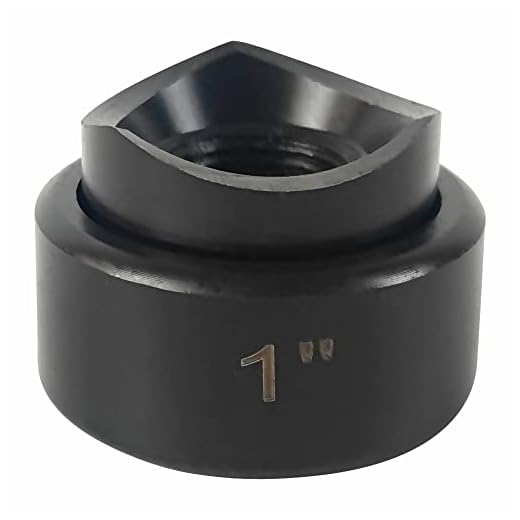
Greenlee 1" Knockout Punch (25.4 mm)
This 1" punch delivers a true 1.00" hole and is solidly built, but buyers should note the difference between conduit nominal sizes and actual hole diameter. With correct use it cuts clean holes, but misuse can result in torn edges or a stuck slug.
My experience
I used this punch on sheet metal and a small panel project. It’s a plain, well-made tool that produces a literal 1.00" hole (25.4 mm), which surprised a few homeowners expecting a 1" conduit knockout size. When tightened correctly until the punch fully travels through the panel, the slug usually releases cleanly.
Key details
Some users report tearing when the punch wasn’t driven fully through the stock or when the wrong pilot hole was used. That’s operator technique rather than a tool defect in many cases, but it’s important to be careful with pilot-hole sizing and continued tightening until the punch releases.
Pros and cons
Practical advice
Always drill a proper pilot hole and use a step bit if needed to arrive at the correct size for the draw stud. I also recommend using cutting grease and a vice for separation after punching to avoid damage to the tool or workpiece.
AMZCNC 1" Hydraulic Punch Die 3/4"-16
This aftermarket 1" punch is an inexpensive way to fill a gap in your kit, and it performs acceptably on softer materials. Don’t expect the longevity or fit-and-finish of OEM parts for heavy professional use.
Quick summary
I treat this AMZCNC 1" punch as a spare or emergency option rather than a primary shop tool. It’s made of hardened tool steel and is offered at a fraction of the price of OEM equivalents. For occasional or DIY work it does the job, but it’s not designed for heavy daily contractor use.
Details and capability
It handles thin steel, brass, copper, aluminum (soft alloys), plastics, and fiberglass. Be mindful to avoid hard alloys (e.g., 6061, 7075) that could overstress the part. I always used cutting grease and inspected the threads regularly when testing it.
Benefits versus drawbacks
Usage tip
If you buy one, pair it with a good die and a quality draw stud; the overall system quality will influence the cut cleanliness and longevity far more than the individual aftermarket punch alone.
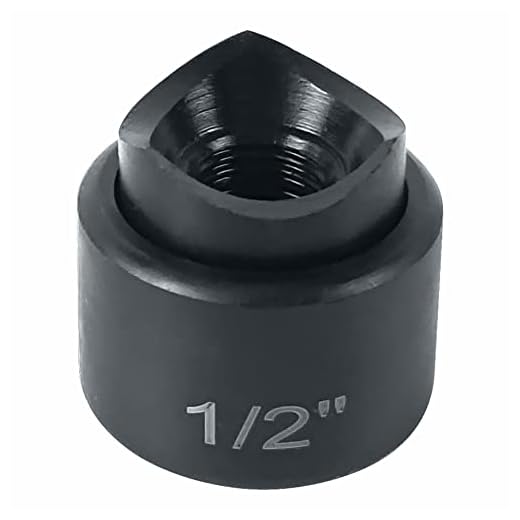
AMZCNC 1/2" Hydraulic Punch Die
I found this to be a cost-effective option when you need a spare or occasional-use 1/2" punch. It's serviceable for softer metals and light shop use but not as refined or long-lived as OEM Greenlee parts.
Overview
I picked up this AMZCNC 1/2" punch die mainly as an inexpensive replacement for occasional jobs. It’s made from hardened tool steel with a black oxide finish and claims to handle a variety of materials including steel, brass, copper, aluminum (softer alloys), fiberglass, and plastics. For home users or someone needing a budget backup, it fills that role well.
Key features and real-world use
I used it on a couple of thin steel panels and some plastic junction boxes. It cut cleanly through thinner materials when I used plenty of cutting grease and a proper draw stud. It’s clearly designed as a budget option — it will do the job but you should temper expectations compared to premium tools.
Benefits and limitations
Practical tips
I’d recommend using plenty of cutting grease and checking fit with your draw stud before committing to a big job. For occasional panel work or as a spare in the van, it’s a handy, inexpensive option; for daily contractor use I’d stick with the OEM Greenlee pieces.
Final Thoughts
My top pick for most pros is the Greenlee 7906SB 8-Ton Hydraulic Knockout Kit. I kept reaching for it because the Quick Draw 90 driver head rotates into tight spots, the unit is genuinely portable for one person, and the 8-ton power handles 1/2" to 2" knockouts without drama. If you do service work, small commercial installs, or frequently need larger holes without hauling a team, grab the 7906SB — it saves time and makes single-person jobs realistic.
If you want the best manual option, choose the Greenlee 7238SB Slug-Buster Ratchet Knockout Kit. Its high-leverage hex ratchet makes manual punching fast and repeatable, and the Slug-Buster profile means cleaner holes and fewer stuck slugs. Buy this if you do a lot of smaller panel and fixture work, want a cordless-free reliable tool, or need a durable backup when a hydraulic setup is overkill.





Small rant: Amazon lists sometimes mix up thread specs for aftermarket punches (3/4″-16UN vs 7/16″-20UN). I nearly bought the wrong draw studs. Always double-check thread pitch before ordering parts online.
Totally — I included the specific thread notes for AMZCNC parts in the article for that reason. Measure or compare part numbers when possible.
This. I once got a 1/2″ punch with the wrong thread and it was a pain returning it.
Lesson learned the expensive way 😂
Random practical tip for newbies: when swapping punches, keep a small notebook of which studs fit which kits. Saved me a lot of time instead of trying every stud to see what fits. Also label the cases. 🙂
Haha true. Also keeps the boss happy when the truck is organized.
Excellent field tip — labeling and a compatibility note can save minutes that add up across a week of jobs.
This is adulting in the electrical trade — very on-brand.
Positive note: the 12305 die seems underrated at 8/10 in the roundup. I bought one to complete a Slug-Buster set and it’s been flawless for 3/4″ work. Nice and simple, no drama.
Glad it’s working out — some of the straightforward dies and punches are the unsung heroes on site.
Exactly. Buy the basics right and you won’t regret it.
Agreed. Reliable parts beat fancy features sometimes.
And they’re easier to replace if lost.
Humor me: anyone try using the Greenlee 7906SB to punch through an old safe? 😂 On a serious note, is the 8-ton capacity really necessary unless you’re doing lots of 2″ holes in heavy steel?
Thanks — I’ll probably stick with a ratchet set then. Less weight to carry.
Haha — I haven’t tested it on safes. The 8-ton capacity gives headroom for thicker steel and repeated larger knockouts without straining the unit. If most of your work is 1/2″ to 1″, you might be fine with a high-leverage manual kit.
8 tons is overkill for most residential work. But for industrial panels and thicker enclosures it’s helpful.
I liked the note about knurled edges on the K2P punches. Small detail but it makes handling greasy parts on a ladder much easier. Anyone else think Greenlee put more thought into ergonomics than competitors?
They do prioritize user experience — the knurling, Slug-Buster profiles, and Quick Draw head are all practical design choices born from field use.
Haha exactly — it’s the little things.
Agree. Once you’ve used a Slug-Buster you miss the clean slug removal when you switch to cheap punches.
Serious question: can the 721-1/2P 7/8″ punch be used on stainless sheet metal if I pre-drill a pilot? I do a lot of ATS enclosures and worry about tearing.
Stainless is tougher — even with a 7/8″ punch you risk burrs and slug seizure. Pre-drilling a pilot isn’t typical for knockout punches; better to use a punch/die rated for stainless or use a hole saw with proper cutting fluid. If you must punch, heat treatment and sharp dies help, but consider fabrication shop work.
Got it — will send those panels out when stainless is involved. Thanks!
Quick practical question: anyone used the 7238SB with a KRW-1 ratchet and then switched to the 7235BB for smaller sizes? Curious about swap ease and whether the Slug-Buster profile is consistent across both kits.
Yes, the Slug-Buster profile is consistent — the dies/punches intermate well across those sets. Swapping sizes is straightforward; the main thing is thread compatibility with your draw studs. The 7235BB is basically the compact complement to the 7238SB.
I swap them all the time. Keep the 7/16 and 3/4 studs handy for cross-compatibility. Works great.
I’m torn between getting the 7238SB ratchet kit vs the hydraulic 7906SB. I do mostly residential panel work and occasional commercial remodels. Portability vs power — which would you recommend for a one-person electrician?
7238SB for most single electricians. If a client calls for a big service change you’re rarely doing dozens of large knockouts in one day.
That’s super helpful, thanks. I’ll start with the 7238SB and see how it goes.
Good plan — you can always add a hydraulic driver later if needed.
For mixed residential and occasional commercial remodels, I’d lean toward the 7238SB if you value portability and don’t regularly punch big 2″ holes. If your remodels involve thick panels and multiple large knockouts daily, the 7906SB is worth it. Think about frequency of heavy work.
Lol I accidentally bought a 1″ Greenlee punch then realized my conduit specs were nominal. Ended up returning it. Who knew those numbers would cause such confusion? Great article for clearing that up though 🙏
You’re not alone — the nominal/actual naming trips up a lot of folks. Glad the article helped!
Same here — documentation on site rarely lists actual hole diameters. Worth printing a quick cheat-sheet for the van.
Minor nit: the article mentions the Greenlee 1″ punch gives a true 1.00″ hole. My older electricians still call them “1 inch” and I always correct them — but buyers should double-check panel knockouts because some panels expect a .89 or .875 hole depending on knockout style.
Also, love the photos of the Slug-Buster edge closeups — very helpful.
Yup, and meters/inspection hardware can be picky. Measure before you punch if it’s a custom panel.
Thanks Eleanor — good catch. There are a few nominal/actual gotchas depending on device collars and conduit types; I’ll clarify that in the sizing section.
Has anyone had trouble removing slugs from the 2″ K2P-2-B punch? I did a few 2″ holes yesterday and one slug got stuck, required a punch-through with a drift. Was I doing something wrong or is that just par for the course on that size?
If you’re on a jobsite without a big hammer, use a short draw stud reverse tap to pop it. Having a stubby punch to drive the slug through works too.
Slug removal on larger punches can be trickier. The Slug-Buster profile is meant to help but sometimes with thicker material the slug wedges. Try slightly rotating the punch while backing it out or use the knurled edge and a magnet; also ensure the die side is clear.
Great roundup — thanks! I’ve been eyeing the 7906SB for a one-man crew. Quick question: has anyone compared the Quick Draw 90 head to the regular hydraulic drivers in tight panels? Looks like a big time-saver but I worry about clearance in older enclosures.
Agreed. Also, for tiny boxes I keep a 7235BB set for the small sizes — fits where the 7906 can’t.
I own the 7906SB and confirm — saved me on a recent job in a meter stack. Not magic, but much better than a straight driver. Just watch the hydraulic hose routing.
Thanks Tom — I tested the 7906SB in several cramped panels. The Quick Draw 90 rotates and really helps when you can’t swing a long driver. In very shallow boxes you may still need low-profile manual punches, but for most retrofit panels it’s a huge help.
Appreciate the detailed badge labels — ‘Best one-person hydraulic knockout kit’ sold me on the 7906SB in the article. One practical question: any tips on storing the hydraulic hoses to avoid kinks? I had one hose fail after a year because of rough storage.
Wrap the hose in a flexible sleeve and keep it inside the case when not in use. Saved me once after a truck load shift.
Thanks — will do that. Learned the hard way!
Glad the badges helped. For hoses, coil them loosely, avoid sharp bends, and use protective sleeves. Store in the kit case or hang them so the weight isn’t on one bend. Regular inspection for nicks goes a long way.
Short but honest: I prefer manual ratchet kits like the 7238SB for panel work. No hose, no pump, and still fast enough. The 9.3 rating feels fair. For big conduit runs the hydraulic 7906SB is tempting, but my van space is limited.
Fair take — the ratchet kits are excellent for portability and speed on smaller jobs. The 7906SB is for when you need more power without a full pump setup.
Same. I carry a 7238SB and only pull out the hydraulic unit when I hit multiple 2″ knockouts in a day.
Loved the breakdown of OEM vs AMZCNC parts. I bought an AMZCNC 1″ punch as a budget spare last year and it worked fine on mild steel but got stuck once on thicker galvanized. If you rely on punch longevity, stick to Greenlee IMO.
Also funny note: the actual hole sizes vs conduit nominal sizes messed me up first week on the job 😅
Ooh didn’t think of cutting oil — will try that next time. Cheers!
Same experience — bought an aftermarket die for occasional site work and it did the job on panels but dulled quickly on EMT. Keep an OEM spare if you use it daily.
Tip: lube with a bit of cutting oil and it helps the cheaper dies last longer. Not perfect but better than nothing.
Thanks for the tip Kevin — I’ll add a line recommending light lubrication for aftermarket punches.
Good point about galvanized — the AMZCNC parts are decent for light use, but don’t expect the same heat treatment and fit as Greenlee. And yeah, the nominal vs actual hole sizing is worth a dedicated note in the article — changed that now.