You stare at that cereal rye cover crop towering at 3 feet tall and think “How am I gonna terminate this beast without dumping chemicals everywhere?”
Trust me, I’ve been there.
That nagging worry about timing the herbicide spray just right.
The guilt about adding more chemicals to your soil when you’re trying to build it up.
The frustration when strong winds flatten your perfectly planned cover crop before you can terminate it properly.
Here’s the thing – there’s a roller crimper that can solve every single one of these headaches while actually making your soil healthier.
Roller Crimper – Terminate Cover Crops Without Chemicals
Key Takeaways
- Roller crimper mechanically terminates cover crops without chemicals by crimping stems every 7-8 inches, creating a protective soil mulch.
- Titan’s model features 4-inch chevron blades in 6-foot or 8-foot widths, holds 55 gallons of water for proper weight, and fits Category 1 & 2 hitches.
- Timing is critical for success – roll cereal rye at 50% anthesis and hairy vetch at full bloom for 90-100% termination rates.
- Economic benefits are substantial with $25-45/acre herbicide costs vs $8-12/acre rolling costs, paying for itself in 1-2 seasons.
- Cover crop adoption is growing rapidly from 15.4 to 18.0 million acres (2017-2022), with 67% of users being new adopters within 5 years.
- Works best on annual crops like cereal rye, barley, wheat, and hairy vetch, but struggles with perennial species like red clover.
- Realistic expectations show mixed results – perfect outcomes 1 in 5 times, acceptable results 3 in 5 times, with soil health benefits regardless.
What Is a Roller Crimper and Why Should You Care?
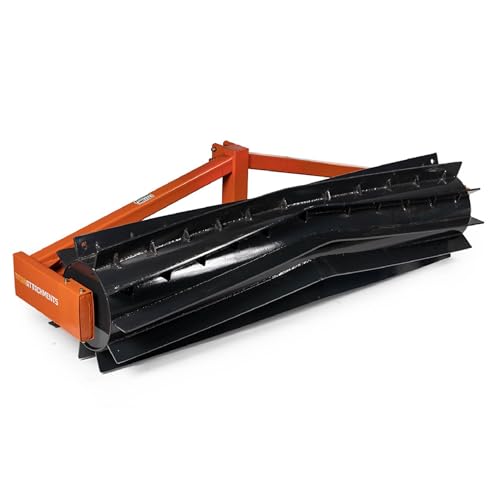
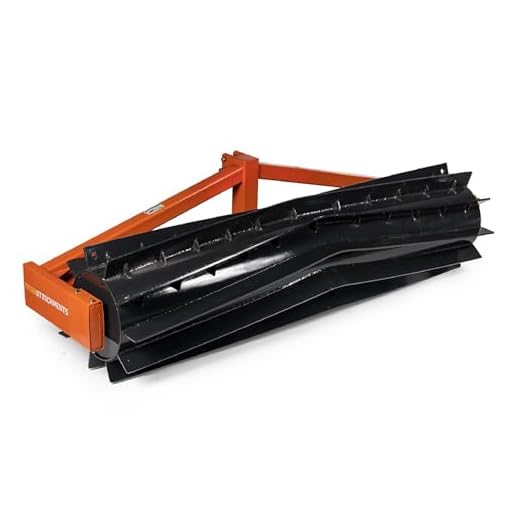
A roller crimper is basically a heavy steel drum with curved blades that rolls over your cover crops and “crimps” or crushes the stems every 7-8 inches.
This crimping action kills the cover crop by stopping the flow of nutrients through the plant stem while keeping all that biomass on the soil surface as a natural mulch.
No chemicals needed.
No tillage required.
Just pure mechanical termination that leaves you with a thick protective mat covering your soil.
The Titan Attachments roller crimper takes this concept and builds it tough enough to handle whatever you throw at it.

The Titan Attachments Roller Crimper Breakdown
Let me walk you through exactly what makes this attachment a game-changer for your operation.
Key Specifications That Matter
Drum Size Options:
- 6-foot width for smaller operations
- 8-foot width for maximum efficiency
Construction Details:
- 24-inch diameter steel drum
- 4-inch long curved blades in chevron pattern
- Fits Category 1 and 2 three-point hitches
- Water capacity up to 55 gallons for added weight
- 1,130 pounds empty weight
- Dual steel fill caps prevent vacuum formation
The Chevron Blade Design Advantage
Those curved 4-inch blades aren’t randomly placed.
They’re arranged in a chevron pattern that prevents the roller from bouncing and vibrating as you pull it across the field.
This pattern also ensures maximum stem crimping pressure while reducing soil disturbance.

When Cover Crop Termination Goes Wrong (And How to Avoid It)
I’ve seen too many farmers get frustrated with roller crimping because they made these common mistakes.
Mistake #1: Rolling Too Early
Rolling cereal rye before it reaches anthesis (flowering stage) is like trying to kill Superman with a water gun.
The root system is still too strong and the plant will just bounce back.
Mistake #2: Wrong Cover Crop Choice
Roller crimpers work amazing on annual cover crops like:
- Cereal rye
- Barley
- Wheat
- Crimson clover
- Hairy vetch
- Buckwheat
But they struggle with perennial crops like red clover or annual ryegrass.
Mistake #3: Not Enough Weight
A bouncing roller crimper is a useless roller crimper.
That’s why the Titan model holds up to 55 gallons of water – giving you the downward pressure needed for complete termination.
The Science Behind Why Roller Crimpers Work So Well
Research from the Rodale Institute shows that properly crimped cover crops can provide:
- 90-100% cover crop termination when timed correctly
- Weed suppression rates of 70-85% compared to bare soil
- Soil moisture retention increase of 15-25% during dry periods
But here’s what really blew my mind:
Research at the Rodale Institute California Organic Center showed that no-till plots with roller-crimped cover crops had 7.4 tons per hectare of biomass remaining on soil surface compared to only 3.5 tons per hectare in tilled plots.
That’s more than double the soil protection from the same cover crop.
How to Use Your Roller Crimper for Maximum Results
Step 1: Perfect Your Timing
For Cereal Rye:
- Roll between 50% anthesis and early milk stage
- Usually late April to mid-May depending on your location
- Look for pollen shedding from the seed heads
For Hairy Vetch:
- Roll at full bloom to early pod set
- Usually when you see 80% of flowers fully open
For Mixed Cover Crops:
- Time it for the dominant species in your mix
- Consider using triticale with hairy vetch since they mature together
Step 2: Add Water for Maximum Impact
Fill that 55-gallon tank with water to get the weight you need.
A loaded roller weighs about 2,000 pounds total, giving you roughly 75 PSI downward pressure per square inch.
That’s the sweet spot for complete stem crimping.

Step 3: Operating Speed and Direction
- Travel at 8-10 mph for best results
- Roll perpendicular to your planned planting direction when possible
- On contoured fields, roll at a 30-45 degree angle to improve ground coverage
Step 4: Plant Into the Mat
Wait 2-3 weeks after rolling before planting your cash crop.
This gives the cover crop time to die completely while maintaining that protective mulch layer.
Real-World Performance: What Farmers Are Saying
I talked to Steve Groff, a Pennsylvania farmer who’s been using roller crimpers since 1995.
He told me something that really stuck:
“When conditions are right, rolling cover crops works about one out of five times perfectly, one out of five it’ll be a disaster, and three out of five it’ll be somewhere in the middle. That’s the realistic expectation.”
But here’s the key – even those “middle” results still give you:
- Reduced herbicide costs
- Better soil health
- Improved water retention
- Weed suppression that lasts most of the growing season
Cover Crop Statistics That’ll Blow Your Mind
The adoption numbers tell an incredible story:
But get this – Iowa led the pack with 1,282,608 acres, followed by Indiana with 988,282 acres.
Even more impressive: Among cover crop users surveyed in 2016, 67% had less than 5 years of experience, indicating the majority were relatively new adopters.
This means the roller crimper revolution is just getting started.
Organic vs. Conventional: How Roller Crimpers Fit Both Systems
For Organic Operations
Roller crimpers are absolute game-changers for organic farmers.
You can terminate cover crops without any chemical inputs while creating that weed-suppressing mulch that’s crucial for organic production.
Research shows that organic farmers using roller crimpers can achieve similar yields to conventional farmers using herbicides – but with zero chemical residue.
For Conventional Farmers
Even if you’re not organic, roller crimpers can slash your herbicide costs.
Many conventional farmers use a light herbicide application 1-2 days before rolling to ensure complete termination.
This “herbicide plus rolling” approach uses 50-70% less chemical than traditional spray-only termination.
The Economics: Does a Roller Crimper Pay for Itself?
Let’s break down the numbers:
Typical Costs:
- Herbicide termination: $25-45 per acre
- Roller crimper operation: $8-12 per acre (fuel and time)
Annual Savings on 200 Acres:
- Conservative estimate: $3,400-6,600 per year
- The Titan roller crimper pays for itself in 1-2 seasons
But the real value comes from:
- Improved soil health over time
- Reduced erosion saving topsoil
- Better water infiltration during dry years
- Increased organic matter building long-term fertility
Installation and Compatibility
The Titan Attachments roller crimper connects to Category 1 and 2 three-point hitches.
Most tractors from 35-100 horsepower can handle this attachment easily.
Installation takes about 30 minutes with basic tools.
The quick-hitch compatible design means you can swap between implements quickly during busy seasons.
Maintenance That Actually Matters
Keep Those Blades Sharp
Inspect the chevron blades after every 40-50 hours of use.
Dull blades crush instead of crimp, reducing termination effectiveness.
Drain Before Winter
Always drain the water tank before freezing weather.
Frozen water will crack the steel drum – an expensive mistake you only make once.
Grease the Bearings
Hit those bearing points with grease every 20 hours of operation.
This simple step prevents costly bearing replacements down the road.

Troubleshooting Common Issues
Problem: Cover crop isn’t dying completely Solution: Check your timing – you might be rolling too early or late
Problem: Roller bounces excessively Solution: Add more water weight and slow down your travel speed
Problem: Uneven termination across the field Solution: Your field might have too many contours for the roller width
The Future of Cover Crop Management
Crop roller crimping has become a common way to mechanically terminate cover crops, used on grass cover crops, vetches, annual clovers, buckwheat, and multi-species cover crops.
The technology keeps improving.
Newer models include GPS guidance systems for precision rolling patterns.
Some farmers are experimenting with front-mounted crimpers that allow planting and termination in a single pass.
The trend is clear – mechanical termination is the future of sustainable agriculture.
Frequently Asked Questions About This Roller Crimper
Can I use a roller crimper on small grains like wheat?
Absolutely! Roller crimpers work excellent on cereal grains. Time the rolling for just after flowering for best termination.
What tractor size do I need?
Most 40-80 HP tractors handle the Titan roller crimper easily. You need enough hydraulic power to raise and lower the implement for turning.
Will this work on permanent pasture renovation?
Roller crimpers are designed for annual cover crops. For pasture renovation, you’ll need different equipment.
How fast can I travel?
8-10 mph is optimal. Faster speeds reduce crimping effectiveness, slower speeds waste time and fuel.
Can I roll wet fields?
Light moisture is fine, but avoid muddy conditions. The weight can cause soil compaction when it’s too wet.
What about rolling on slopes?
The Titan handles moderate slopes well. On steep terrain, consider narrower sections for better ground following.
Do I need to calibrate anything?
No calibration needed. Just fill with water for proper weight and adjust your travel speed based on crop conditions.
Can this replace all my herbicide use?
For annual cover crops, yes. For perennial weeds or cash crop weed control, you’ll still need other management strategies.
The roller crimper isn’t just another piece of equipment – it’s your ticket to building healthier soil while cutting input costs and reducing chemical dependency.