


Which Swisher Tames Your Backyard Jungle — and which one just looks tough?
Rough mowing is a contact sport. I’ve seen brush, briars, and small saplings fall to a good tow-behind in minutes that used to take hours with a weed eater.
I test gear a lot, and I’m picky about power-to-size. These five Swishers cover everything from compact jobs to contractor-level acres. I’ll keep it practical and tell you which one I’d hook up first.
Top 5 Picks
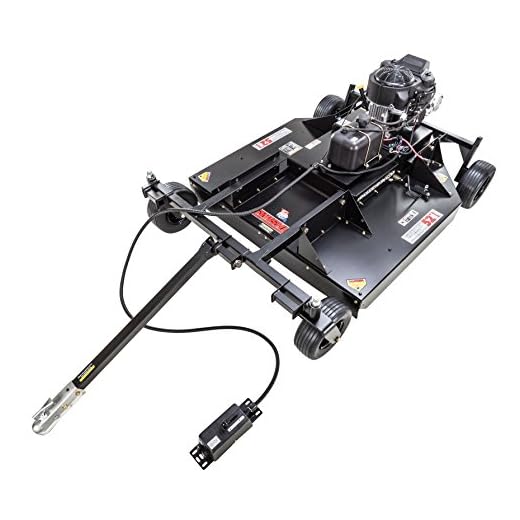
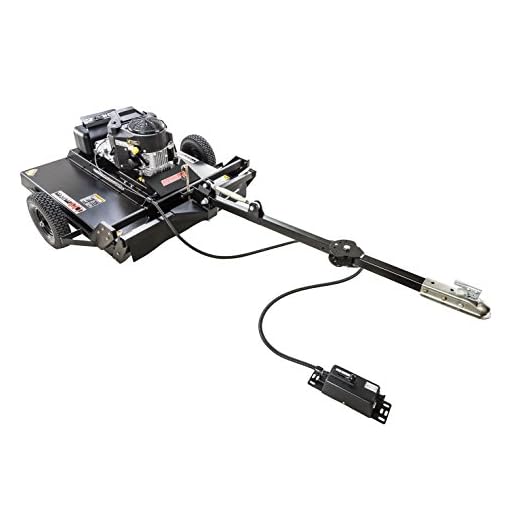


14.5 HP 52-inch Commercial Pro Mower
I consider this the top choice for contractors and large-property owners who need a wide, durable cutter. The Kawasaki V-Twin and commercial build quality justify the higher price tag for professional use.
Who should consider this mower
I recommend the 52-inch commercial model if you're a contractor or landowner with many acres to manage. Its size and commercial components are tailored to continuous, heavy-duty use rather than occasional homeowner mowing.
Commercial features that stand out
Pros, cons, and practical realities
This machine is purpose-built: it’s rugged, wide, and powerful. The downsides are obvious — the purchase price and weight — but if you amortize that cost over heavy, regular use the unit pays back in time savings and durability. Smaller properties will find it cumbersome and may never use its full capability.
Tips from hands-on use
I always inspect the hitch points and wheel bearings before each long job and plan routes to minimize tight turns. For commercial teams, establishing a routine maintenance log (oil, air filter, blade checks) will keep downtime to a minimum and protect the investment.
14.5 HP 44-inch Commercial Pro Mower
I like that this mower pairs a commercial Kawasaki engine with a manageable 44-inch deck — it’s powerful without becoming unwieldy. The two-year residential warranty adds confidence for long-term owners.
Why this model is popular
I picked this unit for people who need commercial-grade power but prefer a slightly smaller deck than the 52-inch pro. It’s a solid middle ground for contractors and serious homeowners who want professional features without the extra bulk.
Practical features I notice every time
Real-world strengths and limitations
This mower balances capability with maneuverability — it’s easier to position around obstacles than the larger 52-inch unit but still brings serious cutting power. The requirement for assembly and its substantial weight are the chief drawbacks; plan for a proper unloading and setup day.
How I use it most effectively
I find it ideal for medium-to-large properties where you want fewer passes but still need to navigate fence lines and gates. Keep replacement blades and grease points on hand; routine checks dramatically extend service intervals and reduce unexpected downtime.
15.5 HP 44-inch Electric-Start Mower
I value the extra horsepower and electric start for dependable, heavy-duty work. The stump-jumper and swinging blades make short work of saplings and tough brush.
Who this is for
I recommend this model if you need extra power and the convenience of electric start. It’s aimed at folks who regularly tackle heavy brush, small saplings, and overgrown fields where reliability and cutting strength matter most.
Standout features I tested
Performance notes and tradeoffs
This mower excels when you need brute force and versatility; it chews through thicker material better than smaller units. The tradeoff is straightforward: it’s pricier and heavier, so confirm your towing vehicle and budget can support it. Expect more maintenance complexity tied to the greater engine output.
Real-world usage tips
I’d recommend running fresh fuel and checking blade clearance before heavy brush work. If you frequently encounter saplings, use the stump-jumper setting and take controlled passes rather than trying to force everything in one go — it preserves blades and reduces stress on the gearbox.
11.5 HP 44-inch Tow-Behind Mower
I appreciate how the offset hitch and remote operator console make hard-to-reach areas easy to mow. It delivers solid performance for rough-cut tasks without breaking the bank.
Why I recommend this model
I picked this unit because it strikes a practical balance between capability and cost. It's built for rough-cut mowing — saplings, tall grass, and fields — and focuses on durability and flexibility rather than a manicured finish.
Key features I like
Benefits and limitations
I find this mower excellent for landowners who want a reliable rough-cut machine without buying commercial equipment. It’s straightforward to operate and has features that save time on bigger properties. On the downside, it’s not designed for lawn finishing — expect a rougher cut — and its weight means you need a proper tow vehicle and secure hookup.
Practical tips from my experience
If you’re using it around fences or trees, use the offset hitch to position the deck where you need it most. Routine blade checks and greasing the hitch pivot points will keep the unit running smoothly. For smaller properties where a clean finish matters, pair this mower with a finish mower instead of expecting pristine turf results.
11.5 HP 44-inch Rough Cut Mower
I recommend this as a go-to for owners who want a compact, capable rough-cut mower. It’s easy to store and performs well on fields, fence rows, and overgrown areas.
Who this mower suits best
I recommend this 11.5 HP 44-inch model for property owners who want a reliable rough-cut tool without the size and cost of commercial equipment. It’s a practical choice for pastures, overgrown lots, and routine field maintenance.
Features I rely on most
Strengths and tradeoffs based on use
This mower is approachable and functional: it gives you the rough-cut performance you need without a commercial price tag. Its limitations are clear — it isn’t for finish mowing and the warranty coverage is modest compared to higher-end commercial models — but for many owners it’s the right compromise.
Practical advice I give new owners
I recommend checking blade alignment and hitch tension before each job. For repeated heavy brush, consider carrying a spare blade set and plan passes to avoid forcing the deck through very dense saplings in a single go — that preserves the gearbox and blades over time.
Final Thoughts
If I had to pick one for heavy, professional work it’s the 14.5 HP 52-inch Commercial Pro Mower. It’s my top pick for contractors and large-property owners because the Kawasaki V-Twin, commercial-grade build, and 52-inch deck let you clear big swaths fast while standing up to constant use.
For homeowners or small-acreage owners who still need serious bite, I’d choose the 15.5 HP 44-inch Electric-Start Mower. The extra horsepower and electric start make it the go-to when you need dependable heavy-duty cutting — especially through saplings, dense brush, and rough fence rows. It’s the best blend of brute force and day-to-day convenience.
How I Choose and Use a Swisher Tow-Behind Rough Mower
I look at four things first: horsepower, deck width, hitch/setup, and blade style. Horsepower tells me how much sustained work the mower can do. Deck width tells me how fast I’ll cover ground. The hitch and tow-offset determine how usable it is around obstacles. And blade style (fixed vs. swinging/stump-jumper) tells me what kind of vegetation it can eat without damage.
Deck size vs. horsepower
Hitch types and towing vehicles
I always match the mower to the tow rig. If you mainly use an ATV, favor the offset or flexible hitch models (the 11.5 HP 44-inch Tow-Behind Mower shines here). If you have a garden tractor or small UTV, you can comfortably use the 44" commercial or the 52" pro deck. Consider articulation and tongue length for slopes and tight turns.
Blade choices and terrain strategy
Maintenance and longevity tips
Quick comparison at a glance:
| Model | Best for | Strength |
|---|---|---|
| 14.5 HP 52-inch Commercial Pro Mower | Contractors, large acreage | Wide cut, commercial build |
| 14.5 HP 44-inch Commercial Pro Mower | Balance of power & size | Manageable deck, Kawasaki engine |
| 15.5 HP 44-inch Electric-Start Mower | Heavy-duty brush & saplings | Extra HP, electric start, stump-jumper blades |
| 11.5 HP 44-inch Tow-Behind Mower | Tight areas, offset towing | Flexible hitch, remote console |
| 11.5 HP 44-inch Rough Cut Mower | Compact storage & small fields | Compact footprint, capable cut |
I always recommend thinking in terms of what you clear most often. If you’re tackling thick brush and saplings weekly, prioritize horsepower and stump-jumper blades. If you’re hitting large open fields, favor deck width. And whatever you choose, a little preventive maintenance will keep a Swisher working like new — and save you more time than you’ll spend switching blades.
FAQ
Yes — most Swisher tow-behind rough mowers are designed for ATVs, UTVs, and garden tractors. Check your tow vehicle’s towing capacity and the mower’s tongue angle. The offset hitch on some 11.5 HP 44-inch models helps with tight turns and tricky terrain.
Go for the 15.5 HP 44-inch Electric-Start Mower. Its higher horsepower and swinging/stump-jumper blade design are made to take on saplings and thicker brush without bogging down.
Sharpen blades after roughly every 10–20 hours if you hit a lot of dirt or stubble. Replace blades if you see cracks, severe bends, or more than 1/4" of metal missing. For tough brush work, I check blades after each heavy-use day.
Not always. Wider decks (like the 52") cut more per pass — great for big fields — but they require a stronger tow vehicle and are harder to maneuver around obstacles. A 44" deck is the sweet spot for many owners: balance of coverage and control.
Electric start buys you convenience and faster restarts during a job; I prefer it when I’m deep in brush and don’t want to fumble with a pull cord. Pull start is simpler and lighter, but less convenient for repeated hot restarts.
I stick to a few non-negotiables: change oil and filters per manual intervals, grease pivot points, check belt tension, inspect blades, and keep the deck free of build-up. A quick walk-around before each job saves headaches.





Anyone have experience hauling these behind a small ATV? The RC11544CL with the offset hitch sounds perfect for tight spots, but my ATV isn’t huge.
Yep, I pull the RC11544CL with a 4×4 side-by-side. The offset helps a lot. Make sure your hitch and drawbar rating match the mower weight though — took me a while to figure that out.
Thanks for bringing that up. Check your ATV’s tow capacity in the manual and consider the tongue weight. The offset design reduces turning issues, but proper rating is essential for safety.
Love the mix of models in the list. One thing I’d add: folks should think about resale. The 44″ commercial models are easiest to flip locally if your needs change. Also, small typo in the RC15544BS entry? ’12V Tow Behind’ — meant to be 12V electric start, I assume.
And if you ever trade up, dealers sometimes offer decent credit for well-maintained units.
Resale is a great point. I sold my 44″ unit within a week last spring — demand is strong.
Small correction posts like this are super helpful. Thx for catching it!
Also worth noting: keep records of maintenance to boost resale value.
Thanks, Carlos — good eye. Yes, ’12V’ there refers to the electric start system. I’ll clarify that in the article.
Little anecdote: rented a 44″ Swisher for clearing a brushy lot last summer and it ate through stuff I thought would break it. Heavy build.
Two quick tips:
1) Check tire pressure; helps ride and cut height.
2) Grease the spindles often.
Saved me a couple trips to the shop.
Love the practical tips! Grease maintenance is underrated — my deck bearings lasted much longer once I kept to a schedule.
Thanks for sharing your experience, Noah. Small maintenance routines like that make a big difference in longevity and performance.
Tire pressure also affects flotation in soft ground — I run a little lower when dealing with marshy edges.
For anyone who uses these commercially: do you run them every day? I’m thinking about the RC14552CPKA but not sure about maintenance burden if it’s nearly daily use.
I ran a 52″ almost daily for a season. Maintenance ramps up: blades, gear oil checks, belt inspections more frequent. But the commercial build handles it if you keep up.
Daily use is feasible with the RC14552CPKA, but expect a strict maintenance schedule. Consider spare blades and routine inspections to avoid mid-season downtime.
One pro tip: keep a small parts kit in your truck — saves a ton of time on remote jobs.
Also budget for consumables — blades, belts, gearbox oil. They add up but are cheaper than downtime.
Minor rant: why are mowers sold like cars with endless trim levels? 😂 Just give me a solid deck, decent blade, and a reliable engine. That RC14544CPKA seems closest to that middle-ground promise.
Hah, right? I just want something that starts and cuts. The extra bells often just confuse buyers.
I appreciate the roundup for cutting through that. The expert badges helped me narrow choices quickly.
We tried to highlight practical differences in the roundup so buyers can pick what actually matters for their use — power, deck size, and build quality tend to be the most important.
Quick question: warranty differences were mentioned. For folks who used the 44″ commercial pro with the two-year residential warranty, did the dealer honor warranty claims smoothly? Any headaches?
Went through a warranty claim for a clutch issue. Dealer was slow but eventually sorted it. Keep all service records — helps your case.
Warranty experiences vary by dealer. If possible, buy from a dealer with good local reviews and document everything from the start. That typically makes claims easier.
Anyone worried about storage for the 52″? I have a single-car garage and wondering if it’s realistic to keep that one inside during winter.
Good practical point — check dimensions including tongue length. Some owners remove the front wheels or tilt the deck to fit, but that’s extra hassle.
52″ might be tight in a single-car but possible if you angle it and remove attachments or tires. Measure twice before buying!
Skeptical of the ‘best compact option’ badge for the RC11544BS — it’s compact, sure, but will it handle thicker brush? Anyone tested it on fence rows with volunteer trees?
Agreed — the compact model is great for lighter brush and fields. For frequent heavy brush and small trees, the RC15544BS is a better fit due to higher HP and stump-jumper capability.
I’ve used the 11.5HP in thorny fence rows; it worked but slowed down. Plan on multiple passes for dense areas.
It handles volunteer trees up to a couple inches in diameter if you’re patient and don’t expect to do 10 mph runs. For thicker stuff, go for the 15.5 HP model.
Patience + lower ground speed helps. Don’t force it at full throttle or you’ll damage blades.
Thanks for the guide. I’m thinking the RC11544BS compact option might be perfect for my weekend property. Anyone worried about parts availability for these Swisher models?
Good point to consider. Check local dealerships for parts and service availability before buying — even if online parts exist, local service can save you downtime.
Swisher parts are fairly common at local dealers and online. Engines (Kawasaki/Briggs) have broader parts markets too, so you’re usually fine.
Really liked the roundup — thanks! I’m leaning toward the RC14552CPKA for some of my bigger properties. Question: how loud are these Kawasaki V-twins compared to a regular rider? I worry about noise complaints in the neighborhood.
Also consider the deck width: the 52″ will get the job done faster, which means less total noisy time. Trade-off seems worth it.
I’ve used a Kawasaki on a zero-turn before — it’s noticeable, but neighbors got used to it after a couple weeks. If noise is a major issue, mow earlier in the day and avoid Sundays.
Good question, Maya. The Kawasaki V-twins are definitely on the louder side compared to small lawn tractor engines, but they’re typical for commercial rough mowers. Adding a proper muffler and doing routine maintenance helps a lot.
Short and honest: the RC15544BS with 15.5 HP and electric start sounds like a dream if you fight saplings and brush. I’ve battled young cedars and would pay extra for the stump-jumper blades.
Anyone who’s tried the swinging blades — do they really make that big a difference on saplings?
If you’re cutting in rocky ground, consider a skid plate or extra protection. I learned that the hard way 😅
I had a similar model and the swinging blades shredded saplings like butter. But keep replacement blades handy — they do wear faster in rocky areas.
They do. Swinging blades reduce shock when hitting stumps and saplings and keep the gearbox from taking all the hits. Saved my mower a few times.
Also worth noting: more HP helps, but it’s the blade/gearbox setup that really handles sapling abuse.
Correct — swinging blades offer better durability against tough brush, but as Grace said, plan on replacements and inspect the blade carrier regularly.
I’m surprised the RC14544CPKA got a 9/10 — seems like a good middle ground. For those with fence rows and some open fields, is 44″ big enough? Would you go 44 or 52 if budget allows?
Also check resale value — 44″ commercial units hold value well and are easier to sell locally.
I’d pick 44″ if storage space is limited. 52″ is faster but heavier and needs more power. Think about trailer storage and transport too.
Budget can swing things fast. If you don’t need commercial throughput, 44″ will do 95% of jobs and costs less in fuel.
44″ is great for mixed-use properties — easier to maneuver and store. If you regularly mow large open fields, the 52″ saves time. Consider your tasks and storage constraints before upgrading.