
I Picked Top 4 CAT 1 Finish Mowers for 18-50 HP Today


48″ precision or 60″ speed — which mower will make your lawn jealous?
I worship a clean stripe. I also hate doing extra passes.
If you want a SHOWROOM finish without wasting weekends, the right CAT 1 finish mower (18–50 HP) changes everything. I tested four solid options so you don’t have to guess.
Our Top Picks

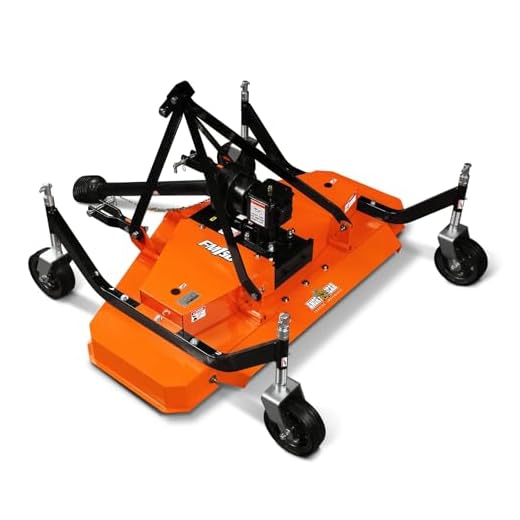


Ag-Rite 48" Commercial Rear-Discharge Mower
This unit feels built to a higher spec and delivers the kind of clean, even finish you'd expect from commercial turf equipment. I appreciate the rear-discharge design, floating hitch, and heavy steel construction for demanding mowing tasks.
Who should consider this mower
I recommend the Ag-Rite 48" finishing mower if you want a commercial-style finish without stepping up to very large professional decks. It’s targeted at estate owners, landscapers, and property managers who need a refined appearance on lawns, sports fields, or high-end pastures and who appreciate a sturdier build.
Notable features I value
Practical considerations and user tips
The biggest convenience trade-off here is that the PTO shaft is sold separately, which lets you choose a slip-clutch or shear protection best suited to your tractor but does mean one more purchase and setup step. I also advise pairing this mower with an appropriate driveline protection device — the heavier, commercial-style gearbox will move a lot of torque and protecting your tractor is a smart move. If you want a tidy, professional-looking finish and are prepared to invest in the driveline and mount setup, this mower is one of the more refined options in the 48" category.
MechMaxx 60" 3-Point Finish Mower
The 60" deck covers ground quickly while keeping the same floating-hitch stability as the smaller MechMaxx model. I find it especially useful for farms and larger properties where reducing passes saves time without sacrificing a neat finish.
Best use cases
I recommend the 60" MechMaxx for owners of medium tractors who need to cover larger acreage quickly while still getting a finish-mower style cut. It bridges the gap between a compact finish mower and a commercial deck by increasing width without dramatically complicating operation.
Important features that matter in the field
How it performs and what to watch for
In my experience and based on user reports, the wide deck performs well on rolling ground — the four tires keep the deck from rocking excessively and help produce a uniform finish. If you’re uncrating this at delivery, plan for a tractor bucket or two people; the crate is heavy and the deck sits solidly packed. Like the 48" model, the installation steps may require a bit of mechanical confidence; check fastener torque carefully and keep spare washers and hardware on hand when you assemble.
MechMaxx 48" 3-Point Finish Mower
I found this deck delivers very consistent, clean cuts thanks to its floating hitch and adjustable wheel brackets. It balances solid construction with a price that feels reasonable for hobby farmers and property owners.
What this mower is for
I see this 48" MechMaxx finish mower as a do-it-all option for landowners who want a neat, lawn-mower-style finish on fields, pastures, or large lawns without spending big on commercial equipment. It's built to connect to Cat 1 tractors in the 18–50 HP range and is aimed at users who value a uniform cut and relatively low cost of entry.
Key features I pay attention to
Why I like it (and where it’s limited)
In practice, the floating hitch and the four-wheel support do a good job at keeping the deck level over rolling terrain, which means fewer scalped spots and a more even finish. I also appreciate the cutter's ability to handle thicker growth up to about 0.75" diameter — that gives it more utility than a pure lawn deck. On the downside, the unit ships heavy and some customers report minor shipping damage and fuzzy instructions; I’d plan for a second person and an engine hoist or loader for safe removal from the crate. If you aren’t comfortable wrenching, you’ll want help assembling.
Practical tips from my experience and reviews
If you expect to mow rough, brushy areas frequently, consider swapping to heavier mulching blades later; the stock blades are excellent for finish work but mulching blades hold up better when you encounter small saplings or woody stems. Also, when tightening wheel-arm fasteners, I recommend checking the torque values against the hardware condition rather than following an unverified high torque spec — some users found deformation at very high torque figures.
BILT HARD 48" Cast-Iron Gearbox Mower
This mower gives a reassuring feeling of durability thanks to its cast-iron gearbox and one-piece deck. I like that it aims to combine a rugged build with the trimming finesse of a finish mower, though it’s quite heavy to maneuver during setup.
Who this is aimed at
I consider the BILT HARD 48" finish mower a solid option for owners who want a robust finish mower with fewer maintenance hassles. The cast-iron gearbox and one-piece deck are aimed at users who favor longevity and ruggedness, and who plan to use the mower regularly across varied turf.
Standout features I notice
My practical take and caveats
The cast-iron gearbox is a real plus if you plan to keep the implement for several seasons; it’s less likely to strip or suffer quick wear than lighter gearboxes. That said, the unit’s advertised tractor range is 15–45 HP — which can be a benefit for smaller tractors but means you should double-check your tractor’s compatibility if you’re working strictly within an 18–50 HP expectation. Assembly and initial handling require planning due to the weight, so have a partner or a lift on hand. Finally, because public reviews are sparse, I’d call customer support with any fit or drivetrain questions before purchase.
Final Thoughts
If you want the absolute best turf finish and commercial-level durability, pick the Ag-Rite 48" Commercial Rear-Discharge Mower. Its rear-discharge design, floating hitch, and heavy steel construction deliver the clean, even cut that wins the eye—ideal for landscapers and property owners who prioritize a near-professional finish.
If you mow large fields or want to shave time off big jobs, go with the MechMaxx 60" 3-Point Finish Mower. It keeps the same floating-hitch stability but covers a lot more ground per pass, making it my pick for farms and large estates where speed plus a tidy finish matters.
How I choose and use a CAT 1 finish mower (18–50 HP)
I focus on five things: cut quality, deck width, build durability, hitch design, and maintenance needs. Cut quality comes from the deck design, blade speed, and how well the deck follows the ground. A floating hitch plus adjustable wheel brackets usually equals a nicer finish.
Pick the right deck width
Construction and gearbox: what matters
A one-piece steel deck resists flex and helps keep cut height consistent. The BILT HARD’s cast-iron gearbox brings durability and confidence, but it adds weight. The Ag-Rite’s heavy steel deck and commercial focus give the best long-term finish and toughness for pro use.
Setup, PTO, and match to tractor
Match the mower to your tractor’s PTO RPM and HP range. For clean results I always confirm: PTO engaged at 540 RPM, correct driveline length, and the mower level side-to-side with a slight front-to-back tilt per the manual. Improper setup is the most common reason a mower won’t give a great finish.
Practical maintenance and daily habits
| Model | Deck Width | Best Use | Standout Feature | Expert Rating |
|---|---|---|---|---|
| Ag-Rite Commercial Rear-Discharge | 48" | Commercial turf & show lawns | Rear-discharge + heavy steel construction | 9/10 |
| MechMaxx 60" | 60" | Large farms, big properties | Fast coverage with floating hitch | 8.6/10 |
| MechMaxx 48" | 48" | Hobby farms & polished lawns | Adjustable wheel brackets, balance of value | 8.4/10 |
| BILT HARD 48" | 48" | Heavy-duty use where durability matters | Cast-iron gearbox, one-piece deck | 8/10 |
I always test how a mower follows a rolling lawn and how it handles clippings left behind. If your property has uneven ground, prioritize floating hitch stability and a deck that resists flex. If you need to reduce hours spent mowing, prioritize deck width and PTO efficiency.
Bottom line: match the mower to the job. For perfect turf and pro-level durability pick the Ag-Rite 48"; for maximum speed on big acres pick the MechMaxx 60". The other two are excellent compromises if you want a tidy finish without going fully commercial.
FAQs
Yes — CAT 1 finish mowers are designed for 18–50 HP tractors, which includes many compact and utility tractors. Check your tractor’s recommended PTO horsepower and lifting capacity first. The MechMaxx 48" and Ag-Rite 48" are especially tractor-friendly; the MechMaxx 60" needs a bit more muscle for smooth operation and efficient lifting.
Absolutely. A floating hitch lets the deck follow ground contours independently of the tractor, which reduces scalping and produces a more even cut. All of the mowers here use a floating-hitch style design, and that’s a big reason they deliver a polished, striped look.
Cast-iron gearboxes add durability and resist stripping under heavy loads, which is helpful if you frequently hit rough patches or tough grass. The trade-off is extra weight during setup. For heavy-duty daily use, cast-iron is a plus; for occasional mowing, a forged or well-built steel gearbox will usually be fine.
Sharpen blades every 20–40 hours depending on ground conditions; clean and inspect after any contact with rocks or stumps. For the gearbox, change oil/per manufacturer schedule (typically yearly or every 50–100 hours) and inspect seals and driveline components at the start and end of each season.
The MechMaxx 48" hits that sweet spot. It balances construction quality, adjustable wheel brackets, and a clean cut at a price point that makes sense for hobby farmers who want a near-commercial result without paying commercial prices.







If I buy the MechMaxx 60″ I promise not to show off to the neighbors… no guarantees tho 😂
But seriously — does the 4-tire design make a big difference vs three-point only decks?
Less bounce and better contour following on wider decks. Plus it reduces stress on the tractor’s hitch in some cases.
The 4-tire design helps stabilize and distribute weight, keeping the deck at a consistent height across larger spans. It can improve finish consistency on the 60″ deck compared to smaller 3-point-only decks.
Minor rant: why is ‘PTO shaft not included’ a thing? 😅 It feels like buying a sandwich without bread. Anyway, I like that the roundup explains which models are better for larger coverage vs precision. MechMaxx 60″ for speed, MechMaxx 48″ for tidy lawns, BILT HARD for heavy duty — got it.
Tip: local dealers often have shafts in stock and will match lengths so you don’t accidentally buy the wrong one.
Sandwich without bread — 😂 I had the same feeling. Bought the shaft separately and it wasn’t terrible once I knew the specs.
Ha — fair analogy. Sellers sometimes omit PTOs due to varied tractor setups and to reduce shipping issues. Glad the breakdown helped!
Long post because I want to be thorough:
I manage a small horse pasture and need something that both grooms and doesn’t throw clumps everywhere. The floating hitch and rear-discharge features seem ideal — less clumping near fencelines and safer for animals. Also I’m curious about how well these mowers handle thicker brush/weedy patches. Any stories?
TIA!
Be mindful of stones and debris when mowing near fences — rear-discharge helps throw less forward but always inspect the area first.
For pastures with weeds and thicker growth, the heavier-built 48″ finishing mower or the 60″ MechMaxx with robust blades will handle it better. Avoid woody brush — finish mowers are for grass and weeds; brush hogs are better for saplings/woody stems.
Also run a slower PTO speed when hitting dense patches to reduce strain on blades and gearbox.
I ran through tall foxtail and thistles with the MechMaxx and it cut clean but slowed the tractor a bit. For anything woody, switch to a rotary cutter.
Do the MechMaxx models’ tires hold up on gravel driveways? I sometimes need to cross a rocky area to reach my field.
The tires are designed for field use but frequent gravel crossings will accelerate wear. Some owners swap to heavier-duty tires or use skid plates for frequent rough crossings.
If it’s just occasional, you’ll be fine. Frequent gravel, though, expect replacement sooner.
Quick question — the 48″ finishing mower listing says PTO shaft not included. Is that standard? Do I need a particular type for Cat 1? Never bought a shaft separately before.
I bought a universal shielded shaft and had to trim a little to fit — measure twice, cut once. Also get the telescoping kind if you plan different lift heights.
Yep standard to buy separately. My local dealer sold me the right one and installed it for a small fee.
Yes, many finish mowers are sold without the PTO shaft to avoid compatibility issues and shipping damage. For Cat 1 you generally need a 540 RPM PTO shaft sized for Cat 1 (6-spline). Check your tractor output and the mower input specs to match the spline and length.
If possible, post your tractor model and someone can recommend exact shaft dimensions.
Constructive take: I like the list but wish there was a short matrix comparing weight, required HP range, and estimated shipping weight. For example, a heavy cast-iron gearbox sounds great but if shipping costs double the price it’s a factor. Also curious if the MechMaxx adjustable height range (0.4″ – 4.5″) is precise enough for ornamental lawns vs pastures.
If weight is a concern, ask the seller for exact shipping and deck weight before buying. Many are happy to provide it.
Good feedback — a comparison table is a great idea for the article update. The MechMaxx height range is usually precise enough for most ornamental lawns when adjusted correctly; take small incremental changes to dial in the exact cut height.
Shipping can surprise you — check Amazon or seller shipping specs and factor that into your total cost. Sometimes local pickup from a dealer saves money.
Nice roundup. The ratings seem fair. I wonder if the price difference between the MechMaxx and BILT HARD reflects long-term reliability or just components like the gearbox. Has anyone owned both brands?
I had a MechMaxx 48 for 3 seasons and no gearbox issues, just regular oil checks. The BILT HARD would feel more robust for daily commercial use though.
Good point — the BILT HARD emphasizes a cast-iron gearbox which can be more durable in heavy-duty use, while MechMaxx focuses on deck width and coverage. Longevity also depends on maintenance practices.
If you run it commercially, I’d invest in the cast-iron gearbox. For home use, MechMaxx was fine for me.
Price often includes heavier components and thicker steel — but maintenance matters more than brand sometimes.
Great roundup — that 48″ finishing mower with the commercial-grade build sounds perfect for my parkland strip. I love the rear-discharge design for a cleaner spread. Curious if anyone has used it on slightly uneven ground and how the floating hitch handled it?
Thanks Sarah — the floating hitch is meant to help on uneven ground by allowing the deck to follow contours. For shallow dips it works very well; very steep ruts can still be a challenge, but overall owners report a smoother finish than fixed-hitch decks.
Agree — floats nicely. Not magic, but it helps a ton for finishing looks.
I ran a similar rear-discharge on a 30 HP tractor last season and it did great over small undulations. Just make sure the wheel brackets are adjusted properly so the deck rides level.
Anyone compared the MechMaxx 48″ vs 60″ in terms of finish quality? I have a 2-acre property with a few flower beds — worried the 60″ might be too big for tight spots.
On smaller properties with tight areas, the 48″ often provides better maneuverability and similar finish quality thanks to the floating hitch. The 60″ saves time on open areas but can be less convenient around beds and fences.
I went with the 48″ for similar reasons — easier to navigate around flower beds and trim. The finish was still excellent.
Longer note: I’m obsessed with an even, striped lawn finish (I know, nerd alert). The rear-discharge 48″ model in the list caught my eye because commercial-grade construction usually equals fewer vibrations and a cleaner cut.
I appreciate that the reviewer mentioned heavy steel construction and floating hitch — those two things together usually mean the deck will follow contours and keep blades at consistent height.
If anyone has before/after pics or tips on blade selection for that kind of finish, please share. I’m trying to avoid patchy spots and clumping.
I get the stripes by mowing in alternating directions and using a roller attachment sometimes. Also mow a little wetter in the morning for neater lines.
Blade selection: go for high-lift blades for better clippings evacuation if you’re not mulching. Keep them balanced after sharpening to avoid vibration.
For stripes and clean finish: 1) Sharp blades and a matched set, 2) consistent mowing height, 3) rear-discharge or mulching attachments usually redistribute cuttings evenly. Pics would help others comment on specific issues.
Maintenance question: for the BILT HARD with cast-iron gearbox, what kind of oil and change interval do people use? Also are replacement blades standard sizes or brand-specific?
Owners typically use gear oil as specified in the manual (often SAE 85W-140 or similar for gearboxes) and change/check it seasonally or after heavy use. Blades are usually standard sizes for the deck — check the user manual for exact part numbers, but many are generic and replaceable.
Thanks — I’ll check the manual. I’m aiming for seasonal checks unless there’s been excessive moisture or debris.
One more tip: run the deck to warm up the oil slightly before checking levels so you get a more accurate read.
Setup tips request: anyone had issues with blade balancing or vibration after assembly? The review said heavy steel construction reduces vibration but I want to hear real-world setup pitfalls. Also the BILT HARD being heavy — is bolt torque important on those frames?
I rechecked bolts after first 2 hours and again after a season. A torque wrench and thread locker for critical fasteners helped.
After assembly, spin the blades by hand (with PTO disconnected) to check for wobble. Balancing blades is important — even small imbalances cause vibration. For heavy frames, check and torque main bolts per the manual after the first few hours of use since they can settle.