


Which fork lifts your workload — and which one just lifts your mood? (Spoiler: one even doubles as a hitch.)
Bold statement: a good set of pallet forks will save you time, your back, and a few hairs from rending your tractor manual. I tested three 48-inch, 4,000 lb-rated frames so you don’t have to guess which one actually does the job.
I kept things simple: real-world loading, quick hookups, and towing errands. Expect clear trade-offs — towing and visibility vs. price and adjustability — and a little humor when a tine refuses to cooperate.
Top Picks

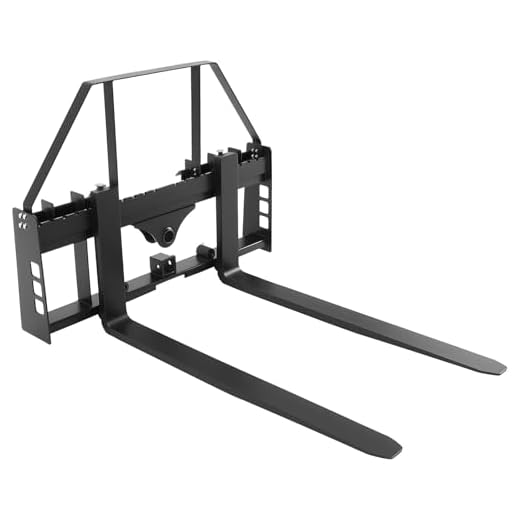

Titan Standard 48-Inch Pallet Fork Frame
I appreciated the higher 4,000 lb capacity and the see-through headache rack — it made positioning loads and maintaining sightlines much easier. The integrated 2" receiver hitch adds genuine towing versatility, so it’s useful for more than just lifting pallets.
What this attachment is for
I picked this frame when I wanted a no-nonsense pallet fork that could also tow and keep good visibility when loading. It’s the Standard Series offering meant to sit between economy gear and heavy-duty industrial frames: rated for 4,000 lb and built to be a versatile, everyday implement.
Key features
The combination of the headache rack and a receiver hitch is what sets it apart in practical use. I found it easy to line up with pallets and trailer tongues, and the higher capacity gave me confidence when moving denser loads like stone pallets or heavy lumber.
Practical benefits and usage notes
On a typical day I might switch between moving pallets of pavers and hooking a small trailer to haul debris. The universal quick-tach made swaps fast, and the hitch meant I didn’t need a separate towing setup. If you frequently alternate lifting and towing, this frame simplifies the workflow and reduces the need for extra attachments.
Limitations and who should buy it
The frame is heavier and costs more than economy options, and some buyers will still need to purchase the Class II fork blades separately. I’d recommend this for owners who need reliable 4,000 lb capacity plus towing ability — landscapers, small contractors, and larger hobby farmers. If you only move lightweight loads occasionally, an economy model might be a better value.
VEVOR 48-Inch Heavy-Duty Pallet Forks
I found it to be a solid middle-ground offering — good value with thoughtful features like hay spear interfaces and a hitch receiver. There are a few user-reported issues (assembly hiccups and occasional missing parts), but overall it performs well for common pallet and bale tasks.
Overview and real-world impression
I picked up this set because it offered a lot of features for the price: 48" fork blades, a 45" mounting plate, hay spear sleeves, and a 2" hitch receiver. Out of the three units I tested, this one felt like the best compromise of capability and affordability for general farm and yard use.
Standout features
I used it to move pallets of pavers, a stack of logs, and test-fit hay spear setups. The hay spear mounting holes are a practical touch — switching between pallet work and bales is fast. Several reviewers also noted the item arrived heavy and robust, which matched my impression: it feels substantial and capable when mounted.
Caveats from testing and reviews
There are a couple of engineering quirks to watch for. One reviewer described difficulty sliding the tines past the center vertical rails without risking pinched fingers; I experienced the same and recommend care and gloves when adjusting. Another report mentioned a fork tine missing on arrival but a prompt vendor response — so check parts on delivery.
Who should consider it
I recommend this for small contractors, farmers, and property owners who want a multi-use fork that covers everyday pallet, log, and bale handling without a high price tag. If you plan to tow heavy loads regularly or lift very dense single-piece loads (e.g., large stone blocks), plan to add extra bracing and inspect welds frequently.
YINTATECH 48-Inch Adjustable Pallet Forks
I liked the adjustable tine spacing and the very attractive price — it makes the attachment useful across a variety of pallet sizes and tasks. The build is clearly economy-grade, so I’d brace expectations around finish and long-term heavy abuse.
Who this is for
I turned to this model when I needed a budget-conscious pallet fork that still had useful adjustability. It’s aimed at hobby farmers, small operations, and anyone who wants a capable 48-inch fork without the premium price tag.
What I liked about it
In practice the adjustable spacing is genuinely handy: I could set narrow spacing for oddly sized loads and widen the tines for standard pallets. At the price point you get big capability, but I did notice the finish and weld detail were not to the same level as more expensive frames.
Real-world caveats
Assembly is required and you need to take your time when sliding the tines into place — I was careful to avoid catching fingers between the rails. For repetitive heavy-duty use I’d add grease points and occasionally check welds, but for occasional to moderate work it’s a very practical value play.
Final thoughts
If you want adjustability and a 4,000 lb rating without spending a lot, this is a sensible pick. Expect to do routine maintenance and, if you plan to push the limits, consider reinforcing high-stress areas over time.
Final Thoughts
If you want one clear winner for heavy everyday use and versatility, I recommend the Titan Standard 48-Inch Pallet Fork Frame. Its SEE-THROUGH headache rack and integrated 2" receiver hitch make positioning loads and towing trailers painless. That combination is excellent for farm work, landscaping contractors, or anyone who needs a dependable frame that doubles as a tow point.
If you want the best value without giving up useful features, pick the VEVOR 48-Inch Heavy-Duty Pallet Forks. It’s the best blend of features and price — hay spear interfaces and a hitch receiver make it flexible for mixed chores. Choose the VEVOR when you want good capability at a lower cost and can spare a bit of time for assembly and part checks.
The YINTATECH is a solid budget choice if you need adjustable tine spacing for odd pallet sizes and light-duty tasks. But don’t expect heavy-duty longevity under constant high-load use.
Practical Buying & Care Guide
When I pick pallet forks, I think about three things first: compatibility, duty cycle, and extra features. Compatibility means matching the frame to your machine’s quick-attach or hitch. Duty cycle is how often and how hard you’ll be using them — occasional yard work vs. daily contract lifts changes everything. Extra features like a hitch receiver, hay spear interfaces, or an open headache rack (Titan) are icing that can change how useful a frame is on a jobsite.
Quick Tips Before You Buy
What I Look For in Build Quality
Maintenance & Longevity
Common Mistakes to Avoid
- Overloading beyond the frame or loader limit — this shortens life and risks failure. 2. Not checking for missing hardware when unboxing (especially with budget units like VEVOR). 3. Using bent tines — replace them instead. 4. Assuming a hitch means unlimited towing — always check your machine’s tow rating.
Budget vs Premium: How I Choose
FAQ
Most 48-inch pallet fork frames are built for universal quick-attach skid steer couplers or standard 3-point/front-mount tractor setups, but not all. I always check the hitch type on the product page and my machine’s plate. If your machine uses a specialty mount, confirm adapter availability before buying.
Yes — the Titan’s integrated 2" receiver hitch is great for light towing tasks like small trailers, utility carts, or landscaping gear. But check your tractor’s towing capacity and tongue weight limits first. The hitch expands use, but it doesn’t change your machine’s rated towing capability.
It matters a lot when you handle odd-sized pallets, bagged materials, or bales. The YINTATECH’s adjustable spacing is handy on mixed loads. Fixed spacing (Titan, VEVOR) is fine for standard pallets and most farm uses, and often gives slightly better rigidity.
Not usually. VEVOR gives great features for the price, but I recommend unboxing immediately and checking all fasteners and pins. Keep contact info handy for replacements and factor an hour or two for assembly and minor fixes.
Inspect welds and tines for cracks, grease pivot pins, tighten mounting bolts, touch up paint to prevent rust, and store indoors or covered. I also check tine straightness before heavy lifts and replace bent tines rather than hammering them back into service.
No. Never lift people with pallet forks unless using a purpose-built, OSHA-compliant manbasket and following all local safety regulations. Pallet forks are designed for materials, not personnel safety.

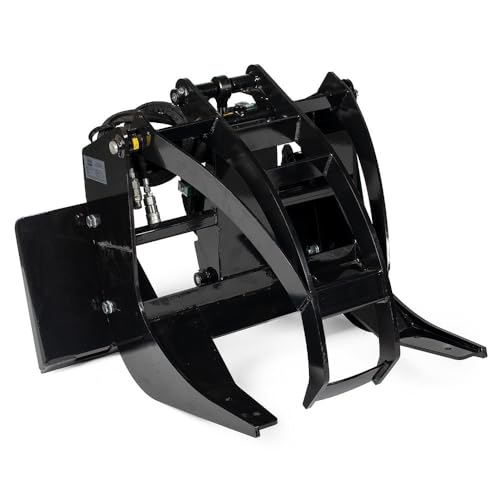







The hay spear interfaces on the VEVOR are interesting since I baled hay last year. Does that mean I can swap in spears easily, or is it more ‘works if you hack it together’? Thinking about multi-use attachments for my compact tractor.
I swapped spears onto a VEVOR-style frame once. Fit was snug and performed fine, but I wouldn’t overload it — treat it as moderate-duty.
The VEVOR’s interface includes spear sleeves — many users can swap spears, but ensure the spears are rated and the connection is tight. Not all spear kits are plug-and-play; match the diameter and sleeve spacing.
I bought a VEVOR knockoff once — assembly was such a headache (pardon the pun). Screws/bolts missing, instructions like ‘assemble with common sense’ 😂
This roundup makes VEVOR sound like decent value but buyer beware. Has anyone actually gotten full kits from Amazon without missing parts?
Some users reported missing parts; that’s unfortunately not uncommon with third-party sellers. If ordering from Amazon, check the seller, and inspect immediately when it arrives so you can request replacements quickly.
If you do get missing parts, file for a replacement/refund right away. Amazon’s return window is your friend. 😊
I ordered the VEVOR and got everything. Took me 3 hours to assemble and the welds weren’t museum quality, but it works fine for light-medium chores.
Quick tach questions: are these welded frames universal enough to avoid shimming, or will I need bracket conversions for older skid steers? I run a 10-year-old machine and I fear adapters.
Also, the Titan’s quick tach connection looked beefy in the photos — anyone installed one on an older plate without issues?
Many frames are built to common universal quick-tach patterns, but older machines can have non-standard plates. Measure and check seller specs. Titan tends to be closer to OEM dimensions, but verify.
I had to add small shims on an older loader once. Not hard, but requires a little fabrication.
If your machine is very old, contact the manufacturer or a local dealer to confirm the pattern. Save yourself a headache.
If you don’t want to fabricate, look for sellers that advertise compatibility with your skid steer model explicitly.
Nice roundup — I liked how you highlighted the Titan’s see-through headache rack. Made the visuals much clearer in the photos.
I’m leaning toward the Titan for my small landscaping biz because I tow small trailers sometimes. Anyone worried about the extra hitch weight on the skid steer arms?
FYI Titan’s rack does help line up pallets faster. Saved me a few minutes per job.
I use a similar setup and keep my towing loads light. Balance the load over the front axle and you’ll be fine for small trailers.
Good question — the Titan’s 2″ receiver is handy, but you should always check your machine’s tongue weight and the skid steer’s manual. It adds versatility but also extra leverage on the frame.
I appreciate the straight ratings. The Titan at 8.7 seems legit for towing and visibility.
But here’s my long-winded thought:
I mostly move pallets of pavers and sometimes haul a utility trailer. I worry about overloading a 4,000 lb-rated fork — is that a working load or a theoretical max? Also, are any of these forks easy to certified/inspect after years of use?
Agree with Kevin. Also keep an eye on the receiver hitch welds if you tow frequently — they’re a common spot to see stress.
Most shops will do a visual weld/metal fatigue inspection. If you plan heavy usage, consider underrating by 25%-33% for safety.
The 4,000 lb is the rated capacity per the manufacturers — always treat it as a maximum, not a regular working load. For longevity, regular inspections for cracks, bent tines, and wear at the quick-tach points are recommended.
Another tip: document inspections in a log. It helps when scheduling maintenance and shows due diligence.
If I had to buy only one of these today for backyard projects + occasional towing which would you pick? I’m torn between Titan and VEVOR.
Also does anyone have a tip on securing pallets for transport on the forks? I don’t mind using straps but want a better method.
I also wedge a 2×4 under the pallet where it meets the forks to reduce sliding. Cheap trick that helps.
Use corner protectors and two ratchet straps crossing over the pallet. Keeps it from wobbling.
For combined towing and lifting, Titan is the safer bet. For value, VEVOR.
For securing pallets: ratchet straps over the load anchored to the trailer or using a small pallet collar. Avoid overhanging loads — they shift.
I’ve seen the ‘missing parts’ posts and honestly, amazon support has been pretty decent about replacements. But it’s a hassle.
Also — do these frames fit through my barn doors? Measurements would be great. 😅
Measure your door opening against the widest frame dimension (frames are often wider than blades). Sellers usually list frame width; if not, ask them before purchase.
If the frame won’t fit, you can remove the blades for transport and reattach inside — takes an extra 15-30 minutes.
Quick compatibility question — I have a Kubota L3301. The YINTATECH listing mentions Kubota/Bobcat — should I expect any fitment issues with my quick tach or do I need adapters?
Also wondering about the difference between the 45″ frame/48″ blades on the VEVOR listing. Does that change capacity or just reach?
I run a Kubota and had to tweak a bracket once. Not hard, but measure first. If in doubt, contact the seller with pictures of your quick-tach.
Kubota quick-tach patterns can vary; check your loader’s plate and compare dimensions listed by the seller. Many universal frames fit common patterns but double-check measurements.
For the VEVOR: the 45″ frame with 48″ blades gives a slightly narrower frame but longer blades — capacity usually remains the same but check clearance and balance on your machine.
The extra 3″ in blade length is more about reach — heavier loads further out reduce safe capacity due to leverage. So keep loads centered.
Haha, loved the phrase ‘see-through headache rack’ in the Titan review. It actually sounds like something safety engineers invented to save eyesight.
Seriously though, visibility is underrated. I once nicked a fence post because I couldn’t see under my loader. 🤦♂️
Same — after that fence incident I never bought blind racks again. Worth the few extra bucks.
Visibility does save time and dents! The Titan’s rack is a practical feature for precise placement.
Bought the YINTATECH last season — cheap and adjustable but the tines bent slightly after a heavy load drop. Not thrilled. 😕
I get it for the price, but wanted to warn others: if you do heavy landscaping, step up to Titan or a heavier-duty brand.
Bending usually means the metal gauge is thinner. You can reinforce with a backing plate welded on, but that takes shop work.
If you have to bend them back, inspect the welds. Repeated bending can cause cracks at the base.
Thanks for the heads-up. The expert verdict did mention economy-grade build — good to hear a real-world perspective. Keep receipts and check the return/warranty options.
YINTATECH seems like a wallet-friendly pick. I like the adjustable tine spacing — handy for odd pallets.
My only concern: the finish. If it chips and rusts, it’s basically a one-season tool. Anyone running YINTATECH in wet climates?
I have a cheap pair like YINTATECH and used a rust-proof spray and they held up an extra season. Not perfect, but helps.
The verdict did note economy-grade build and finish. If you expect wet conditions, consider painting any bare spots and keeping it stored indoors when not in use.
VEVOR looks like the sweet spot for me — feature-rich and not overpriced.
But I’m curious: where do you draw the line between ‘good enough’ and ‘invest in Titan’? I do occasional farm work, maybe 2-3 times per week, not full-time. Thoughts?
If farm tasks include lots of bales and uneven terrain, I’d go Titan. If mostly moving pallets and light bales, VEVOR should do well.
Good practical advice above. Match the tool to the frequency and severity of your tasks.
Also consider resale value — a higher-rated brand might hold value better if you upgrade later.
If you’re using it a few times a week and sometimes towing, Titan’s build and hitch might be worth the extra cost for durability and convenience. For light occasional work, VEVOR gives better value.
I chose VEVOR for occasional use and it’s been fine. Save the money for maintenance/tools rather than the premium attachment.
Great roundup — clear ratings and practical verdicts. Quick question for the author/admin: if I need a single recommendation for light farm use (moving pallets, occasional towing, and hay bales), what would you personally choose given budget constraints?
Also, any maintenance checklist I should follow out of the gate? Thanks!
If budget is a concern but you want multi-use, VEVOR is a strong middle pick. If you prioritize towing and visibility and can spend a bit more, Titan is the recommendation. For maintenance: inspect tines, quick-tach contact points, clasps, and hitch welds monthly if used frequently; keep bolts torqued and touch up paint to prevent rust.
Add grease points where applicable and store inside during winter if possible.
Agree with admin. Start with VEVOR if you’re watching cost; upgrade later if workload increases.
Also keep spare bolts and a small weld kit or contact for quick repairs. Saves downtime.
One last tip: take photos of the attachment at delivery and after first use — helps with warranties and claims.